Wednesday, 29 October 2025

US WAC Service Shoes

Step into history with the US WAC Service Shoes. Discover the story, design, and legacy of the footwear worn by the groundbreaking women of the WWII Army Corps.

There’s a sound that echoes in the halls of history, a sound often overlooked. It’s not the roar of a P-51 Mustang or the thunder of artillery. It’s quieter. It's the crisp, determined click-clack of heels on the wooden floors of a recruitment office, the steady rhythm of a platoon marching on a parade ground, the soft scuff on the dusty floor of a map room in London. It is the sound of the Women’s Army Corps, and it was made by shoes just like these: the US WAC Service Shoes.

US WAC Service Shoes

Step into History: The Story of the US WAC Service Shoes

Before we talk about leather and laces, we have to talk about the women. The trailblazers. To truly appreciate these shoes, you have to picture the world they stepped into. It was a world at war, a world where a woman’s place was rigidly defined. The creation of the Women’s Army Auxiliary Corps (WAAC) in 1942, and its later conversion to the full-status Women's Army Corps (WAC) in 1943, was nothing short of revolutionary.

Over 150,000 American women answered the call, leaving homes and traditional roles to serve their country in ways previously unimaginable. They were clerks, mechanics, cryptographers, and air traffic controllers. They were the architects of a new kind of army, and they needed a uniform that projected professionalism, service, and—above all—duty.

More Than Just Footwear: The Birth of the Women's Army Corps

Every piece of that uniform was a statement, but the shoes... the shoes were foundational. They had to carry these women through long days, through new challenges, and across the globe. They were the point of contact between a soldier and the ground she was determined to defend.

A Symbol of a New Era

When the first WACs were issued their gear, they weren't just receiving clothing. They were receiving an identity. The smart, functional uniform, complete with the sensible yet stylish oxford-style service shoe, set them apart. It declared them as members of the U.S. Army. These weren't just women in a club; they were soldiers. And their cordovan brown shoes were a quiet rebellion against the old ways, a testament to their right to serve.

Designing for Duty: The Anatomy of the WAC Service Shoe

The US Army didn’t just grab a civilian shoe off the shelf. The Type I Service Shoe was designed with military life in mind. It was a masterpiece of wartime practicality.

Form Meets Function

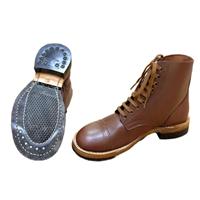
Built on a sturdy leather sole with a stacked leather heel, the original WAC service shoes were meant to endure. The uppers, crafted from a rich russet or cordovan brown leather, were tough but capable of taking a brilliant shine—a necessity for any inspection-ready soldier. The design was an elegant, closed-lace oxford, which provided a secure fit and a clean, military appearance. You can almost smell the unique scent of polish and well-cared-for leather just thinking about them lined up in a barracks.

From Parade Ground to Pacific Outpost

These weren't combat boots, mind you. These were the daily-wear shoes for garrison duty, office work, and stateside assignments. They walked the halls of the Pentagon, crunched on the gravel of training bases across America, and graced the floors of Allied headquarters from London to Manila. They provided the durability for a day spent on your feet and the professional look required of a member of the armed forces. They were the unsung percussion of the home front and the rear echelons, keeping the massive machinery of the U.S. Army running smoothly.

The Reenactor's Dilemma: Authenticity vs. Agony

Now, let's talk about us—the ones who keep these stories alive. As a long-time WWII reenactor portraying a WAC, I've learned a few things the hard way. One of them is about footwear. I remember my first WAC event. My feet were killing me in a pair of poorly-fitting vintage-style shoes. It was a stark reminder that while our passion is for history, our bodies live in the present. Finding a pair of shoes that looked the part but didn't wage war on my arches... that was a game-changer.

Why a Modern Fit Matters

And that’s the beauty of this particular recreation. While they are an exact copy in appearance, right down to the classic profile and color, these WAC Service Shoes have been made slightly wider. It seems like a small detail, but believe me, it’s everything. Original 1940s footwear was notoriously narrow. This subtle change provides a more comfortable, modern fit without sacrificing an ounce of historical accuracy in the look. It means you can stand at attention for an hour, walk in a parade, or spend a day interpreting history for the public without wincing. You can focus on the history, not your aching feet.

Walking in Their Footsteps: The Legacy of the WAC

Every time I lace up my service shoes, I feel a connection. A surge of pride. It’s a tangible link to those pioneering women who broke down barriers and proved their worth in a time of global crisis. Their service paved the way for future generations of women in the military, and their legacy is one of courage, resilience, and patriotism.

Wearing an accurate uniform is more than just playing dress-up. It's an act of remembrance. It’s a way to honor those who came before us. And starting from the ground up, with a solid, accurate, and—thankfully—comfortable pair of shoes, is the most important step you can take. These aren't just shoes; they are a tribute you can wear, a piece of history that still has miles to walk.

Experience a piece of history for yourself! Check out our authentic reproduction of US WAC Service Shoes here: Get Your US WAC Service Shoes

Tuesday, 28 October 2025

US M1940 3-Buckle Mounted Service Boots

Uncover the history of the US M1940 3-Buckle Boot, the last service boot of the US Horse Cavalry. A tribute to the end of an era in military history.

The Last Ride: Unlacing the History of the US M1940 3-Buckle Mounted Service Boots

US M1940 3-Buckle Mounted Service Boots

Close your eyes for a moment. Can you hear it? The soft nicker of a horse in a pre-dawn chill. The rhythmic clink of metal and the groan of worn saddle leather. This is the world that was vanishing, a world of horsemanship and saber charges that was about to be deafened by the roar of tank treads and airplane engines. And on the feet of the men who stood at this precipice of history was a very specific piece of gear: the US M1940 3-Buckle Mounted Service Boot.

It wasn't just a boot... no, that's not quite right. It was a statement. A leather tombstone for an entire way of war. This was the final, definitive service boot issued to the U.S. Horse Cavalry, an institution riding into a glorious, if tragic, sunset.

A Sunset on Horseback, A Dawn of Mechanized War

To understand the M1940 boot, you have to understand the moment of its birth. The late 1930s and early 1940s were a time of profound, almost violent, transition for the U.S. Army. Generals who had earned their spurs chasing Pancho Villa were now grappling with blitzkrieg tactics. The horse, for centuries the symbol of military speed and shock, was being replaced by the internal combustion engine. The M1940 boot was caught squarely in the middle—designed for the stirrup but destined for the foxhole.

More Than Just Leather and Brass

I remember the first time I held an original pair. The leather was as stiff as a board, cracked like a dry riverbed, but you could still feel the ghost of the trooper who wore them. You could almost hear the jingle of spurs that were no longer there. This boot was the result of decades of cavalry experience. It was tall enough to protect the leg from rubbing against the saddle and horse, yet practical enough for groundwork. It was, in its own way, a masterpiece of functional design, perfected at the very moment it became obsolete.

Forging an Icon: The Anatomy of the M1940 Boot

Let's get down to the brass tacks, or in this case, the leather and buckles. What makes the M1940 3-Buckle Boot so distinctive? It’s all in the details, the kind of things that make a reenactor's heart beat a little faster.

The Roughout Revolution

First, look at that leather. It’s a ‘roughout’ construction, meaning the flesh side of the hide faces outwards. This wasn't for looks; it was pure, unadulterated G.I. practicality. Unlike the spit-and-polish boots of the garrison, the roughout surface didn't scuff as easily and could be heavily treated with dubbing wax for waterproofing. You can almost smell the beeswax and pine tar now. It was a boot meant to be used, to be caked in the mud of the field and the dust of the training ground, not just shined for inspection.

Three Buckles for the End of an Era

And then there are the buckles. Three of them, cinching a smooth leather cuff around the calf. This design was an evolution from earlier, taller, and more cumbersome lace-up and pull-on cavalry boots. The buckles allowed for a snug, secure fit that could be adjusted quickly, whether you were swelling from a long day in the saddle or just trying to get your gear on in a hurry. They give the boot its iconic, aggressive silhouette—a look that screams "cavalry" even to the untrained eye.

From the Stable to the Foxhole: The M40 in Action

Here’s the fascinating twist in the story of the US M1940 3-Buckle Mounted Service Boots. While designed as the definitive boot for horse soldiers, its timing was, for the cavalry, terrible. By 1942, most cavalry divisions were being dismounted and reorganized into infantry or armored units. The 1st Cavalry Division, for instance, famously fought in the Pacific—on foot.

A Boot Out of Time?

So, did these boots ever see action? Absolutely. But often on the feet of men who had never ridden a horse in their lives. In the early stages of World War II, before the standardization of the M1943 "Double Buckle" combat boot, the Army issued what it had. That meant these sturdy, well-made M1940s were sometimes worn by infantrymen, engineers, and artillerymen, especially during the North African and Italian campaigns. They proved to be a rugged, if somewhat specialized, piece of general-issue footwear—a cavalry ghost walking through an infantryman's war.

Think of the 26th Cavalry Regiment (Philippine Scouts) making the last mounted saber charge in U.S. military history in 1942. They were the men these boots were made for, holding back the tide of invasion with tactics from a bygone century. The M1940 boot is their legacy, a rugged footnote in one of the most heroic last stands of the war.

The Quartermaster's Verdict: Why These Boots Matter for Reenactors

For a historian, this boot is a fascinating artifact. But for a reenactor, it's something more. It's a key to unlocking a specific and vital impression. Wearing a pair of quality reproduction M1940 3-Buckle boots isn't just about looking the part. It's about feeling the part.

Walking in Their Footsteps

When you pull on these boots and fasten those three buckles, you connect with that moment of transition. You’re representing the American soldier caught between the oat-fed past and the gasoline-fueled future. Whether you're portraying a member of the 1st Cavalry in its final days on horseback or an early-war G.I. issued these boots before shipping out to Africa, they are the correct, authentic foundation for your story.

They are a testament to a time when the bugle call was giving way to the radio squawk, and the hoofbeat was being replaced by the clatter of steel treads. They are, quite simply, the last of a breed. And that makes them more than just boots. It makes them history you can wear.

Experience a piece of history for yourself! Check out our authentic reproduction of US M1940 3-Buckle Mounted Service Boots here: Get Your US M1940 3-Buckle Mounted Service Boots

Monday, 27 October 2025

US M1943 Two-Buckle Boots

Discover the history of the US M1943 Two-Buckle Boots, the iconic footwear that carried GIs through the Battle of the Bulge and beyond. A must-read for WWII reenactors.

Step into History: The Story of the US M1943 Two-Buckle Boots

There’s a certain feeling you get when you handle a piece of history. A weight. A story. And if you ask me, few items tell a story as potent as a good pair of combat boots. I’m talking about the ones that carried a generation through the mud of Europe, the boots that stood firm in the frozen hell of the Ardennes. I’m talking about the unsung hero of the late-war infantryman’s kit: the US M1943 Two-Buckle Boot.

US M1943 Two-Buckle Boots

Before these came along, the American GI was stuck with a system that was, to put it mildly, a pain in the neck. Or rather, a pain in the ankle. You had your low-quarter Service Shoe and a separate pair of canvas leggings. Getting them on was a fiddly, time-consuming process of hooks and laces. In the wet, they were miserable. In the cold, they were a liability. The Army knew it needed something better. What it came up with was a revolution in leather and brass.

From Clumsy Leggings to Combat-Ready: The Birth of a Legend

The M1943 boot was part of the larger M-1943 Uniform Ensemble, a complete overhaul of GI field gear designed for maximum versatility. The goal was a single, layered system that could take a soldier from a Normandy summer to a Bavarian winter. And the footwear was the foundation of it all.

The Problem with the Old System

Let's be honest, the old shoe-and-legging combo was a holdover from a different era of warfare. It looked sharp on the parade ground, sure, but in the hedgerows and forests of France? Not so much. The canvas leggings offered minimal protection, got soaked instantly, and the gap between legging and shoe was a perfect entry point for mud, water, and snow. For an army that marched on its feet, this was a critical flaw.

A Unified Solution: The M-1943 Combat Service Boot

The M43, officially the "Boot, Service, Combat, Composition Sole," was the answer. It combined the shoe and the legging into a single, integrated piece of footwear. It was taller, more robust, and infinitely more practical. They weren't just a replacement for the old system—well, they were, but they were so much more. They were a statement of intent, a piece of modern military engineering designed for a modern war.

Anatomy of a War-Winning Boot

What made the M1943 boot so special? It’s all in the details. The designers at the Quartermaster Corps weren't just thinking about looks; they were thinking about survival.

Roughout Leather and Unrelenting Durability

The first thing you notice is the texture. The boot was constructed from "roughout" leather, meaning the flesh-side of the hide faced outwards. This wasn't a fashion choice. The rough texture held waterproofing dubbin far better than smooth leather. And for the grunt in the field, it meant one less thing to polish. The rasping sound of that leather against brush became a familiar sound on the march to Berlin. It was tough, it was practical, and it was built to take an incredible amount of punishment.

The Iconic Two-Buckle Cuff

And then there are the buckles. That integrated leather cuff, fastened by two distinctive straps, is the boot's signature feature. It provided excellent ankle support and, crucially, created a much better seal against the elements than the old leggings ever could. I remember the first time I strapped into a high-quality reproduction pair for a winter reenactment. The satisfying clink and snap of those buckles felt... definitive. It felt secure. It was a small thing, but in the field, those small things are everything.

"These Boots Were Made for Marching": The M43 in Action

The M1943 Two-Buckle Boots began to see wide issue in the fall of 1944, just in time for some of the most brutal fighting of the war in Europe.

From the Hürtgen Forest to the Rhine

These were the boots that slogged through the bloody Hürtgen Forest. They are the boots you see in nearly every iconic photo from the Battle of the Bulge, caked in snow and frozen mud. They crossed the Rhine River and pushed into the heart of Germany. For the GIs of the 101st Airborne at Bastogne, holding the line in sub-zero temperatures, a dry pair of socks and these sturdy boots were as vital as a rifle and ammunition.

A Soldier's Perspective: More Than Just Footwear

For the men who wore them, these boots were a lifeline. In a war where trench foot could take a soldier out of action as surely as a bullet, reliable footwear was paramount. The M43 wasn't perfect—in the extreme cold of the Bulge, a better-insulated boot was desperately needed—but it was a quantum leap forward. It was more than just footwear; it was a promise from the Army that it was trying to give its men the best gear possible to survive and win.

Getting it Right: The Reenactor's Choice

For those of us who strive to honor these men by recreating their history, authenticity is everything. Your impression is built from the ground up, and that starts, quite literally, with your boots.

Why Authenticity Matters in Your Impression

Wearing the wrong footwear doesn't just look wrong; it feels wrong. It disconnects you from the experience. The weight, the feel of the leather, the way the buckles fasten—it all contributes to understanding, in some small way, what the GI went through. A quality reproduction isn't just a costume piece; it's a tool for historical interpretation.

A Look at a Top-Tier Reproduction

That's why a product like this all-leather reproduction from SM Wholesale is so important. They’ve captured the critical details: the correct roughout leather, the proper pattern, the sturdy buckles. When you pull these on, you feel the history. You get a sense of the rugged, no-nonsense design that made them so effective.

A Legacy Forged in Mud and Steel

The US M1943 Two-Buckle Boot is more than just an artifact. It's a symbol of American resolve and ingenuity during the final, decisive year of the war in Europe. It represents a critical shift in military thinking, prioritizing the soldier's performance and survivability over parade-ground spit-and-polish. It walked a long, hard road to victory, and its legacy endures today, on the feet of dedicated reenactors who keep the story of the American GI alive.

Experience a piece of history for yourself! Check out our authentic reproduction of US M1943 Two-Buckle Boots here: Get Your US M1943 Two-Buckle Boots

Sunday, 26 October 2025

US Army Roughout Boots

Step into history with the iconic US Army Roughout Boots. Discover the story, significance, and legacy of the WWII GI's most essential piece of gear.

More Than Just Leather: The Story Stitched into Every Pair of US Army Roughout Boots

There's a certain feeling you get when you handle a piece of history. It's a weight, a texture, a connection to a time you've only read about. For me, that feeling was never stronger than the day I found my grandfather's old footlocker in the attic. Tucked under a moth-eaten wool blanket was a pair of his service boots. They were cracked, stiff, and darkened to the color of dried blood, but they were real. I ran my thumb over the worn, fuzzy leather and could almost smell the damp French soil and hear the distant rumble of artillery. Those boots weren't just leather and laces; they were a story.

The boots in that locker were the legendary US Army Roughout Boots, the unsung workhorses of the American ground forces in World War II. They carried the GI from the beaches of Normandy to the forests of the Ardennes, and their simple, rugged design speaks volumes about the men who wore them.

From the Factory Floor to the Foxhole

US Army Roughout Boots

Before 1942, the standard US Army service shoe was a smooth, russet-colored leather affair that required constant polishing. A spit-shined boot looks sharp on the parade ground, sure, but in the muck and grime of a European battlefield? It’s a logistical nightmare. The Quartermaster Corps needed something tougher, something that didn't demand precious time and resources to maintain. The solution was brilliant in its simplicity.

The 'Type II Service Shoe': A Revolution in Footwear

Instead of using the smooth, grain side of the leather facing out, they simply flipped it. This exposed the flesh-out, or "roughout," side. This new design, officially designated the "Shoes, Service, Reverse Upper, Composition Sole," or Type II, was a game-changer. That suede-like finish wasn't a fashion statement; it was pure, unadulterated practicality. It didn't scuff and scratch like polished leather, and it held waterproofing waxes—that famous "dubbin"—far better. Soldiers were explicitly ordered not to polish them. A stiff brush to knock off the mud and a new coat of dubbin was all the care they needed.

Walking in a GI's Footsteps: What Made These Boots Special?

Imagine you're a GI, huddled in a damp foxhole somewhere in Belgium. Rain is dripping from your helmet. Everything is cold. But your feet, while maybe not perfectly dry, are protected. That's what these boots represented: a small but vital piece of security in a world of chaos. They weren't just footwear; they were ten pounds of American resolve on each foot when paired with the iconic canvas leggings.

The Roughout Advantage: Grip, Breathability, and a Gritty Look

The "fuzzy" nap of the roughout leather provided a better grip for the canvas M1938 leggings that were worn with them, preventing them from slipping down. The leather itself, when not slathered in grease, was also more breathable than its smooth-out predecessor. And let's be honest, they just looked the part. Over time, each pair developed a unique patina. The fresh, light tan of a new issue boot would slowly darken with dirt, oil, and waterproofing, becoming a canvas of a soldier's journey from basic training to the front lines. That iconic, scuffed-up silhouette is the very image of the WWII GI.

A Foundation for Victory (Literally)

These boots were the foundation upon which the GI stood, marched, and fought. The early versions featured a leather sole, but the Army quickly transitioned to a more durable synthetic rubber composition sole, which offered better traction and longevity. This was the boot that waded ashore at Omaha Beach, that trudged through the Hürtgen Forest, and that held the line at Bastogne. Simple. Reliable. Tough. Just like the men who wore them.

The Echo of Bootsteps: From Normandy to Modern Reenactment

The Type II Roughout was eventually superseded by the Type III, which featured an integrated leather cuff, but its service from 1942 to 1944 places it squarely in the most intense period of the war in the European Theater. For reenactors and living historians today, getting the footwear right is absolutely paramount. Your boots are your connection to the ground, the very first touchpoint of your historical impression.

My Own Brush with History

I'll never forget my first reenactment event. I had a beautiful M1 rifle, a correct wool uniform… and a pair of modern work boots. An old-timer, a guy they called "Sarge," pulled me aside. He didn't yell. He just pointed at my feet and said, "Son, the whole story starts there. Get the boots right, and the rest follows." He was right. The moment I laced up my first pair of authentic WWII US Army boots, the entire experience changed. The posture, the gait, the sheer feeling of authenticity—it all clicked into place. It felt… real.

Getting the Details Right: Authenticity in Your Impression

When you're building your kit, you want boots that honor that history. You need the correct suede-like roughout finish, the proper ankle height designed to be worn with leggings, and a sturdy sole that can handle a weekend in a muddy field. It's about more than just looking the part; it's about paying respect to the incredible history these boots represent. Every stitch, every eyelet, is a nod to the factory workers who made them and the soldiers who wore them into battle.

These boots are not just a purchase; they are an investment in authenticity. They are the solid foundation for any serious ETO impression from 1942-1944. They are the story of the common soldier, a story of grit and endurance, told in leather and rubber. It's a story that deserves to be remembered, and to be told correctly, right down to the soles of your feet.

Experience a piece of history for yourself! Check out our authentic reproduction of US Army Roughout Boots here: Get Your US Army Roughout Boots

Saturday, 25 October 2025

US Type II Service Shoes

Step into history with the US Type II Service Shoes. Discover the story of the iconic russet ankle boots worn by early-war GIs, from garrison life to combat.

More Than Just Boots: The Story of the US Type II Service Shoes

Listen closely. Can you hear it? That sharp, rhythmic clap of leather on pavement. It’s the sound of a generation marching from the last days of peace into the crucible of global war. Before the iconic mud-caked roughouts of Normandy, before the two-buckle boots of the Bulge, there was a different kind of footwear on the feet of the American GI. A boot that spoke of discipline, of the parade ground, and of an army rapidly transforming itself. I’m talking about the unsung leather-and-nail heroes of the early war: the US Type II Service Shoes.

US Type II Service Shoes

The Unsung Workhorse of the Early-War GI

You might know them as “Garrison Shoes,” and the name fits perfectly. These smooth, russet-brown ankle boots were the standard issue for all Army personnel as America was drawn into World War II. They were the last gasp of the old peacetime Army's spit-and-polish tradition. They were meant to look sharp, to take a shine that could blind a platoon sergeant, and to instill a sense of uniformity and pride. When you see photos of troops training stateside in 1941, drilling with Springfield rifles, or preparing to ship out to places they’d only seen on a map, you’re looking at men wearing these very boots.

From the Parade Ground to the Field

Don't let the "Garrison" nickname fool you. While they were certainly at home on the drill field, the Type II Service Shoe saw its share of hard service. Paired with canvas leggings, this was the footwear that went ashore in North Africa during Operation Torch. It’s what our boys wore in the desperate, early fighting in the Philippines and across the Pacific. These boots had to bridge the gap between the rigid standards of garrison life and the brutal realities of a modern battlefield.

The daily ritual of maintaining them became ingrained in the soldier's life. The smell of saddle soap and cordovan shoe polish is a scent that would transport any veteran of that era right back to his barracks. There was a certain pride in taking a scuffed-up pair of boots and bringing them back to a deep, glowing shine. It was a small act of control, of order, in a world descending into chaos.

What Made the "Garrison Shoe" Special?

The Type II was a simple, robust design. It featured a toe cap and was constructed from smooth, chrome-tanned leather. This smooth-out construction was its most defining feature—and its biggest liability in the field. It scuffed easily and required constant polishing, something that was nearly impossible to do in a foxhole. The soles were typically leather, sometimes with hobnails for added traction, which made a hell of a racket on a quiet night patrol. But for the time, they were a solid, well-made piece of military gear.

Putting on the Past: A Reenactor's Perspective

I’ll never forget the first time I laced up a proper pair of reproduction Type II Service Shoes for an early-war event. It was... different. The feel of the stiff leather around the ankle, the solid heft of them. It felt formal. It felt real. Suddenly, my impression wasn't just a costume; it was a connection. I felt like one of those young men from the black-and-white photos, standing on the edge of history.

The Feel of History

Wearing these boots changes your whole posture. You stand a little straighter. You walk with more purpose. The sound they make on hard ground is a constant reminder of the military discipline they represent. It’s a sensory experience that text and photos can’t fully capture. When you're building an early-war impression—whether it’s for a stateside training scenario, a North Africa landing, or the Kasserine Pass—getting the footwear right is the foundation of it all. Literally.

Getting the Details Right for Your Impression

For any serious reenactor portraying the 1941-1943 period, these boots are non-negotiable. The later "roughout" boots simply weren’t there yet. Pairing these smooth russet boots with canvas leggings is *the* signature look of the early American GI. It screams authenticity. It shows you’ve done your homework and respect the history. A quality reproduction, like these US Type II Service Shoes, is an investment in the accuracy and power of your historical impression.

The Evolution of a Legend: From Type II to Roughouts

Of course, history doesn't stand still. The lessons learned in the harsh conditions of North Africa and the Pacific led to a change in thinking. The Army realized that a boot requiring constant polishing was impractical for combat. This led to the development of the Type III Service Shoe, better known as the "roughout." By turning the leather flesh-side out, the Army created a boot that was more durable, less prone to scuffing, and could be easily waterproofed with dubbin. By mid-1943, the roughout was becoming the new standard, and the polished shine of the Type II began to fade from the front lines.

The Foundation of Your Authentic Kit

But the Type II Service Shoe never truly disappeared. It remains a powerful symbol of a specific moment in time—of America’s entry into the war. It represents the millions of civilians who became soldiers, learning to march, to drill, and to fight in these very boots. They are the footwear of Pearl Harbor, of Bataan, of Operation Torch. They are more than just a piece of leather; they are the first steps on the long road to victory.

For the historian, the collector, or the reenactor, understanding this boot is understanding the evolution of the American soldier in World War II. It’s the starting point. The foundation. And getting that foundation right is everything.

Experience a piece of history for yourself! Check out our authentic reproduction of US Type II Service Shoes here: Get Your US Type II Service Shoes

Friday, 24 October 2025

US Paratrooper Rigger-Made Ammo Pouches (Reproduction)

Discover the history of the rigger-made ammo pouch, a symbol of WWII US paratrooper ingenuity. Learn why this piece of gear is essential for reenactors.

The Unsung Hero of the Airborne: The Story of Rigger-Made Ammo Pouches

I remember an old timer from the 506th, a man whose hands were as gnarled as oak roots. He once showed me a faded photograph. It wasn't of a battle or a pin-up girl. It was a close-up of his gear, laid out on a bunk before a jump. He pointed a trembling finger at a small, unassuming canvas pouch sewn onto his webbing. "That little fella," he'd said, his voice raspy with memory, "wasn't standard issue. It was hope, sewn with grit and parachute cord by a rigger named Smitty. Meant I had an extra clip when I needed it most."

That story has always stuck with me. In the grand, sweeping narratives of World War II, we often focus on the tanks, the planes, and the grand strategies. But victory is often found in the margins, in the small, clever details. And few items tell a better story of soldier ingenuity than the US Paratrooper Rigger-Made Ammo Pouches.

US Paratrooper Rigger-Made Ammo Pouches (Reproduction)

More Than Just a Pouch: A Symbol of Airborne Ingenuity

When you're about to jump out of a perfectly good airplane, deep behind enemy lines, you have a very specific set of concerns. One is your parachute. Another is hitting the ground with enough ammunition to fight your way to the objective and hold it. Standard issue gear, designed for the leg infantryman, wasn't always up to the unique challenges of airborne operations. The standard M1 Garand cartridge belt was bulky. The cloth bandoliers were clumsy and notorious for snagging on the inside of a C-47.

The paratroopers of the 82nd and 101st Airborne Divisions weren't the type to just accept a problem. They were problem-solvers. They needed more ammo, and they needed it in a secure, streamlined, and easily accessible package. So, they turned to the unsung artisans of their outfits: the parachute riggers.

Forged in Necessity: The Birth of the Rigger Pouch

These weren't just pouches; they were battlefield innovations, born from the cold calculus of survival. A trooper knew every single round could be the one that made the difference between seeing the sun rise or not.

Who Were the Riggers?

A parachute rigger was a special breed. Every man in an airborne unit literally trusted these soldiers with his life every time he jumped. Their primary job, of course, was to maintain, inspect, and pack the parachutes. This required meticulous attention to detail, strong hands, and an intimate knowledge of heavy-duty sewing machines, canvas, and webbing. They were masters of stitch and thread. It was only natural that when troopers needed custom gear, they went to the riggers.

From Parachutes to Pouches: A Story of Field Expediency

Using scrap canvas, spare webbing, and the same sturdy thread used for parachute harnesses, riggers began creating custom pouches. It wasn't an official, top-down order. It was a grassroots solution. A trooper would acquire some extra canvas, take it to the rigger's shed, and ask for a pouch to be sewn directly onto his M1936 suspenders or pistol belt. Sometimes they made small pouches for a single Garand clip; other times, larger ones for two or three Thompson submachine gun magazines.

This is what makes the rigger-made ammo pouch so special. It wasn't a product of a factory assembly line. Each one was slightly different, a testament to the specific needs of the soldier who would carry it into hell. It speaks volumes about the unit cohesion and practical mindset of the American airborne forces.

Built for the Fight: Design and Variations

Feel the rough texture of the khaki canvas in your mind. It’s sturdy, unpretentious, and built for one purpose: to endure. These pouches were beautifully simple. A pocket, a flap, and a snap or fastener to keep it shut. That's it.

The beauty of these pouches was their adaptability. A trooper carrying the venerable M1 Garand needed a pouch that could snugly hold an 8-round en-bloc clip. The NCOs or specialists armed with a Thompson "Tommy" Gun needed something much larger and deeper for their 20 or 30-round stick magazines. The riggers built what was needed, creating two primary variations that you can see reflected in today's high-quality reproductions.

These pouches were sewn onto jumpsuits, fixed to suspenders, or attached to belts—wherever the trooper felt he could get to his ammo fastest. This was personalization born from life-or-death experience.

Owning a Piece of Airborne Grit: The Modern Reproduction

For a modern historian or a dedicated reenactor, authenticity is everything. It's about more than just looking the part; it's about understanding the "why" behind each piece of kit. And that's where a well-made reproduction of a rigger pouch becomes essential. It’s a detail that separates the casual enthusiast from the serious student of history.

When you add one of these rigger-made pouches to your impression, you're not just carrying extra replica ammo. You're carrying a story. You're tipping your hat to the unnamed riggers in the dusty airfields of England, working late into the night under a single naked bulb, sewing for their brothers-in-arms. You're acknowledging the paratrooper who knew that the factory couldn't predict what he'd need in the hedgerows of Normandy.

A Legacy Sewn in Canvas

The rigger-made ammo pouch is more than just canvas and thread. It is a physical manifestation of the airborne spirit: adaptable, resourceful, and unwilling to quit. It’s a small detail that tells a massive story about the American paratrooper in World War II. It’s the story of men who, when faced with a problem, didn't wait for a solution from on high. They made their own.

And for that reason, it remains one of the most iconic and meaningful pieces of gear you can own.

Experience a piece of history for yourself! Check out our authentic reproduction of US Paratrooper Rigger-Made Ammo Pouches (Reproduction) here: Get Your US Paratrooper Rigger-Made Ammo Pouches (Reproduction)

Thursday, 23 October 2025

US Parachutist Let-Down Rope (Reproduction) | 2nd Pattern

Uncover the history of the WWII US Parachutist Let-Down Rope. Learn why this essential airborne item was a paratrooper's lifeline and a reenactment must-have.

Listen up. Lean in a little closer. I want to tell you about an item that doesn't get the glory of a Garand or the swagger of a jump boot, but for a paratrooper hung up in the dark, it was the most beautiful piece of gear he owned. We’re talking about the US Parachutist Let-Down Rope (Reproduction) | 2nd Pattern. It’s more than just cordage; it was a 40-foot thread of hope.

US Parachutist Let-Down Rope (Reproduction) | 2nd Pattern

The Unsung Lifeline: Uncoiling the History of the US Parachutist Let-Down Rope

Picture it. The air is black, ripped apart by the roar of C-47s and the crackle of flak. You’re a young trooper, loaded down with nearly a hundred pounds of gear. The green light flashes, and you plunge into the chaotic night over Normandy. The violent shock of the parachute opening nearly tears your teeth out, and then… a sudden, terrifying silence. You’re floating. But you’re not heading for a soft field. You’re drifting straight into the skeletal arms of a French oak tree.

More Than Just a Rope: A Paratrooper's Last Resort

This wasn't some rare, fluke occurrence. Landing in trees, on church steeples, or tangled in hedgerows was a grim reality of airborne operations. Gravity played a cruel lottery, and being unceremoniously snagged high above the ground was a losing ticket. You’re a perfect, dangling target for any enemy patrol. Getting down, and getting down *quietly*, was paramount. This is where the airborne let-down rope entered the scene.

The Jump into Uncertainty

Every paratrooper carried one. It was typically housed in a dedicated pocket on the right side of the M42 jump trousers, secured and ready. It wasn't an afterthought; it was a core piece of survival equipment. I remember an old timer from the 101st telling me once, his voice raspy with age and memory, that the feel of that coiled rope against his leg during the flight over the channel was a strange comfort. A quiet promise that he had one more option, one more way to cheat death if things went sideways.

Stuck in the Trees: The Let-Down Rope's Moment to Shine

Once tangled, a trooper would have to perform a dangerous, delicate ballet. He’d cut himself free from his parachute harness, anchor the let-down rope to a sturdy branch, and rappel to the ground. In the dark, with numb fingers and the adrenaline of combat coursing through his veins, the simple, reliable construction of that rope was everything. He needed to trust it with his life, and it rarely let him down. It was his silent partner in a descent far more controlled than the first one.

From First to Second Pattern: A Subtle but Crucial Evolution

Like a lot of gear in WWII, the let-down rope saw improvement based on battlefield experience. The initial version, the 1st Pattern, was good, but the 2nd Pattern made a few key changes. It's the small things, you see, the details that matter when your life is on the line.

What Changed and Why It Mattered

The primary evolution was in the rope's construction and hardware. The 2nd Pattern, which this fantastic reproduction emulates, often featured a more robust weave and sometimes a simplified or improved loop system for anchoring. The change was driven by feedback from the field—reports of ropes fraying or hardware being clumsy with gloved hands. The army learned, adapted, and issued a better lifeline. This wasn't about aesthetics; it was about saving lives so those troopers could get on with their mission.

Getting the Details Right: The Modern Reproduction

Now, for us in the reenactment community, authenticity is king. A cheap piece of nylon cord just won't cut it. It feels wrong, looks wrong, and frankly, it’s disrespectful to the history. That’s why this 2nd Pattern WWII paratrooper let-down rope is such a gem.

Weaving Authenticity into Every Fiber

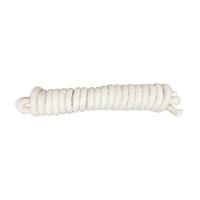
The kernmantle construction in cotton gives it the right weight, the right feel. It has that coarse, reassuring texture you'd expect. Holding it, you can almost feel the history coiled within its fibers. It’s a "nearly identical reproduction," and they aren't kidding. It’s crafted to the correct length and diameter, ready to be properly packed into the leg pocket of your jump trousers. It's one of those final touches that separates the serious portrayals from the casual ones.

Completing Your Airborne Impression

You can have the perfect helmet, the correct A-frame, and a beautifully aged M1 rifle, but if you're missing the small, essential items, the impression feels hollow. The gear tells a story, and the let-down rope tells a crucial chapter of the paratrooper's experience.

Why This Rope is Non-Negotiable for a Serious Reenactor

Carrying a proper reproduction like this one isn't about planning to actually rappel from a tree during a tactical battle. Of course not. It's about honoring the complete experience. It’s about acknowledging the thought and preparation that went into every single man who jumped out of that door. It shows you've done your research. It completes the silhouette. When someone asks you what's in that leg pocket, you can tell them the story of the trooper's last resort, and you can do it with a piece of gear that looks and feels like it just came out of a government crate in 1944. It’s a small detail, but it speaks volumes about your commitment to getting it right.

Experience a piece of history for yourself! Check out our authentic reproduction of US Parachutist Let-Down Rope (Reproduction) | 2nd Pattern here: Get Your US Parachutist Let-Down Rope (Reproduction) | 2nd Pattern

Wednesday, 22 October 2025

US B-3 'Mae West' Life Preserver

Discover the history of the iconic US B-3 'Mae West' Life Preserver. Learn why this WWII AAF and Paratrooper gear was a soldier's last hope.

The 'Mae West': More Than Just a Life Vest for WWII's Sky Soldiers

The air inside the C-47 is thick. It’s a cocktail of sweat, oil, and the gut-wrenching tang of fear. You’re packed in, shoulder to shoulder with the rest of the stick, a chaotic jumble of web gear, rifles, and grim-faced young men. Underneath your T-5 parachute harness, pressing uncomfortably into your ribs, is a bulky, canvas-like slab of yellow fabric. It feels awkward. It feels cumbersome. But that slab of canary-yellow hope, the US B-3 'Mae West' Life Preserver, might just be the one thing that saves your life when the green light flashes.

US B-3 'Mae West' Life Preserver

I’ve suited up for reenactments more times than I can count, and let me tell you, getting the gear right is everything. It’s not about playing soldier; it’s about honoring them. And I remember the first time I wrestled with a reproduction B-3, trying to get it to sit right under my harness. I felt the weight, the bulk, and for a second, I connected with those boys from the 82nd and 101st. You realize, in a very real way, that this wasn't just a piece of kit. It was a lifeline.

From the B-17 to the C-47: The Birth of the B-3 Life Preserver

Before it ever found its way into a paratrooper’s C-47 Skytrain, the B-3 was born out of necessity for the flyboys of the Army Air Forces (AAF). Imagine being a ball turret gunner in a B-17, five miles high over Germany. The flak is bursting around you like angry black clouds. If you have to bail out, your problems are only just beginning. Below you lies either enemy territory or, just as often, the frigid, unforgiving waters of the North Sea or the English Channel.

The B-3 Life Preserver was the answer. A simple, rugged vest made from rubberized canvas, it was designed to be worn over the flight suit. It wasn't meant for comfort. It was meant for survival. The original design was brilliantly simple, featuring two separate air bladders that could be inflated by a pair of CO2 cartridges. A sharp tug on the beaded handles, and… *whoosh*. Instant buoyancy. It was your last, best friend over the unforgiving gray of the Channel.

A Nickname that Stuck

Of course, GIs have a knack for nicknames, and the B-3's was a classic. When fully inflated, the vest’s two prominent lobes gave the wearer a rather… shall we say, *exaggerated* chest. It didn’t take long for some wisecracking airman to compare the look to the famously curvy Hollywood starlet of the era, Mae West. The name stuck. It was irreverent, a bit of gallows humor in the face of death, and it became as much a part of the gear's identity as its bright yellow color. This wasn't just a piece of military equipment; it was the "Mae West."

Anatomy of a Lifesaver: What Made the B-3 Tick

What makes a piece of historical gear truly fascinating are the details. The original B-3 wasn't just a bag of air. It was a well-thought-out piece of survival engineering, especially for its time.

The Bright Yellow Beacon

The color wasn't a fashion statement. That distinct "canary yellow" was chosen for one reason and one reason only: visibility. In the churning, gray waves of the Atlantic, a downed airman was a needle in a haystack. The bright yellow of an inflated Mae West life vest could mean the difference between being spotted by a rescue plane and being lost to the depths forever. It was a beacon of hope in a world of gray.

Inflation and Operation (The Real Deal)

The primary inflation method was the twin CO2 cartridges. But what if they failed? Or what if you needed to top off the pressure? The designers thought of that. Each bladder was also fitted with an oral inflation tube, allowing a downed airman to literally breathe life back into his vest. It’s these small, practical details that separated well-designed WWII paratrooper gear from the rest.

A Paratrooper's Unlikely Companion

So how did a pilot's life preserver end up strapped to an airborne infantryman jumping into Normandy? Simple geography. The massive airborne assault on D-Day, Operation Neptune, required thousands of paratroopers to fly over the English Channel. If their C-47 was shot down, or if they were dropped off-target into one of the many rivers or intentionally flooded fields in the Norman countryside, the result was the same: a water landing.

Over Water, Into France

A paratrooper in 1944 was a walking arsenal, laden with a rifle, ammunition, grenades, a parachute, a reserve chute, and countless other items. We're talking 80-100 pounds of extra weight. In water, that's a death sentence. The B-3 "Mae West" was issued as a desperate countermeasure. Some troopers, savvy to the violent turbulence of the C-47s, would even partially inflate their vests before the jump, not for buoyancy, but for a little extra padding against the fuselage during the chaotic flight.

The Weight of Authenticity in Reenacting

For those of us who strive to create an accurate impression, the B-3 Life Preserver is a non-negotiable piece of the D-Day paratrooper kit. It tells a specific story of a specific moment in time. This isn’t just any piece of WW2 reenactment gear; it’s a symbol of the unique dangers faced by the men of the 82nd and 101st Airborne on June 6th, 1944. An accurate reproduction, like the museum-quality piece offered here, captures the look, the feel, and the presence of the original. It’s a non-functioning display piece, of course, but for a historical impression, that’s exactly what you need. It completes the silhouette and honors the history.

Owning a Piece of Airborne Legend

The B-3 'Mae West' Life Preserver is more than just stitches and fabric. It’s a tangible link to the bomber crews who fought in the skies over Europe and the paratroopers who dropped into darkness to liberate a continent. It’s a story of ingenuity, a dash of GI humor, and a desperate grasp for survival against overwhelming odds.

Adding a high-quality reproduction to your collection or reenactment kit isn’t just about getting the details right. It’s about holding a piece of that story in your hands and ensuring that the legacy of those brave sky soldiers is never, ever forgotten.

Experience a piece of history for yourself! Check out our authentic reproduction of US B-3 'Mae West' Life Preserver here: Get Your US B-3 'Mae West' Life Preserver

Tuesday, 21 October 2025

US General Purpose Leg Strap | Paratrooper Gear

Discover the history of the US General Purpose Leg Strap, a vital piece of WWII paratrooper gear used to secure knives and grenades on D-Day and beyond.

Listen up. When you picture a paratrooper from the 101st or the 82nd, what comes to mind? The M1 helmet with its painted spade or heart, sure. The M1 Garand, the jump boots, the sheer guts. It’s the big, iconic stuff that gets all the glory. But I’m here to tell you, glory doesn’t win fights. Small, smart details do. The kind of details that keep your gear from flying off into the French countryside when your chute pops open with a jolt that rattles your teeth.

And one of the most overlooked, yet absolutely critical, of these details was a simple strip of canvas: the US General Purpose Leg Strap | Paratrooper Gear.

US General Purpose Leg Strap | Paratrooper Gear

The Unsung Hero of the Airborne Kit: The US General Purpose Leg Strap

Look, anyone who’s ever had to carry more than a wallet knows this truth: securing your load is everything. Now imagine your load is a fighting knife or a pound of plastic explosive, and you’re about to jump out of a perfectly good airplane into a hail of German machine-gun fire. Suddenly, a simple strap becomes one of the most important things in your world. This wasn’t just a piece of kit; it was an anchor in the storm of combat.

More Than Just a Piece of Webbing

At first glance, it’s deceptively simple. It's a length of olive drab canvas, specifically the correct M1928-style webbing that any serious reenactor will recognize immediately. You can feel that rough, durable texture in your mind’s eye. It has a sturdy metal buckle for cinching it down tight, and it’s fully adjustable. No frills, no fancy nonsense. It was designed to do one job and do it flawlessly, because in the chaos of a night drop behind enemy lines, flawless was the only acceptable standard.

The reproduction we’re looking at here nails those details. It’s not just a "strap." It’s a faithful recreation of the general purpose leg strap that GIs relied on. Getting that right—the weave, the color, the hardware—is what separates a good impression from a great one. It's the quiet grammar of a soldier's kit.

The Paratrooper's Lifeline: Securing the Tools of the Trade

So, what was this humble strap holding? Its "general purpose" designation meant it was a versatile workhorse, but a few key items were its most frequent companions. For a paratrooper, whose hands were busy with his parachute risers and his primary weapon, anything else he needed had to be strapped down securely but remain instantly accessible.

The M3 Trench Knife: A Paratrooper's Last Resort

Every paratrooper carried a knife. Often, it was the M3 Trench Knife, a vicious, no-nonsense blade designed for close-quarters fighting. Where to put it? You couldn’t have it bouncing around in a pocket. The most common and effective solution was to strap the scabbard directly to the lower leg or ankle using the general purpose strap. I remember an old 101st vet telling me once, his voice raspy with age, that he could still feel the reassuring weight of that knife against his jump boot. It was a comfort, a final argument he knew he had if things went completely sideways. That security was provided by this strap, pulled tight against the canvas of his trousers, a silent promise of readiness.

Handling High Explosives: The Gammon Grenade and Beyond

Then there was the heavy stuff. Things that go boom. The British-designed Gammon Grenade, an improvised anti-tank weapon, was essentially a cloth bag the trooper filled with Composition C explosive. It was powerful, unstable, and had to be secured. Troopers would often strap these—or other demolition charges and mines—to their legs for the jump. Can you imagine the trust you had to have in your gear? The thought of that much high explosive strapped to your thigh, held in place by a single canvas strap and a metal buckle, as you plummet towards the earth... well, it focuses the mind. The US general purpose leg strap had to hold. There was no alternative.

From Normandy to Your Kit: Authenticity in Reenactment

Today, for historians and reenactors, this strap is more than just an accessory. It’s a key to unlocking a more authentic impression. When you’re kitting up for an event, you go through the same motions as that young man in 1944. You check your webbing, you settle the weight of your gear, and you cinch down that leg strap. You feel the cold click of the buckle locking into place. In that small moment, you’re connecting with the past.

It’s a detail that tells a story. It shows you understand the practical realities of the airborne soldier. It demonstrates that you know a trooper's loadout was a carefully balanced ecosystem where every piece had a purpose, and every strap was a lifeline. Forgetting it is like forgetting to blouse your boots. It’s a small thing, but it’s the small things that paint the full picture.

Fact is, a simple piece of webbing can be the difference between a costume and a tribute. It’s a testament to the ingenuity and sheer pragmatism of the American GI. This wasn’t a piece of parade-ground polish; it was a gritty, functional tool tasked with a life-or-death responsibility, jump after jump, from the hedgerows of Normandy to the forests of Bastogne.

Experience a piece of history for yourself! Check out our authentic reproduction of US General Purpose Leg Strap | Paratrooper Gear here: Get Your US General Purpose Leg Strap | Paratrooper Gear

Monday, 20 October 2025

US Paratrooper Helmet Leather Chincup (Repro) | M1C / M2

Discover the vital role of the US Paratrooper Helmet Leather Chincup. A deep dive into the M1C/M2 accessory for WWII historians and reenactors.

There are some pieces of kit you think about all the time. The rifle, the pack, the boots. Then there are the pieces you don't notice... until they fail. Let me tell you, when you’re standing in a vibrating C-47, the wind screaming through the open door, the last thing you want to question is what’s holding your helmet to your head. It’s in that moment that a simple piece of leather and thread becomes one of the most important things you own.

I’m talking about the chincup. Specifically, the US Paratrooper Helmet Leather Chincup (Repro) | M1C / M2. It might look like a footnote in a field manual, but for the boys jumping into Normandy, Holland, and across the Rhine, it was a critical piece of engineering.

US Paratrooper Helmet Leather Chincup (Repro) | M1C / M2

From the Normandy Sky to Your Kit: The M1C/M2 Chincup

To understand why this little leather cradle was so important, you first have to understand the problem with the standard M1 "steel pot." The regular infantry helmet had a simple two-point chinstrap. It did the job on the ground, but it was a disaster waiting to happen for an airborne trooper.

A Leap of Faith: The Problem with the Standard M1

The violent ballet of a parachute jump is no joke. The prop blast hitting you as you exit the aircraft is like a physical punch. Then comes the opening shock of the canopy—a jarring deceleration that rattles you to your bones. A standard M1 helmet would have been ripped from a trooper’s head in a split second, becoming another piece of falling debris. The Army quickly realized they needed something more robust, something that could lock the helmet to the paratrooper as if it were part of his own skull.

Engineering for the Drop: The Airborne Solution

The solution was the M1C and later the M2 helmet system. Gone was the simple chinstrap. In its place was a more complex system of 'A-yokes'—additional web straps stitched to the helmet liner—that terminated in a sturdy leather chincup. This four-point system distributed the force and kept the helmet planted, ensuring that a paratrooper landed with his protection intact. It wasn't just a strap; it was a purpose-built system for a new kind of warfare.

More Than Just Leather and Thread: Deconstructing the Design

When you get your hands on one, even a quality reproduction like this, you start to appreciate the little things. I remember my first M1C repro helmet years ago. The chincup that came with it was a flimsy, cardboard-like thing. Felt all wrong. It’s these little details, the ones you can feel, that make or break an impression.

The Feel of History: Chamois, Leather, and Stitching

The original chincups were made of sturdy brown leather, designed to withstand sweat, rain, and abuse. But the real genius was on the inside. A soft, chamois lining. Think about it. You've got this thing cinched tight against your chin, maybe for hours. That soft lining prevented chafing and made it just a bit more bearable. It’s a small touch of humanity in a piece of military hardware. You can feel that same attention to detail in a good repro—the smell of the leather, the slightly fuzzy texture of the chamois against your skin. That’s how you know you’ve got a good piece of kit.

A Modern Nod to Comfort: The Reproduction Advantage

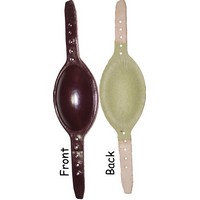
Now, here's where we reenactors get a little lucky. This specific reproduction leather chincup is made just a hair longer than the originals. "Heresy!" some purists might cry. But I say it’s a smart, practical improvement. Let’s be honest, most of us are a bit... larger than the 19-year-old draftees of 1944. That extra bit of length provides a more comfortable, secure fit without sacrificing the authentic look. It’s the best of both worlds—historical accuracy you can actually wear all weekend without wincing.

Getting the Impression Right: The Chincup in Reenacting

For anyone building a US Airborne impression from World War II, this isn't an optional accessory. It's the final piece of the puzzle that turns a standard M1 helmet into a proper paratrooper M1C or M2.

The Detail That Makes the Difference

It’s one of those small details that veteran reenactors and sharp-eyed members of the public will notice immediately. Seeing the A-yokes and the distinctive leather chincup instantly identifies your impression as airborne. It shows you’ve done your homework. It shows you care about getting it right, right down to the way your helmet is secured.

From Static Line to Public Display

Whether you’re a tactical reenactor who needs gear that performs under stress or a living historian setting up a static display, the quality of your components matters. A well-made chincup completes the look of the helmet on a display table and provides the security you need when you're on the move. It’s a piece that bridges the gap between looking the part and feeling the part.

The Legacy Strapped to Their Chin

The US Paratrooper helmet leather chincup is an unsung hero. It didn't fire any bullets or capture any bunkers. But for thousands of young men who plunged into the darkness over hostile territory, it was a small guarantee. A promise that the helmet on their head would be there when they landed. It represents the specialized, purpose-driven innovation of the airborne forces. It’s a testament to the idea that in warfare, even the smallest piece of gear can be the difference between failure and success. And that’s a piece of history worth holding onto.

Experience a piece of history for yourself! Check out our authentic reproduction of US Paratrooper Helmet Leather Chincup (Repro) | M1C / M2 here: Get Your US Paratrooper Helmet Leather Chincup (Repro) | M1C / M2

Sunday, 19 October 2025

Gammon Grenade (No. 82) Inert Replica

Uncover the story of the Gammon Grenade (No. 82), WWII's ingenious anti-tank weapon. A must-read for historians, collectors, and reenactors.

The Gammon Bomb: WWII’s Improvised Tank-Killer in Your Hands

There are some pieces of history you can feel just by looking at them. The sleek lines of a Spitfire, the brutalist form of a Tiger tank. And then there are others, the ones that don't give up their stories so easily. They’re unassuming, even a bit... odd. The British No. 82 Grenade, better known to the Tommies who depended on it as the "Gammon Bomb," is one of those.

Gammon Grenade (No. 82) Inert Replica

More Than Just a Grenade: The Story of an Unlikely Hero

Picture it. Normandy, 1944. You're a paratrooper, crouched in a ditch that smells of damp earth and fear. The rumble you've been dreading grows louder, shaking the very fillings in your teeth. It’s a German halftrack, clattering down the lane, its armor shrugging off small arms fire like rain. You don't have a PIAT. You don't have a bazooka. What you have is a canvas bag filled with plastic explosive, with a detonator screwed into the top. It feels less like a weapon and more like a desperate prayer. This was the world of the Gammon Grenade.

I remember an old veteran from the Parachute Regiment telling me once, his voice raspy with age, about the first time he held one. "Felt like a bloody bag of laundry, son," he'd said with a chuckle, "until you remembered what it could do. Then it felt like the weight of the world." That's the essence of the Gammon Bomb—a stitched-together ghost of battlefield necessity that packed an unbelievable punch.

A Closer Look at the No. 82 Grenade

"Bring Your Own Bang": The Design of the Gammon Bomb

Look at this Gammon Grenade (No. 82) Inert Replica and you’ll see an exercise in brutal simplicity. It wasn’t elegant—far from it. It was born from the mind of Captain R. S. Gammon of the 1st Parachute Regiment, who saw the need for a versatile, lightweight demolition and anti-tank weapon. The result was less a manufactured grenade and more of a kit.

The core of the weapon is a dark, khaki-colored canvas bag, stitched for durability, with a metal screw cap at the top. This is where the magic, and the terror, began. A soldier would be issued the bag and a detonator, the famous "All-Ways" fuse No. 247. The filling? That was up to him. He’d pack it with Plastic Explosive No. 75, also known as Nobel's 808. A small amount, maybe half a pound, and you had a potent anti-personnel grenade. Pack it to the brim with two full pounds of the stuff, and you had a tank-killer.

From Nuisance to Nightmare: How It Worked

The mechanism was as direct as the men who used it. The soldier would unscrew the cap, stuff in the required amount of plastic explosive, and screw the detonator in place. When the moment came, he'd pull the pin—a horrifyingly final sound—which released a weighted streamer of fabric. This wasn't for stability; it was to ensure the pin was fully clear of the detonator mechanism. You'd throw it, and upon impact from virtually any angle (hence the "All-Ways" fuse), it would detonate.

And it didn't just explode; it *erupted*. A full-charge Gammon Bomb was a shaped charge, focusing the concussive blast. It wouldn't necessarily punch a neat hole in a Panther's thick hide, but against armored cars, halftracks, or the vulnerable tracks and engine decks of bigger tanks? It was devastating. It was the bulldog of grenades: ugly, stubborn, and ferocious.

In the Thick of It: The Gammon Grenade in Action

A Paratrooper's Best Friend

Because of its light weight and incredible versatility, the Gammon Bomb became a signature weapon of Britain's elite airborne forces and special operations units like the SAS. When you're dropped behind enemy lines, every ounce of weight counts. A weapon that could serve as an anti-personnel grenade, a demolition charge for a bridge, or a last-ditch tank stopper was worth its weight in gold. Soldiers would often carry several empty bags and one container of explosive, tailoring their munitions to the mission on the ground. It was the ultimate expression of soldier ingenuity meeting military doctrine.

Eyewitness to History: Anecdotes from the Field

The stories from places like Arnhem and the deserts of North Africa are legendary. Men using Gammon Bombs to clear machine gun nests with terrifying efficiency. A single, well-placed throw disabling the tracks of a Panzer IV, leaving it vulnerable for the PIAT teams. It was a weapon that demanded courage. You couldn't lob this from 50 yards away. You had to be close, close enough to see the rivets on the armor, close enough to feel the heat from the engine. It was an intimate and brutal form of warfare.

From Battlefield to Collection: The Gammon Grenade for Reenactors

For the modern historian and reenactor, an item like this is more than just a prop. Holding a quality replica, feeling its heft and the rough texture of the canvas, connects you to those moments. When you're kitting out your impression of a British Para or a member of the Jedburgh teams, the details matter. Having a Gammon Grenade replica on your webbing isn't just about looking the part; it's about understanding the mindset of the soldier who carried it. It tells a story of a time when victory depended on cleverness and sheer grit.

A Legacy of Innovation

The Gammon Bomb was phased out after the war, replaced by more sophisticated and standardized anti-tank weaponry. But its legacy remains. It is a perfect symbol of the wartime spirit: a simple, effective, and deadly tool born from necessity. It stands as a tribute to the ingenuity of its designer and the raw courage of the men who wielded it in the darkest days of the 20th century. It’s a piece of history that deserves to be remembered, and understood.

Experience a piece of history for yourself! Check out our authentic reproduction of Gammon Grenade (No. 82) Inert Replica here: Get Your Gammon Grenade (No. 82) Inert Replica

Saturday, 18 October 2025

Hawkins Mine (No. 75) Inert Replica

Uncover the history of the versatile British Hawkins Mine No. 75. A deep dive into its design, use in WWII by US & UK forces, and its place in reenactment.

The Pocket-Sized Giant Killer: Unearthing the Story of the Hawkins Mine

There are some pieces of military kit that scream their purpose. A Sherman tank, a Browning machine gun… you know what they’re for the moment you see them. But then there are the quiet ones. The unassuming, brutally simple tools that did the dirty work without any of the fanfare. For me, nothing embodies that spirit more than the British No. 75 Grenade Mine, better known to history as the Hawkins Mine.

Hawkins Mine (No. 75) Inert Replica

I remember the first time I held a high-quality replica. I was at a Normandy-themed event, kitted out as a US Combat Engineer. A fellow reenactor, a chap who takes his impression very seriously, passed me his Hawkins Mine (No. 75) Inert Replica. I expected a lightweight prop. I was wrong. The sheer heft of it, the cold, gritty feel of the heavy-gauge steel in my palm… it felt *real*. It felt purposeful. In that moment, it wasn't just a piece of kit; it was a tangible link to the men who carried the genuine article onto the beaches and into the hedgerows of France.

More Than Just a Mine: The Ingenious Design of the No. 75

What makes the Hawkins so fascinating isn't complex engineering. It’s the absolute opposite. It’s a masterclass in wartime pragmatism. A simple, vicious solution to a very big problem: how to give a single soldier the power to stop a vehicle, or even a tank, without a dedicated anti-tank weapon.

Simplicity in Steel: What Made the Hawkins So Effective?

At its heart, the Hawkins Mine was little more than a thin steel case, a rectangular tin about the size of a field dressing, packed with about 2.5 pounds of high explosive. The genius was in its activation. On top, two chemical fuses, essentially glass ampoules filled with acid, were set under a pressure plate. When a vehicle's wheel or a tank's track rolled over it, the plate would crush the ampoules. The acid would then dissolve a retaining wire, releasing a striker to hit the detonator. Boom. A simple, effective, and utterly reliable mechanism that didn’t require complex springs or levers. It didn’t shout its presence; it waited.

A Triple Threat on the Battlefield

The true brilliance of the Hawkins was its versatility. It wasn't just a one-trick pony. This brutalist metal biscuit was a triple threat:

  • Anti-Tank Mine: Its primary role. Soldiers could quickly scatter them across a road to form a makeshift minefield, disabling trucks, half-tracks, and, if placed well, even blowing the track off a Panzer.
  • Demolition Charge: Need to blow a railway line or sabotage a piece of equipment? The Hawkins, with its timed pencil detonators, could be used as a simple demolition charge.
  • Anti-Tank Grenade: This is where it gets really interesting. A soldier could pull the pins, prime the detonators, and literally *throw* it under the tracks of a passing tank. It was a desperate, dangerous act, but it gave the infantryman a fighting chance against armor.

From British Ingenuity to American Gumption: The Hawkins Goes to War

Developed by the British in 1942, the No. 75 Mine quickly became a favorite of special forces. It was light enough to be carried in quantity and powerful enough to make a real difference. But its story doesn't end there. The US military saw the genius in its design and adopted it wholesale, where it served with distinction.

Airborne and Commandos: The First to Fight

Imagine this: It’s the dead of night, pre-dawn on June 6th, 1944. You're a paratrooper with the 82nd or 101st Airborne. You're deep behind enemy lines, your mission to secure bridges and causeways. In your pack, alongside your rifle and grenades, are two or three Hawkins mines. They are your pocket artillery, your best bet for stopping a German armored car from racing towards your objective. That was the reality for thousands of Allied soldiers. The Hawkins was the unsung workhorse of asymmetric warfare, giving small, isolated units a punch far above their weight.

D-Day's Unsung Hero: Paving the Way in Normandy

While the paratroopers used them for sabotage, US Combat Engineers used them for defense on the Normandy beaches. Once a foothold was secured, engineers would use Hawkins mines to create hasty defensive minefields, protecting the beachheads from German counter-attacks. They were laid in ditches, scattered on roads, and hidden in the rubble of shattered French villages—a rectangular chunk of concentrated defiance waiting for the enemy.

Holding History: The Reenactor's Perspective on the Hawkins Replica

For those of us dedicated to bringing history to life, authenticity is everything. It’s in the details. And having the right equipment isn't just about looking the part; it's about feeling it, understanding the weight and bulk of what the soldiers carried.

The Weight of Authenticity

This is why a museum-quality reproduction like this Hawkins Mine replica is so important. It’s not a cheap plastic toy. It’s made from heavy-gauge steel, giving it the correct weight and feel. When you slide it into a general-purpose ammo bag or strap it to your pack, you feel that heft. It changes how you move, how you carry yourself. It's a small detail, sure, but it adds an immeasurable layer of immersion to your impression.

Completing Your Impression

Whether you're portraying a British Commando, a US Paratrooper, or a Combat Engineer, the Hawkins Mine is a crucial, and often overlooked, piece of your kit. It tells a story of ingenuity, desperation, and the incredible versatility demanded of soldiers in the Second World War. It’s a piece that sparks conversations and adds a deep layer of historical accuracy to your display.

The Hawkins Mine never achieved the fame of the M1 Garand or the Thompson submachine gun. It was a quiet, deadly, and brutally effective tool that did its job and saved countless lives by stopping the enemy in their tracks. Holding a faithful replica in your hands is the closest many of us will get to understanding the feel of that responsibility. And that, to me, is what this hobby is all about.

Experience a piece of history for yourself! Check out our authentic reproduction of Hawkins Mine (No. 75) Inert Replica here: Get Your Hawkins Mine (No. 75) Inert Replica

Friday, 17 October 2025

US M1916 Hip Holster for M1911 (Reproduction) | Leather

Uncover the history of the iconic US M1916 Hip Holster for the M1911 pistol. A must-read for WWI & WWII historians and military reenactors.

More Than Just Leather: The Enduring Legacy of the US M1916 Holster

There are certain sounds, certain smells, that transport you. For me, it’s the stiff, rich scent of new cowhide mixed with the faint tang of gun oil. It’s the solid thunk of a .45 magazine seating home. It’s the particular groan of a leather belt taking the weight of a full canteen. You can have the most accurate M1 Garand or the perfect wool uniform, but without the right gear—the *feel* of history—you’re just playing dress-up.

US M1916 Hip Holster for M1911 (Reproduction) | Leather

And when it comes to the American GI, from the muddy fields of the Meuse-Argonne to the volcanic sands of Iwo Jima, few pieces of kit are more iconic, more fundamentally *American*, than the holster hanging off his right hip. We’re talking, of course, about the silent partner to John Browning's masterpiece: the venerable US M1916 Hip Holster.

An Icon Born from Necessity: The Genesis of the M1916

You can’t talk about the M1916 without first talking about the pistol it was built to carry: the M1911. When the U.S. Army adopted that legendary .45, they needed an equally robust way to carry it. The first attempt, the M1912, was… well, it was a start. It featured a nifty swivel design that, in theory, let the holster move with the wearer. In practice? It was floppy. It was noisy. And if you’ve ever tried to crawl through the underbrush with something clanking and swinging from your belt, you know that’s a one-way ticket to getting spotted.

The Ordnance Department went back to the drawing board. The solution, introduced in 1916, was a masterclass in functional simplicity. They ditched the clumsy swivel for a sturdy, integrated belt loop. The result was a holster that hugged the hip, secure and silent. A stubborn, beautiful piece of military design that just plain worked. It was ready for the Great War.

Deconstructing a Legend: What Makes the M1916 Holster Tick?

I remember the first time I got a really good repro M1916. The one I had before was, let's just be kind and call it "costume grade." But this new one... it felt real. It didn't just hold my sidearm; it completed the entire impression. That's what you get when the details are right.

The Feel of a Warrior's Grip

It all starts with the leather. This isn’t some flimsy, paper-thin material. A proper US M1916 Hip Holster for M1911 is crafted from top-grain cowhide. It’s thick. It’s stiff. You can feel the quality in its weight and the unyielding structure that’s meant to protect the pistol within. The stitching is heavy and deliberate, an echo of the arsenal workers who churned these out by the thousands, knowing each one might be headed for the front.

Form Follows Function

Every element of the M1916 has a purpose. The full-flap design wasn’t just for looks; it was a shield against the mud, rain, and grime of trench warfare. Nothing’s worse than reaching for your sidearm and finding it choked with dirt. The brass stud closure is simple and secure—no fumbling with complex snaps when your hands are cold or shaking. And that rawhide leg thong? That was for cavalry, sure, but infantrymen and paratroopers quickly learned its value in keeping the holster from flopping around during a dead sprint.

A Blank Canvas for History

Perhaps my favorite feature of a quality reproduction like this one is the undyed leather. An original M1916 didn't stay that light tan color for long. It absorbed everything: sweat, rain, saddle soap, Neatsfoot oil, and the grime of daily use. It darkened to a deep, rich russet or a dark mahogany, unique to its owner. This reproduction gives you that same opportunity. It’s a blank canvas waiting for your story, ready to develop a patina that reflects your time in the field.

From the Meuse-Argonne to the Pacific: A Holster for the Ages

The M1916 wasn't just a WWI holster. Its simple, rugged design was so effective that it remained the standard-issue holster through World War II and beyond. Think about that. A young lieutenant charging a German machine-gun nest in 1918 carried the same holster as a Marine sergeant hitting the beach on Guadalcanal in 1942. It was there with Patton's tankers in North Africa and with the Screaming Eagles in the frozen woods of Bastogne.

Even when newer, "improved" holster designs were introduced, many veteran GIs and officers—men who knew their lives depended on their gear—clung to their trusty old M1916s. It was familiar. It was reliable. It was an anchor to a specific moment in time, a piece of equipment that had already proven itself under fire.

Getting it Right: Why This Reproduction Hits the Mark

For a reenactor or a serious historian, authenticity is everything. We obsess over the weave of a fabric, the shade of a paint color, the shape of a buckle. The US M1916 Hip Holster for M1911 (Reproduction) understands this obsession. It nails the crucial details: the correct pattern, the heavy cowhide, the embossed "US" oval that is so instantly recognizable. It’s more than a prop; it’s a functional piece of historical equipment that honors the original design.

When you slide your M1911 into this holster, you hear that satisfying sigh of leather on steel. When you fasten that brass stud, you feel the security that a soldier felt a century ago. It’s this tactile connection to the past that elevates what we do from a hobby to a form of living history.

The Final Verdict: Carrying a Piece of History

The M1916 holster is more than a scabbard for a pistol. It's a symbol of American military history, a piece of gear that served faithfully across two world wars and countless smaller conflicts. It represents an era of design where durability and function were king.

Owning a quality reproduction isn't about owning a thing; it's about holding a story. It's about feeling the weight on your hip and understanding, in a small but profound way, what it might have been like to rely on that piece of leather and the steel it contained. It’s a tangible link to the past, and one that every enthusiast of the period should have.

Experience a piece of history for yourself! Check out our authentic reproduction of US M1916 Hip Holster for M1911 (Reproduction) | Leather here: Get Your US M1916 Hip Holster for M1911 (Reproduction) | Leather

Thursday, 16 October 2025

US M3 Shoulder Holster for .45 Auto Pistol

A deep dive into the history and design of the WWII US M3 Shoulder Holster. Learn why this iconic .45 holster was the choice for tankers, pilots, and paratroopers.

There are some pieces of gear that just scream "WWII." The M1 Garand, the "pineapple" grenade, the classic steel pot helmet. But then there are the unsung heroes. The gear that didn't just look the part, but solved a fundamental problem on the battlefield. Today, we're talking about one of my absolute favorites: the leather-and-brass solution to a steel-and-blood problem, the US M3 Shoulder Holster for the .45 Auto Pistol.

US M3 Shoulder Holster for .45 Auto Pistol

The Unsung Hero on Your Chest: A Deep Dive into the US M3 Shoulder Holster

Close your eyes for a second. Imagine you're the commander of a Sherman tank, buttoned up and rumbling across the Normandy hedgerows. The air is thick with the smell of diesel, hot steel, and nervous sweat. Space is a luxury you don't have. Every inch of the turret is packed with equipment, ammunition, and your crew. Now, imagine trying to draw a .45 pistol from a standard hip holster in that metal coffin. It's a clumsy, snag-prone nightmare. This, right here, is the problem the M3 holster was born to solve.

More Than Just Leather: The Genesis of the M3 Holster

Before 1942, if you were issued an M1911A1 pistol, you were likely issued an M1916 hip holster. A fine piece of kit for an infantryman on the march, but a disaster for anyone sitting down. Pilots couldn't access it in a cramped cockpit. Paratroopers found it snagged on everything during a jump. And as for our tanker friend? Forget about it. The Army needed something better, something faster, something that kept the .45 out of the way but always within reach.

A Problem of Space and Speed

The "Holster, Shoulder, M-3" was the elegant answer. Initially developed for the Army Air Forces, its genius was immediately apparent. By shifting the pistol from the hip to the torso, it freed up the user's waistline and put the weapon in a prime location for a quick, seated draw. It didn't take long for Armored Divisions and Airborne units to see the M3 and say, "I'll take one of those." It quickly became the iconic "tanker holster" or "pilot holster," a badge of honor for specialized troops.

Built for a Fight: Anatomy of a Classic

What I've always admired about wartime gear is its brutal simplicity. There are no frills, no unnecessary gadgets. Every stitch, every rivet has a purpose. The M3 is a perfect example.

Crafted from heavy, durable saddle leather, it was designed to withstand the abuse of a combat environment. The smell of that thick, oiled leather is a scent that transports you right back in time. The design is minimalist: a form-fitted holster pocket, a simple leather shoulder strap, and a chest strap to keep it from flopping around. The open-top design, secured by a simple snap strap, was all about speed. No cumbersome flaps to wrestle with when seconds counted. The satisfying *thump* of an M1911A1 seating into a well-made M3 is a sound every enthusiast should know.

In the Hands of Heroes: Who Carried the M3?

When you see an original photo of a GI wearing an M3, you know you're looking at someone at the sharp end of the spear. You see them slung over the shoulders of P-47 Thunderbolt pilots, their hands resting near the grip as they scan the skies over Germany. You see them on the chest of grizzled tank sergeants, peering from the cupola of their Sherman, the brass "U.S." embossed on the leather a small point of pride.

From Normandy to the Pacific: The M3 in Action

I remember my old drill sergeant, a man who'd forgotten more about gear than I'll ever know, talking about the "economy of motion." Every piece of kit had to have a purpose and couldn't get in the way. The M3 holster... now that's a masterclass in economy of motion. It didn't just carry a weapon; it carried confidence. For a paratrooper of the 101st Airborne, dropping behind enemy lines on D-Day, that holster meant his sidearm was secure during the jump and ready the moment his boots hit the ground. That's not just a piece of equipment; that's a lifeline.

The Reenactor's Choice: Why This Reproduction Hits the Mark

Now, let's talk about bringing this history to life. As a reenactor or a serious collector, authenticity is everything. You want gear that looks, feels, and functions like the real deal. That's where a high-quality reproduction like this US M3 Shoulder Holster comes in.

It's made from the correct heavy saddle leather, not the flimsy costume-grade stuff you see elsewhere. The stitching, the "U.S." stamp, the hardware—it's all spot-on. But here’s the best part, and it's a detail many reproductions miss: it's built for modern soldiers. Let's be honest, the average man today is a bit broader in the chest and shoulders than the average GI from 1944. This reproduction features a longer strap, ensuring a proper, comfortable fit without having to punch extra holes or strain the leather. It’s a small, thoughtful detail that makes a world of difference when you’re wearing it all weekend.

This isn't just a prop. It's a functional, durable piece of kit that completes your impression and honors the brilliant design of the original. It’s the kind of gear that makes you stand a little taller, the rhythmic creak of the leather against your fatigues a constant reminder of the history you're representing.

The US M3 shoulder holster is more than a museum piece; it's a piece of living history. It tells a story of innovation, practicality, and the American soldier's ability to adapt and overcome. It’s a testament to the idea that sometimes, the simplest solutions are the most effective, enduring long after the battle is over.

Experience a piece of history for yourself! Check out our authentic reproduction of US M3 Shoulder Holster for .45 Auto Pistol here: Get Your US M3 Shoulder Holster for .45 Auto Pistol

Wednesday, 15 October 2025

US Enlisted Trouser Belt (Repro) | Custom Size OD#3 Web

A deep dive into the history of the US Enlisted Trouser Belt of WWII. Discover why the M1937 belt in OD#3 is a crucial detail for any reenactor.

More Than Just a Belt: The Unsung Hero of the WWII GI's Uniform

You can smell it before you see it. That distinct aroma of damp wool, canvas, and old leather. It’s the scent of history. You pull on the scratchy M1937 wool trousers, the weight of them familiar and grounding. You’ve got the shirt, the boots, the field jacket. But the uniform isn’t complete. It feels loose, unfinished. Then you grab it—a simple strip of olive drab cotton with a plain, blackened metal buckle. You thread it through the loops, pull it snug, and hear that satisfying, solid click as the friction buckle bites down. Now, you’re ready. Now, the impression feels whole.

That simple piece of gear, the US Enlisted Trouser Belt (Repro) | Custom Size OD#3 Web, is more than just a way to hold your pants up. It’s the quiet anchor of the whole damn uniform. It's the punctuation mark on a sentence of authenticity.

US Enlisted Trouser Belt (Repro) | Custom Size OD#3 Web

First Impressions: Why the M1937 Trouser Belt Matters

In the world of historical reenacting, we obsess over the big things. The correct M1 Garand, the right helmet shell, the perfect pair of rough-out boots. And we should. But authenticity is a game of inches, built from a thousand tiny, correct details. The M-1937 Trouser Belt is one of those details that separates the rookies from the veterans.

Officially designated "Belt, Trouser, M-1937," this was the standard issue belt for nearly every enlisted man in the U.S. Army during World War II. It was designed to be worn with the service uniform's wool trousers. Simple, rugged, and mass-produced, it was a ubiquitous piece of equipment. From the training fields of Fort Benning to the bloody sands of Omaha Beach and the frozen forests of the Ardennes, this belt was there. It was a silent witness to history, a humble workhorse that did its job without fanfare.

Getting the Details Right: The Soul of Authenticity

It's a small thing, right? A belt is a belt. But that's where you'd be wrong. The devil, as they say, is in the details, and for a WWII impression, the details on this belt are crucial.

The Perfect Shade: What is "OD #3"?

Let's talk color. The reproduction we're looking at is made from correct OD #3 webbing. What does that mean? OD #3, or Olive Drab shade number 3, was the standard color for a lot of early to mid-war web gear. It’s a distinct, almost khaki-tan color with a hint of green. It's not the darker, greener OD #7 that became common later in the war. Using an OD #7 belt with an early-war (think North Africa or Sicily) impression is a common, glaring mistake. Getting that OD #3 shade right instantly adds a layer of historical accuracy that seasoned reenactors will notice and appreciate.

The Feel of History: Webbing and Hardware

Then there’s the material itself. This isn’t some flimsy nylon knock-off. It's woven cotton webbing, just like the originals. It has a certain stiffness and texture that feels correct in your hands. The buckle is another key point. A simple, open-faced frame buckle, usually blackened brass or steel, designed for pure function. No flash, no frills. It was meant to be durable, easy to adjust with cold or wet fingers, and, most importantly, cheap to produce by the millions. This high-quality reproduction nails that feel, from the weave of the web to the finish on the buckle.

A Story Woven in Cotton: The Belt in the Field

I remember my first public event, years and years ago. I was nervous, my kit felt strange and new. An old gentleman, walking with a cane, stopped at our 29th Infantry Division display. He was quiet, his eyes scanning everything with a knowing gaze that made my palms sweat. He didn't look at the rifles or the helmets first. He pointed a shaky finger right at my buddy’s waist. "Now that's the right color," he rasped, his voice thick with age. "We weren't all dark green, you know. I remember that khaki color. Held up my damn pants from Normandy all the way to the Elbe."

That moment stuck with me. This simple belt wasn’t just a piece of gear; it was a connection. It was a tangible piece of that veteran's memory. It did more than hold up his trousers. It carried the weight of his C-rations, his canteen when he wasn't wearing his pistol belt, and maybe even a tucked-away letter from home. It was part of the fabric of his daily life in the most extraordinary of circumstances.

From Normandy to Your Wardrobe: The Modern Reenactor's Choice

For us today, this belt is the foundation of a correct impression. And getting the fit right is just as important as the color. That's why a custom-sized belt is such a game-changer. The original Quartermaster specifications were precise. This isn't a one-size-fits-all affair. A proper US Enlisted Trouser Belt should have a specific amount of "tail" after it's been buckled. Ordering one cut specifically to your waist size, with that extra length built-in, is another one of those small details that adds up to a big difference in presentation.

The Foundation of Your Impression

So, as you build your kit, don't overlook the small stuff. The M-1937 Trouser Belt is more than an accessory. It's a fundamental component of the enlisted man’s uniform, a piece with a rich history of service and sacrifice. Choosing a faithful reproduction, with the correct OD #3 webbing, proper hardware, and a custom fit, shows a commitment to honoring the men who wore them first. It’s the starting point, the unsung hero that, quite literally, holds the entire impression together.

Experience a piece of history for yourself! Check out our authentic reproduction of US Enlisted Trouser Belt (Repro) | Custom Size OD#3 Web here: Get Your US Enlisted Trouser Belt (Repro) | Custom Size OD#3 Web

US WAC Officer Collar Insignia (Pair) | Post-WWII Production

Discover the history and symbolism of the US WAC Officer Collar Insignia. A must-read for WWII reenactors and military history enthusiasts....