The 'Mae West': More Than Just a Life Vest for WWII's Sky Soldiers
The air inside the C-47 is thick. It’s a cocktail of sweat, oil, and the gut-wrenching tang of fear. You’re packed in, shoulder to shoulder with the rest of the stick, a chaotic jumble of web gear, rifles, and grim-faced young men. Underneath your T-5 parachute harness, pressing uncomfortably into your ribs, is a bulky, canvas-like slab of yellow fabric. It feels awkward. It feels cumbersome. But that slab of canary-yellow hope, the US B-3 'Mae West' Life Preserver, might just be the one thing that saves your life when the green light flashes.
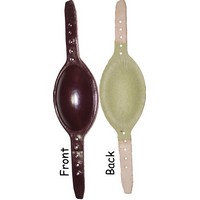
I’ve suited up for reenactments more times than I can count, and let me tell you, getting the gear right is everything. It’s not about playing soldier; it’s about honoring them. And I remember the first time I wrestled with a reproduction B-3, trying to get it to sit right under my harness. I felt the weight, the bulk, and for a second, I connected with those boys from the 82nd and 101st. You realize, in a very real way, that this wasn't just a piece of kit. It was a lifeline.
From the B-17 to the C-47: The Birth of the B-3 Life Preserver
Before it ever found its way into a paratrooper’s C-47 Skytrain, the B-3 was born out of necessity for the flyboys of the Army Air Forces (AAF). Imagine being a ball turret gunner in a B-17, five miles high over Germany. The flak is bursting around you like angry black clouds. If you have to bail out, your problems are only just beginning. Below you lies either enemy territory or, just as often, the frigid, unforgiving waters of the North Sea or the English Channel.
The B-3 Life Preserver was the answer. A simple, rugged vest made from rubberized canvas, it was designed to be worn over the flight suit. It wasn't meant for comfort. It was meant for survival. The original design was brilliantly simple, featuring two separate air bladders that could be inflated by a pair of CO2 cartridges. A sharp tug on the beaded handles, and… *whoosh*. Instant buoyancy. It was your last, best friend over the unforgiving gray of the Channel.
A Nickname that Stuck
Of course, GIs have a knack for nicknames, and the B-3's was a classic. When fully inflated, the vest’s two prominent lobes gave the wearer a rather… shall we say, *exaggerated* chest. It didn’t take long for some wisecracking airman to compare the look to the famously curvy Hollywood starlet of the era, Mae West. The name stuck. It was irreverent, a bit of gallows humor in the face of death, and it became as much a part of the gear's identity as its bright yellow color. This wasn't just a piece of military equipment; it was the "Mae West."
Anatomy of a Lifesaver: What Made the B-3 Tick
What makes a piece of historical gear truly fascinating are the details. The original B-3 wasn't just a bag of air. It was a well-thought-out piece of survival engineering, especially for its time.
The Bright Yellow Beacon
The color wasn't a fashion statement. That distinct "canary yellow" was chosen for one reason and one reason only: visibility. In the churning, gray waves of the Atlantic, a downed airman was a needle in a haystack. The bright yellow of an inflated Mae West life vest could mean the difference between being spotted by a rescue plane and being lost to the depths forever. It was a beacon of hope in a world of gray.
Inflation and Operation (The Real Deal)
The primary inflation method was the twin CO2 cartridges. But what if they failed? Or what if you needed to top off the pressure? The designers thought of that. Each bladder was also fitted with an oral inflation tube, allowing a downed airman to literally breathe life back into his vest. It’s these small, practical details that separated well-designed WWII paratrooper gear from the rest.
A Paratrooper's Unlikely Companion
So how did a pilot's life preserver end up strapped to an airborne infantryman jumping into Normandy? Simple geography. The massive airborne assault on D-Day, Operation Neptune, required thousands of paratroopers to fly over the English Channel. If their C-47 was shot down, or if they were dropped off-target into one of the many rivers or intentionally flooded fields in the Norman countryside, the result was the same: a water landing.
Over Water, Into France
A paratrooper in 1944 was a walking arsenal, laden with a rifle, ammunition, grenades, a parachute, a reserve chute, and countless other items. We're talking 80-100 pounds of extra weight. In water, that's a death sentence. The B-3 "Mae West" was issued as a desperate countermeasure. Some troopers, savvy to the violent turbulence of the C-47s, would even partially inflate their vests before the jump, not for buoyancy, but for a little extra padding against the fuselage during the chaotic flight.
The Weight of Authenticity in Reenacting
For those of us who strive to create an accurate impression, the B-3 Life Preserver is a non-negotiable piece of the D-Day paratrooper kit. It tells a specific story of a specific moment in time. This isn’t just any piece of WW2 reenactment gear; it’s a symbol of the unique dangers faced by the men of the 82nd and 101st Airborne on June 6th, 1944. An accurate reproduction, like the museum-quality piece offered here, captures the look, the feel, and the presence of the original. It’s a non-functioning display piece, of course, but for a historical impression, that’s exactly what you need. It completes the silhouette and honors the history.
Owning a Piece of Airborne Legend
The B-3 'Mae West' Life Preserver is more than just stitches and fabric. It’s a tangible link to the bomber crews who fought in the skies over Europe and the paratroopers who dropped into darkness to liberate a continent. It’s a story of ingenuity, a dash of GI humor, and a desperate grasp for survival against overwhelming odds.
Adding a high-quality reproduction to your collection or reenactment kit isn’t just about getting the details right. It’s about holding a piece of that story in your hands and ensuring that the legacy of those brave sky soldiers is never, ever forgotten.


No comments:
Post a Comment