Step into History: The Story of the US M1943 Two-Buckle Boots
There’s a certain feeling you get when you handle a piece of history. A weight. A story. And if you ask me, few items tell a story as potent as a good pair of combat boots. I’m talking about the ones that carried a generation through the mud of Europe, the boots that stood firm in the frozen hell of the Ardennes. I’m talking about the unsung hero of the late-war infantryman’s kit: the US M1943 Two-Buckle Boot.
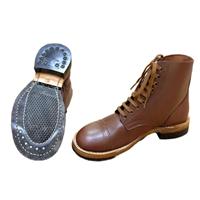
Before these came along, the American GI was stuck with a system that was, to put it mildly, a pain in the neck. Or rather, a pain in the ankle. You had your low-quarter Service Shoe and a separate pair of canvas leggings. Getting them on was a fiddly, time-consuming process of hooks and laces. In the wet, they were miserable. In the cold, they were a liability. The Army knew it needed something better. What it came up with was a revolution in leather and brass.
From Clumsy Leggings to Combat-Ready: The Birth of a Legend
The M1943 boot was part of the larger M-1943 Uniform Ensemble, a complete overhaul of GI field gear designed for maximum versatility. The goal was a single, layered system that could take a soldier from a Normandy summer to a Bavarian winter. And the footwear was the foundation of it all.
The Problem with the Old System
Let's be honest, the old shoe-and-legging combo was a holdover from a different era of warfare. It looked sharp on the parade ground, sure, but in the hedgerows and forests of France? Not so much. The canvas leggings offered minimal protection, got soaked instantly, and the gap between legging and shoe was a perfect entry point for mud, water, and snow. For an army that marched on its feet, this was a critical flaw.
A Unified Solution: The M-1943 Combat Service Boot
The M43, officially the "Boot, Service, Combat, Composition Sole," was the answer. It combined the shoe and the legging into a single, integrated piece of footwear. It was taller, more robust, and infinitely more practical. They weren't just a replacement for the old system—well, they were, but they were so much more. They were a statement of intent, a piece of modern military engineering designed for a modern war.
Anatomy of a War-Winning Boot
What made the M1943 boot so special? It’s all in the details. The designers at the Quartermaster Corps weren't just thinking about looks; they were thinking about survival.
Roughout Leather and Unrelenting Durability
The first thing you notice is the texture. The boot was constructed from "roughout" leather, meaning the flesh-side of the hide faced outwards. This wasn't a fashion choice. The rough texture held waterproofing dubbin far better than smooth leather. And for the grunt in the field, it meant one less thing to polish. The rasping sound of that leather against brush became a familiar sound on the march to Berlin. It was tough, it was practical, and it was built to take an incredible amount of punishment.
The Iconic Two-Buckle Cuff
And then there are the buckles. That integrated leather cuff, fastened by two distinctive straps, is the boot's signature feature. It provided excellent ankle support and, crucially, created a much better seal against the elements than the old leggings ever could. I remember the first time I strapped into a high-quality reproduction pair for a winter reenactment. The satisfying clink and snap of those buckles felt... definitive. It felt secure. It was a small thing, but in the field, those small things are everything.
"These Boots Were Made for Marching": The M43 in Action
The M1943 Two-Buckle Boots began to see wide issue in the fall of 1944, just in time for some of the most brutal fighting of the war in Europe.
From the Hürtgen Forest to the Rhine
These were the boots that slogged through the bloody Hürtgen Forest. They are the boots you see in nearly every iconic photo from the Battle of the Bulge, caked in snow and frozen mud. They crossed the Rhine River and pushed into the heart of Germany. For the GIs of the 101st Airborne at Bastogne, holding the line in sub-zero temperatures, a dry pair of socks and these sturdy boots were as vital as a rifle and ammunition.
A Soldier's Perspective: More Than Just Footwear
For the men who wore them, these boots were a lifeline. In a war where trench foot could take a soldier out of action as surely as a bullet, reliable footwear was paramount. The M43 wasn't perfect—in the extreme cold of the Bulge, a better-insulated boot was desperately needed—but it was a quantum leap forward. It was more than just footwear; it was a promise from the Army that it was trying to give its men the best gear possible to survive and win.
Getting it Right: The Reenactor's Choice
For those of us who strive to honor these men by recreating their history, authenticity is everything. Your impression is built from the ground up, and that starts, quite literally, with your boots.
Why Authenticity Matters in Your Impression
Wearing the wrong footwear doesn't just look wrong; it feels wrong. It disconnects you from the experience. The weight, the feel of the leather, the way the buckles fasten—it all contributes to understanding, in some small way, what the GI went through. A quality reproduction isn't just a costume piece; it's a tool for historical interpretation.
A Look at a Top-Tier Reproduction
That's why a product like this all-leather reproduction from SM Wholesale is so important. They’ve captured the critical details: the correct roughout leather, the proper pattern, the sturdy buckles. When you pull these on, you feel the history. You get a sense of the rugged, no-nonsense design that made them so effective.
A Legacy Forged in Mud and Steel
The US M1943 Two-Buckle Boot is more than just an artifact. It's a symbol of American resolve and ingenuity during the final, decisive year of the war in Europe. It represents a critical shift in military thinking, prioritizing the soldier's performance and survivability over parade-ground spit-and-polish. It walked a long, hard road to victory, and its legacy endures today, on the feet of dedicated reenactors who keep the story of the American GI alive.


No comments:
Post a Comment