Sunday, 15 February 2026

UK Windproof Camouflage Trousers

Uncover the history of the legendary UK Windproof Camouflage Trousers. From the WWII SAS to French forces in Indochina, this is the story behind the uniform.

There's a certain feeling you get when you handle a piece of history. A weight. Not just the physical heft of the material, but the weight of the stories woven into its very fabric. I remember an old veteran, a former SAS trooper I met at a show once. His eyes, even then, held a glint of the old fire. He touched a pair of trousers just like these on a display table and said, with a quiet reverence, "These got me home." That's a feeling you can't get from a textbook.

And that's precisely the feeling you get with the UK Windproof Camouflage Trousers. This isn't just surplus gear; it's a canvas tapestry of war, a ghost's whisper from the hedgerows of Normandy and the sweltering jungles of Indochina.

More Than Just Trousers: The Legendary UK Windproof Camouflage Trousers of the SAS

UK Windproof Camouflage Trousers

Ghosts in the Brush: The Birth of a Legendary Garment

Picture it. A damp, moonless night in occupied France, 1944. A small team of men, phantoms in the dark, move silently through the undergrowth. They are not wearing the standard khaki battledress of the British Tommy. No. They are clad in something different, something that breaks up their silhouette, merging them with the dappled shadows of the forest. They are the men of the Special Air Service, and their uniform is a weapon in itself.

The UK Windproof Camouflage set, which included these iconic trousers and the more famous Denison Smock, was developed specifically for these elite units. Standard uniforms simply wouldn't do for men whose survival depended on stealth and surprise. They needed something that could defeat the keenest sentry's eye.

From Normandy to the Jungle

Originally issued to British Commandos and airborne forces, the windproofs truly found their calling with the SAS. They were worn during daring behind-the-lines raids in North Africa, parachuted into France ahead of D-Day, and fought through the brutal campaigns in Italy and Northwest Europe. These weren't parade-ground trousers; they were the working clothes of the world's most formidable special forces, stained with the mud, sweat, and grit of clandestine warfare.

Deconstructing a Classic: What Made These Trousers So Special?

So, what was it about these overtrousers that made them so effective? It wasn't just one thing, but a combination of brilliant, practical design choices.

The "Brushstroke" Camouflage

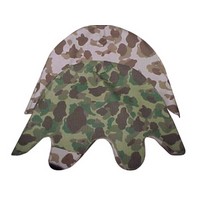
First, and most obviously, is the pattern. Officially known as the 1942 Pattern, it’s more affectionately called "brushstroke" for its distinctive, hand-painted look. Unlike the neat, stenciled patterns of other nations, the British design was a chaotic, artistic swirl of earthy greens and browns over a khaki-tan base. It was revolutionary. It didn't just try to mimic a leaf; it tried to mimic the *effect* of light and shadow, utterly disrupting the human form. It was a masterpiece of concealment, turning a soldier into a piece of the landscape.

Built for the Mission: Fabric and Functionality

The material itself was a tightly woven cotton gabardine. It was tough as nails, capable of shrugging off thorns and scrapes, yet relatively lightweight. As the name implies, its primary job was to cut the wind, a crucial feature for paratroopers descending at speed or for men lying in ambush for hours on a cold, windswept hill. While not fully waterproof, it would repel a light shower, keeping the wearer's battledress beneath it drier for longer.

Functionality was paramount. You'll find large, simple pockets for easy access with gloved hands, and reinforcing where it's needed most. These were tools, not fashion. They were made to endure the unendurable.

A Legacy Forged in Fire: Beyond WWII

The story of these famous windproof camouflage overtrousers doesn't end in 1945. Their effectiveness was so undeniable that their legacy continued, most notably in a place very different from the fields of Europe.

The French Connection: Indochina

In the post-war years, surplus British equipment found its way across the globe. The French, embroiled in the brutal First Indochina War, were quick to adopt them for their own elite airborne units (Troupes Aéroportées). The British brushstroke pattern proved just as effective in the dense, suffocating jungles and rice paddies of Vietnam as it had in the bocage of Normandy. For a time, the sight of this unique camouflage was the signature of the battle-hardened French Paras, a testament to the design's enduring brilliance.

Stepping into History: The Reenactor's Perspective

For those of us who strive to bring history to life, details are everything. And one of the most crucial, and often misunderstood, details of these trousers is the fit. It's not a mistake; it's a feature.

Getting the Fit Right: That "Oversize" Detail

These are overtrousers. They were designed to be worn over the thick wool Battledress trousers. That's why this excellent reproduction is made 8" oversize. This is absolutely correct. The loose, baggy fit was intentional. It allowed for complete freedom of movement—crawling, climbing, running—without binding. Crucially, it also trapped a layer of air between the windproofs and the uniform, providing surprisingly effective insulation.

When you put them on, they shouldn't feel like modern trousers. They should feel roomy, utilitarian. You should feel ready to load into a C-47, the rough canvas rustling with every move, the smell of the fabric mixing with the anticipation in the air. That's authenticity.

The Echo of History in Every Stitch

More than mere cloth and thread, the UK Windproof Camouflage Trousers represent a pivotal moment in military history. They are a symbol of innovation, born from the desperate needs of clandestine warfare. They carry the legacy of the shadowy figures of the SAS and the leather-tough paratroopers of two different nations, fighting in two very different, but equally unforgiving, wars.

To wear a pair is to connect with that legacy. It's to understand that for the men who wore them originally, these trousers weren't just part of a uniform. They were a promise of survival. They were the ticket home.

Experience a piece of history for yourself! Check out our authentic reproduction of UK Windproof Camouflage Trousers here: Get Your UK Windproof Camouflage Trousers

Friday, 13 February 2026

UK 2nd Pattern Denison Smock

1. **Analyze the product:** * Key features: Reproduction, 2nd Pattern, heavy twill fabric, genuine wool collar, wool knits, button tab cuffs. * Historical details: It's the "2nd Pattern," which implies an earlier version and a specific evolution. The materials (heavy twill, genuine wool) are noted for their authenticity, which is a major selling point. Button tab cuffs were often a modification preferred by officers over the standard knitted cuffs. * Unique selling points: The high level of authenticity in materials ("genuine wool collar," "heavy twill like the originals"). The focus on the 2nd Pattern specifically targets knowledgeable enthusiasts and reenactors who care about period accuracy for events like Operation Market Garden. 2. **Keyword research:** * Primary keywords: UK 2nd Pattern Denison Smock, Denison Smock, British Paratrooper Smock. * Secondary keywords: WWII British Airborne uniform, Operation Market Garden gear, Red Devils smock, reenactment smock, Arnhem uniform. 3. **Persona development:** * Persona 1: Major Alistair Finch (Ret.). Gruff, practical, focuses on the garment's battlefield utility. Tone is very direct and technical. * Persona 2: Dr. Eleanor Vance, Historian. Academic, precise, focuses on manufacturing variations, supply chain, and design evolution. Tone is highly informative but potentially dry. * Persona 3: James "Jim" Callahan, veteran reenactor and amateur historian. Passionate, experienced, and able to blend historical facts with the tangible experience of wearing the gear. He speaks to fellow enthusiasts with a shared understanding and excitement. * Chosen Persona: James "Jim" Callahan. His voice is perfect for this audience. It allows for a balance of historical detail, personal reflection, and a genuine passion that will resonate with reenactors and collectors on a website selling this equipment. 4. **Blog structure:** * H1: The Denison Smock: Wearing the Legacy of the Red Devils * H2: More Than a Jacket: The Birth of an Airborne Icon * H3: The First Draft: Understanding the 1st Pattern * H3: Perfecting the Design: The 2nd Pattern Takes Flight * H2: Woven from History: A Hands-On Look at the 2nd Pattern * H3: The Famous "Brushstroke" Camouflage * H3: Features Forged in Combat * H2: Echoes of Arnhem: The Smock in Action * H2: The Reenactor's Responsibility: Getting It Right * H3: Why This Reproduction Stands Out * H2: A Wearable Piece of History 5. **Content ideas:** * Angles: 1. Focus on the evolution from the 1st to 2nd pattern, explaining the "why" behind the changes. 2. Tell the story of the smock through its most famous engagement: Operation Market Garden. 3. Combine both: Detail the evolution and then ground it in the reality of its use at Arnhem, making the historical details more poignant. * Interesting facts/anecdotes: 1. The origin of the name from its designer, Major Denison. 2. The "beaver tail" flap, designed to keep the smock from riding up during a parachute jump. A classic, must-mention feature. 3. The original camo was hand-painted, meaning each of the first smocks was unique. 4. Officers often had their smocks privately tailored, replacing the knit cuffs with button tabs for a neater appearance—a detail relevant to this specific reproduction. * Introduction: Start with an evocative, sensory description of putting on the smock for the first time, setting a personal and immersive tone. * Conclusion: Summarize the smock not just as a piece of clothing, but as a symbol of the elite British Airborne forces and their enduring legacy. 6. **Human-like writing elements:** * Sensory details: The hefty weight of the twill, the distinct smell of canvas and wool, the scratch of the collar on your neck, the muted sound of rain on the dense fabric. * Fabricated memory: "I'll never forget the first time I handled a real, wartime-issue Denison. The weight of it, the faint smell of history... it felt less like a garment and more like a relic. Putting on a high-quality reproduction like this one brings a sliver of that feeling back." * Creative phrases: "a chaotic masterpiece of concealment," "woven from equal parts twill and tenacity," "the ghost of a tailor's needle," "more than a uniform, it’s a statement." * Natural imperfections: "And that's the thing, isn't it?", "Look, let's be honest...", "It's a small thing, I know, but for us in the hobby..." Discover the history of the iconic UK 2nd Pattern Denison Smock. Learn about the legendary British Airborne jacket worn at Arnhem and why it's a must-have for reenactors.

The Denison Smock: Wearing the Legacy of the Red Devils

There are certain pieces of military kit that transcend their function. They become symbols. The German Stahlhelm, the American M1 pot, and for the British Airborne, the undeniable icon is the Denison Smock. I remember the first time I held an original. The sheer weight of the heavy twill, the faint, musty smell of history clinging to the fibers—it felt less like a piece of clothing and more like a tangible link to the past. It felt like a responsibility.

UK 2nd Pattern Denison Smock

More Than a Jacket: The Birth of an Airborne Icon

Before you can appreciate the magnificent UK 2nd Pattern Denison Smock, you have to understand where it came from. In the early days of Britain’s airborne forces, the War Office realized these new parachute troops needed something special. Standard Battle Dress was too restrictive and lacked any form of camouflage. The task fell to one Major Denison, whose design would etch his name into military history.

The First Draft: Understanding the 1st Pattern

The first iteration, the 1st Pattern Denison, introduced in 1942, was a game-changer. It was a loose-fitting, pullover garment made of heavy-duty cotton twill. Its most defining feature was the wild, hand-painted camouflage pattern of broad, earthy-toned brushstrokes. No two were exactly alike. It featured a full-length zip, wool-knit cuffs, and the now-famous "beaver tail"—a fabric flap at the back that passed between the legs and fastened to the front, preventing the smock from riding up into a paratrooper's armpits during a jump. It was revolutionary, but like any first draft, it had room for improvement.

Perfecting the Design: The 2nd Pattern Takes Flight

Enter the 2nd Pattern Denison Smock. This is the version that truly defined the British paratrooper from Normandy to the Rhine. Introduced in 1944, it refined the original design based on hard-won experience. The full-length zip, which could be cumbersome and prone to failure, was replaced with a more robust half-zip. The camouflage was now screen-printed for uniformity, though it retained its iconic "brushstroke" look. But one of the most significant changes was at the cuffs. While standard-issue smocks kept the wool knits, it became common for soldiers, particularly officers, to have them tailored with adjustable button tabs for a smarter, more practical fit. It’s these small, soldier-driven modifications that breathe so much life into the history of a garment.

Woven from History: A Hands-On Look at the 2nd Pattern

When we look at a quality reproduction, we’re looking for those very details. It's not just about the look; it's about the feel, the weight, the authenticity that connects us to the men who originally wore them. And that's the thing, isn't it? Authenticity is everything.

The Famous "Brushstroke" Camouflage

The pattern is a chaotic masterpiece of concealment. A base of sandy khaki over-painted with broad strokes of reddish-brown and dark green. It was designed to break up the human silhouette, and it did so brilliantly in the shattered landscapes and dense woodlands of Northwest Europe. It wasn't pixel-perfect like modern camo; it was art born of necessity.

Features Forged in Combat

Every element of the Denison tells a story. The four large pockets on the front weren't for your keys; they were for grenades, maps, and extra magazines. The loose cut wasn't just for comfort—it was designed to be worn over the thick wool Battle Dress, creating a layered system. And that genuine wool collar on this reproduction? It's not just a detail. Imagine the raw scrape of a rifle sling and heavy webbing against your neck during a long march. That small touch of wool was a concession to comfort in a world of harsh utility.

Echoes of Arnhem: The Smock in Action

You cannot talk about the 2nd Pattern Denison Smock without talking about Operation Market Garden. It was at Arnhem where the smock was cemented in legend. The images of the 1st Airborne Division—the "Red Devils"—fighting tenaciously against impossible odds are synonymous with this garment. In the woods around the Oosterbeek perimeter, amidst the rubble of the town, the brushstroke pattern became the uniform of heroism. When you see footage from that "bridge too far," the Denison is everywhere. It is the symbol of that savage, valiant fight.

The Reenactor's Responsibility: Getting It Right

For those of us in the reenactment community, wearing this smock is a privilege. We are, in a small way, custodians of the memory of these soldiers. That's why getting the details right is not just obsessive nitpicking; it's a form of respect. The weight of the fabric matters. The color of the knit wool matters. The presence of button-tab cuffs, a common field and officer modification, matters.

Why This Reproduction Stands Out

Look, let's be honest, there are a lot of smocks out there. But when you find one made from the correct heavy twill, one that has the heft and feel of an original, you know it. This reproduction of the 2nd Pattern Denison Smock gets those crucial details spot on. The genuine wool collar, the correct pattern, the button tabs—it all comes together to create a piece that doesn't just look the part, it feels the part. It's the difference between a costume and a piece of historical equipment.

A Wearable Piece of History

The Denison Smock is more than just a rare and collectible item. It is a direct link to the courage of a unique fighting force. It represents innovation born from the new challenges of airborne warfare. From the drop zones of Normandy to the brutal house-to-house fighting in the Netherlands, this smock was there. It protected soldiers from the elements, helped conceal them from the enemy, and became the enduring symbol of the British Airborne. Owning a faithful reproduction is the closest many of us will ever get to touching that incredible legacy.

Experience a piece of history for yourself! Check out our authentic reproduction of UK 2nd Pattern Denison Smock here: Get Your UK 2nd Pattern Denison Smock

Thursday, 12 February 2026

UK Windproof Camouflage Smock

Uncover the history of the iconic WWII UK Windproof Camouflage Smock. Learn why this SAS favorite is a legend among military reenactors and historians alike.

More Than Just a Jacket: The Legendary WWII UK Windproof Camouflage Smock

I can still feel it. The raw bite of a November wind whipping across a mock-battlefield in the Peak District. The kind of cold that seeps right into your bones. I was huddled behind a dry-stone wall, my wool battledress doing its best, but the wind was winning. Then I pulled the hood of my windproof smock up, tightened the drawstrings, and suddenly… silence. The gale was reduced to a whisper against the fabric. In that moment, hunched in the damp English countryside, I felt a flicker of connection, a tangible link to the men who wore these for real eighty years ago. This garment isn't just a piece of kit; it's a time machine made of tough, wind-resistant cotton.

UK Windproof Camouflage Smock

From the Moors to the Maquis: Birth of an Icon

The story of the British Windproof Camouflage Smock is a tale of necessity. As Britain's special forces began to take shape in the crucible of WWII, they needed gear that was a cut above the standard issue. They needed clothing that would allow them to operate deep behind enemy lines, unseen, unheard, and protected from the elements. This smock was born from that need, a direct descendant of the hardy garments worn by pre-war mountaineers and arctic explorers.

Not Quite a Denison, But Just as Deadly

Now, let's clear something up right away, because we history buffs love our details, don't we? Many people see this style and immediately think "Denison Smock." And while they're cousins, they aren't twins. The Denison was the padded, heavy-duty smock designed for the Parachute Regiment, intended to be worn over their equipment during a jump. The Windproof Smock, on the other hand, was a lighter, unpadded over-garment. It was designed for stealth, mobility, and—as the name brilliantly suggests—keeping the wind at bay. Think of it as the leaner, meaner sibling, purpose-built for the shadowy world of commandos, the SAS, and the SOE.

Designed for the Phantom Soldier

The smock’s generous cut was a stroke of genius. It was designed to be worn over the standard wool battledress, creating an air-trapping layer for insulation while allowing for complete freedom of movement. A soldier could crawl, climb, and run without being constricted. It was, in essence, the sartorial ghost of the hedgerows, a piece of clothing that let a man melt into his environment while doing a dirty job.

A Closer Look: The Anatomy of a Classic

When you get your hands on a quality reproduction like the UK Windproof Camouflage Smock, you're not just holding a jacket. You're holding a piece of tactical design history. Every stitch and feature had a purpose.

The 'Brushstroke' Camouflage: Art Meets Warfare

Let's talk about that pattern. It’s iconic. The broad, hand-painted-looking 'brushstrokes' of earthy green and brown over a khaki base were revolutionary for their time. Unlike the sharp, geometric patterns of other nations, this camouflage was organic, chaotic, and incredibly effective at breaking up the human silhouette in the woodlands and fields of Northern Europe. The original patterns were actually hand-painted onto the fabric screens, meaning no two runs were ever truly identical. It was a pattern with the DNA of daring stitched right into it.

Pockets, Pouches, and Practicality

Look at this thing. It's a symphony of pockets. Two large, bellowed chest pockets, big enough to swallow maps, compasses, escape rations, and all the other small necessities for a mission where resupply wasn't an option. The simple button closures were chosen for a reason—they're quiet. No zippers to snag or make a racket when you're trying to sneak up on a sentry. Everything about it screams utilitarian elegance. The integrated hood, the simple drawstring waist… it’s all there for a reason, and not an ounce of fluff.

In the Field: Tales of the SAS Windproof Smock

This smock truly earned its reputation in the hands of legends. When you see photos of SAS jeep patrols kicking up dust in the desert or operatives linking up with French Resistance fighters, this is the garment you see.

Behind Enemy Lines in France

Imagine this: It’s 1944. You've been dropped into occupied France. For weeks, your world is the forest. You live off the land and what the Maquis can provide. Your only protection from the elements, the only thing helping you blend into the undergrowth as a German patrol passes mere yards away, is this thin layer of printed cotton. It became more than a uniform; it was a second skin for these men, a symbol of their unique and dangerous trade.

A Badge of Honour

For the men of the SAS and other special units, the Windproof Smock became an unofficial badge of honour. It set them apart from the regular PBI (Poor Bloody Infantry). It signified a man who operated on the razor's edge, a volunteer for the most hazardous duties. They would modify them, repair them, and wear them until they were faded and falling apart. Each tear and stain told a story.

Bringing History to Life: The Smock in Modern Reenactment

For those of us in the reenactment community, items like this are our connection to the past. It's one thing to read about history; it's another to feel the crisp rustle of the fabric, to load the pockets with your period-correct kit, and to stand on a cold morning feeling the same protection they did.

Getting the Details Right

A good reproduction captures the essence of the original. It's about the correct weight of the fabric, the right colours in the camouflage pattern, the authentic cut. When you put it on, it should feel right. It should hang correctly over your battledress. It's these details that transform a costume into a piece of living history. This is why getting a high-quality piece like the UK Windproof Camouflage Smock is so crucial for an authentic impression.

An Enduring Legacy

The UK Windproof Camouflage Smock is more than just a vintage military jacket. It is a testament to British ingenuity and a symbol of the elite soldiers who wore it. From the clandestine operations of WWII to the dedicated fields of modern reenactment, its legacy endures. It’s a piece of history you can wear, stitched with the stories of ghosts and heroes.

Experience a piece of history for yourself! Check out our authentic reproduction of UK Windproof Camouflage Smock here: Get Your UK Windproof Camouflage Smock

Tuesday, 10 February 2026

US WAC Officer Collar Insignia (Pair) | Post-WWII Production

Discover the history and symbolism of the US WAC Officer Collar Insignia. A must-read for WWII reenactors and military history enthusiasts.

The Unsung Emblem: A Closer Look at the WAC Officer Collar Insignia

I’ve been in this hobby—this passion—for a long time. Decades, if I'm being honest. You get to a point where you can feel the history in an object just by holding it. The heft of a Garand, the rough texture of canvas webbing, the specific scent of old wool. But some of the most powerful stories come from the smallest items. Items you could easily lose between the couch cushions. I’m talking about things like this: the US WAC Officer Collar Insignia (Pair) | Post-WWII Production.

US WAC Officer Collar Insignia (Pair) | Post-WWII Production

I remember the first time I really *saw* one. Not in a book, but pinned to the crisp collar of a reenactor portraying a WAC First Lieutenant at a living history event in Pennsylvania. It was a scorching July day, and the sun caught that tiny piece of brass just right. It glinted. A tiny beacon of brass and purpose. In that flash, I wasn't just looking at a bit of metal; I was looking at a symbol of one of the most significant shifts in American military history. It represented the moment thousands of women stepped out of traditional roles and into the uniform of the United States Army.

More Than Just Brass: The Birth of the Women's Army Corps

To understand this little insignia, you have to understand the women who wore it. Before there was the WAC, there was the WAAC—the Women's Army Auxiliary Corps, established in May 1942. The key word there is "Auxiliary." They served *with* the Army, but not technically *in* it. That meant fewer benefits, less pay, and a frustrating lack of the military authority their male counterparts enjoyed.

From WAAC to WAC: A Fight for Recognition

It was a trial by fire. The women of the WAAC proved themselves so indispensable—serving as everything from cryptographers and mechanics to air traffic controllers and stenographers—that the top brass couldn't ignore their contributions. In July 1943, President Roosevelt signed legislation dropping the "Auxiliary" and officially creating the Women's Army Corps (WAC). They were in. Full stop. They received the same rank, the same pay, and the same respect under military law. This collar insignia wasn't just decoration; it was a badge of that hard-won equality. It was a passport to a world previously barred by gender.

Decoding the Design: Pallas Athene, Goddess of Wisdom and War

Take a closer look at the insignia. That profile isn't just any woman. It's Pallas Athene, the Greek goddess of wisdom, courage, and strategic warfare. What a choice, right? The Army didn't pick Venus, the goddess of beauty, or Hera, the goddess of marriage. They chose a warrior-scholar. A strategist.

A Symbol of Strength and Intellect

The message was clear. The women of the WAC were not just there to fill roles; they were there to contribute their intelligence and their grit to the war effort. The quiet defiance of Pallas Athene's profile, crowned with a Corinthian helmet, perfectly encapsulated the spirit of these pioneering women. They were expected to be sharp, resourceful, and every bit as dedicated as the men serving alongside them. When a WAC officer pinned this insignia to her collar, she was pinning on a legacy of strength and intellect stretching back millennia.

On the Collar of History: How the Insignia Was Worn

For officers in the WAC, this insignia was standard issue. It was worn on the service coat, positioned on both collars. On the right collar, you’d find this Pallas Athene insignia. On the left, you’d have the block letters "U.S." The combination was unmistakable. It announced to the world not just her status as an officer, but her specific branch of service—a branch that was forging a new path with every order given and every task completed.

Regulations and Realities in the Field

You can read the regulations, sure. They'll tell you the exact placement, one inch from the edge. But what they don't tell you is the feeling of a young woman, maybe just out of officer candidate school, carefully pinning these on for the first time. The cool metal against her fingertips. The sense of pride—and maybe a little bit of fear—at the weight of responsibility they represented. From the bustling command centers in London to the dusty supply depots in the Pacific, this small golden head was a constant, a symbol of her commitment.

The Reenactor's Choice: Why Post-War Production Makes Perfect Sense

Now, let's talk turkey. As a reenactor, I'm a stickler for authenticity. But I'm also a pragmatist. Original WWII-issue WAC insignia are getting rarer and, frankly, more expensive than a weekend pass to Paris. And let's be honest, the last thing you want to do is lose a 80-year-old artifact in the mud during a tactical demonstration.

Authenticity Without the Anxiety

That's where a piece like this 1970s production WAC Officer Collar Insignia comes in. It's a lifesaver. The design, the pattern, the die—it's identical to the wartime issue. It has the right look, the right feel, and the right presence on your uniform. You get all the visual accuracy you need to create a convincing impression, without the anxiety of potentially losing a valuable piece of history. You can confidently wear it, knowing your presentation is spot-on, and keep your precious originals safe at home. It’s the smart choice for any serious living historian dedicated to portraying the Women's Army Corps.

Bringing the Story to Life

Every time I see a reenactor portraying a WAC, I make a point to go over and thank them. They are keeping alive the story of over 150,000 women who answered the call. These women broke barriers, faced skepticism, and proved their worth a thousand times over. They weren't just a footnote; they were a vital part of the victory.

And it all starts with the details. The right uniform, the right bearing, and the right insignia. That small, golden head of Pallas Athene on the collar says it all. It speaks of courage, of intelligence, and of a generation of women who changed the U.S. Army forever. It's more than a piece of history; it's an inspiration.

Experience a piece of history for yourself! Check out our authentic reproduction of US WAC Officer Collar Insignia (Pair) | Post-WWII Production here: Get Your US WAC Officer Collar Insignia (Pair) | Post-WWII Production

Monday, 9 February 2026

Original US WAAC Officer Cap Badge

Discover the history of the "Walking Chicken," the iconic US WAAC Officer Cap Badge. A symbol of pioneering women in WWII and a must-have for any collector.

The "Walking Chicken": More Than Just a Badge - The Story of the WAAC Officer Cap Insignia

Some pieces of history you can read about in a book. Others, you have to hold in your hand to truly understand. I remember my grandfather, a crusty old Seabee from the Pacific theater, pulling a dusty cigar box from his closet. Inside, nestled amongst his own medals and patches, was a small, golden-brass eagle. "That's not mine," he'd grumbled, a rare softness in his eyes. "That belonged to a real trailblazer." He was talking about the insignia of the Women's Army Auxiliary Corps, and it's a story that still gives me chills.

Original US WAAC Officer Cap Badge

An Emblem of a New Era for Women in Service

In the frantic early days of World War II, America was scrambling. The nation needed every able body for the war effort, and that meant looking beyond the traditional pool of fighting men. In May of 1942, a revolutionary idea took hold: the Women's Army Auxiliary Corps (WAAC) was born. These weren't nurses, who had long served with the military. These were women stepping into roles as clerks, technicians, drivers, and communications specialists—freeing up men for combat. It was a seismic shift. And every revolution needs a symbol.

For the officers leading these pioneering women, that symbol was this very piece of insignia: the Original US WAAC Officer Cap Badge. This wasn't just a piece of pot metal pinned to a Hobby Cap; it was a tiny brass testament to a new chapter in American history, worn by the unsung architects of a new kind of army.

Deconstructing the "Walking Chicken"

At first glance, it's an eagle. But it's not just any eagle. The design is steeped in powerful symbolism, though its nickname is famously, and perhaps affectionately, a bit more down-to-earth.

Pallas Athene: A Symbol of Wisdom and War

The eagle depicted is not the American Bald Eagle seen on most US Army insignia. This is the eagle of Pallas Athene, the Greek goddess of wisdom, courage, and strategic warfare. What a deliberate, magnificent choice. The Army wasn't just creating an auxiliary corps; they were acknowledging that the qualities of leadership—wisdom, courage, tactical thinking—were not exclusive to men. To wear this badge was to carry the legacy of a goddess, a silent declaration of competence and strength. When you hold an original, you can feel the weight of that symbolism, the crispness of the stamping in the metal, the smooth, cool surface that once faced the world with pride.

Why the Quirky Nickname?

Of course, GIs have a knack for nicknames. And the Pallas Athene eagle, with its slightly leaner, more stylized profile compared to the familiar Great Seal eagle, quickly earned a moniker: the "Walking Chicken." It might have started as a joke, the eagle's awkward cousin. But like so many soldier-born nicknames, it stuck. The WAACs, and later the WACs, often adopted it with a sense of ironic pride. It was *their* bird, their unique identifier in a sea of military brass. It humanized the insignia, transforming it from a piece of government-issue equipment into a shared inside joke, a symbol of their unique sisterhood.

From Auxiliary to Army: The Badge's Place in History

The journey of this badge mirrors the journey of the women who wore it. Initially, WAACs were "in service with the Army," but not *in* the Army. This meant they received less pay and fewer benefits than their male counterparts. It was a frustrating half-measure.

But their performance was undeniable. They were too efficient, too dedicated, too essential to be kept at arm's length. By July 1943, the "Auxiliary" was dropped. The WAAC became the WAC—the Women's Army Corps—granting its members full military status. While the insignia would eventually change, this original "Walking Chicken" badge remains a poignant symbol of that crucial first step. It represents the women who signed up for an uncertain future, who proved their worth under difficult circumstances, and who paved the way for every American woman who has served since.

Holding History in Your Hand

For a reenactor or a collector, an item like this is a cornerstone. It’s the kind of detail that separates a good impression from a great one. When you’re putting together a WWII female officer uniform, this isn't just an accessory; it's the focal point of the headgear, the first thing a discerning eye will notice. An original piece carries an aura a reproduction can't quite capture—the faint patina in the crevices, the subtle wear from being handled and polished decades ago. It connects you directly to the past, to the woman who first pinned it to her cap, straightened her uniform, and marched into her duty station, ready to change the world.

You can almost hear the rustle of the wool uniform, smell the polish used to keep the brass bright, and feel the quiet determination of the officer who wore it. It's an anchor to a specific moment in time.

A Legacy That Marches On

The US WAAC Officer Cap Badge is more than a collector's item. It's a tribute. It’s a reminder that great changes in history are often made by ordinary people doing extraordinary things. The women of the WAAC were secretaries, teachers, and factory workers who answered a call and, in doing so, redefined the role of women in America. This "Walking Chicken" led the way, a small but powerful emblem of a truly giant leap forward.

Experience a piece of history for yourself! Check out our authentic reproduction of Original US WAAC Officer Cap Badge here: Get Your Original US WAAC Officer Cap Badge

Sunday, 8 February 2026

US WAC Officer's Overseas Cap (Reproduction) | OD Elastique

1. **Analyze the product:** * **Key features:** Reproduction of a WAC Officer's Overseas Cap. * **Material:** Dark OD (Olive Drab) wool elastique. * **Detailing:** Correct officer's braid (gold and black). * **Sizing:** One size only. * **Historical context:** Worn by female officers in the US Army's Women's Army Corps during WWII. The "elastique" fabric is a specific, high-quality, durable wool serge with a distinct diagonal weave. * **Unique selling points:** The accuracy of the material (wool elastique is a key detail for serious reenactors) and the correct officer-grade braid, which distinguishes it from enlisted caps. 2. **Keyword research:** * **Primary Keywords:** WAC Officer's Overseas Cap, Women's Army Corps uniform, WWII WAC cap, US Army WAC officer hat. * **Secondary Keywords:** WWII women's uniform, WAC reenactment gear, OD wool elastique, historical military headwear, Army officer braid. 3. **Persona development:** * **Persona 1: The Reenactment Veteran ("Sarge" Sarah).** A 20-year veteran of the WWII reenactment scene, specializing in the WAC. She's passionate about authenticity and shares her knowledge with a mix of authority and camaraderie. Her writing is practical, informative, and filled with personal anecdotes from "events." * **Persona 2: The Academic Historian (Dr. Finch).** A university professor focusing on women's roles in WWII. His style would be formal, detailed, and heavily footnoted, focusing on regulations and historical impact. * **Persona 3: The Curious Descendant (Jake).** A young man whose grandmother was a WAC officer. He's new to the history and his writing would be filled with emotion, discovery, and a sense of reverence. * **Chosen Persona:** "Sarge" Sarah, the Reenactment Veteran. This persona is perfect for a website selling reenactment equipment. It allows for a knowledgeable but approachable tone, directly addressing the target audience while weaving in rich historical detail and passion for the subject. 4. **Blog structure:** * **H1:** More Than a Hat: The Story and Soul of the WAC Officer's Overseas Cap * **H2:** A New Kind of Soldier, A New Kind of Uniform * **H2:** Deconstructing a Symbol: What Makes This Cap Correct? * **H3:** The Fabric of Command: OD Wool Elastique * **H3:** The Mark of Leadership: Officer's Piping * **H3:** Form, Function, and a Touch of "Flair" * **H2:** On Her Head, In the Field: Wearing the Cap During Wartime * **H2:** Getting the Impression Right: A Reenactor's Perspective * **H2:** A Legacy Folded in Wool 5. **Content ideas:** * **Angles:** Blend the "Symbol of a Revolution" angle (women breaking barriers) with the "Devil's in the Details" angle (focusing on material and construction accuracy). * **Interesting Facts:** 1. The WAC's transition from an "Auxiliary" (WAAC) to a full-fledged part of the US Army in 1943. 2. The cap's nickname, the "Hobby Hat," after the first WAC Director, Oveta Culp Hobby. 3. The strict regulations on how it was to be worn—tilted to the right, one inch above the brows—showed the importance of uniformity and discipline. 4. The gold and black "bicolor" braid was the specific identifier for officers, a quick visual cue of rank and responsibility. * **Introduction/Conclusion:** Start with a personal, evocative memory of what the cap represents. Conclude by summarizing its importance as a tangible piece of a revolutionary moment in history. 6. **Human-like writing elements:** * **Sensory Details:** The distinctive, slightly coarse feel of the wool elastique; the glint of the gold braid under a tent light; the sharp, satisfying crease you put in it yourself. * **Fabricated Memory:** "I'll never forget the first time I got my WAC officer impression dialed in. The jacket was sharp, the skirt hung right, but it wasn't until I placed this cap on my head—the *right* cap—that it all clicked. In the reflection of a jeep's window, I wasn't just 'Sarah in a costume' anymore. The weight of it, the look of it... it felt like respect." * **Creative Phrases:** "A simple slash of olive drab that carried the weight of a commission." "This wasn't just headwear; it was a headline." "A folded piece of resolve." "The texture whispers authenticity." * **Natural Imperfections:** "Let me tell you, getting the fabric right is half the battle." "It sounds like a small thing, the piping, but trust me... it's everything." "And that's the thing, isn't it?" Uncover the history of the WAC Officer's Overseas Cap. Learn about its wool elastique fabric, officer braid, and its role as a symbol for women in WWII.

I remember the first time I got my WAC officer impression dialed in. I’d spent months hunting down the right insignia, tailoring the jacket, polishing the shoes until I could see my own tired, happy face in them. But something was missing. It wasn't until I held this specific cap in my hands, felt its substantial wool, and placed it on my head—tilted just so—that the whole thing clicked into place. In the reflection of a dusty jeep window, I saw more than just a costume. I saw a story.

That story belongs to the incredible women of the Women's Army Corps. And this cap, the US WAC Officer's Overseas Cap (Reproduction) | OD Elastique, is a crucial piece of it.

US WAC Officer's Overseas Cap (Reproduction) | OD Elastique

More Than a Hat: The Story and Soul of the WAC Officer's Overseas Cap

A New Kind of Soldier, A New Kind of Uniform

Before we dive into the beautiful details of this cap, let's set the stage. It's World War II. The US Army realizes it has a massive manpower shortage. The solution? Groundbreaking. Revolutionary. It was the creation of the Women's Army Auxiliary Corps (WAAC) in 1942, which became the full-fledged Women's Army Corps (WAC) a year later. Suddenly, over 150,000 American women were serving *in* the Army, not just with it. They were mechanics, clerks, cryptographers, and air traffic controllers. They were soldiers.

And every soldier needs a uniform. The WAC uniform was designed to be smart, professional, and functional. It had to command respect. For the officers leading these new companies of women, every detail mattered, right down to their headwear. This brings us to the iconic overseas cap, affectionately nicknamed the "Hobby Hat" after the first WAC Director, Colonel Oveta Culp Hobby.

Deconstructing a Symbol: What Makes This Cap Correct?

As a reenactor, authenticity is my creed. A photograph might not show the feel of a fabric, but when you’re standing in formation, you know. You just *know* when something is right. This reproduction cap gets it right, and here's why.

The Fabric of Command: OD Wool Elastique

First, touch it. That distinctive, diagonal ribbed texture? That’s wool elastique. This wasn’t the standard serge wool of an enlisted soldier's garrison cap. Oh no. This was a higher-grade material reserved for officers' uniforms. It’s a tightly woven worsted wool that has a bit of natural stretch—or "give"—hence the name "elastique." It holds a crease like a dream and was far more durable. Running your thumb over the fabric of this WAC officer's cap, you feel that quality. It’s a subtle detail, sure, but in our world—the world of getting history *right*—subtle details are everything.

The Mark of Leadership: Officer's Piping

Now, look at the edge. That elegant braid of gold and black is not just decoration. It's a statement. This is the official "bicolor" piping for officers of the US Army during the era. Enlisted WAC personnel wore a different "old gold" and "moss green" piping. This simple line of thread immediately identified the wearer as a woman in a position of authority—a lieutenant, a captain, a major. It was a visual cue of her responsibility, her training, and her commission. A folded piece of resolve, stitched right onto the cap.

Form, Function, and a Touch of "Flair"

The overseas cap, or garrison cap, was the standard field and duty headwear. It was practical. It could be folded flat and tucked into a belt or pocket when entering a building. But let me tell you, there was an art to wearing it. Army regulations AR 600-40 were explicit: it was to be worn on the right side of the head, with the front edge one inch above the eyebrows, and the vertical crease centered on the nose. When creased and worn correctly, it gave a sharp, confident, and professional look that was undeniably military.

On Her Head, In the Field: Wearing the Cap During Wartime

Imagine a WAC Captain in London in 1944. The air is thick with the tension of the coming invasion. She’s rushing from a planning meeting at Eisenhower's headquarters to her billet, her overseas cap perched correctly on her head. The wool protects her from the persistent English drizzle. The gold braid glints under the dim blackout lights. That cap isn't just part of her uniform; it's part of her identity. It’s seen long nights pouring over decrypted messages, rainy days supervising motor pools, and maybe even a few brief, cherished moments of laughter in a London pub. It was a constant companion, a symbol of her service that she carried with her from basic training to V-E Day.

Getting the Impression Right: A Reenactor's Perspective

For those of us who strive to honor these women through living history, getting the WAC officer impression correct is paramount. You can have the perfect Pallas Green officer's blouse and skirt, but if you top it with an enlisted cap or one made of the wrong material, the whole image falls apart. This reproduction is a game-changer. The use of dark OD wool elastique and the correctly colored officer's braid means you can build your entire impression around a solid, authentic foundation. It’s the piece that pulls everything together, transforming a collection of clothing into a credible, respectful portrayal of a WWII hero.

A Legacy Folded in Wool

This cap is more than just a reproduction. It's a key to a story. It's a tangible link to the pioneering women who answered their nation's call, who broke down barriers, and who proved that courage and leadership know no gender. Holding it, wearing it, you're not just playing a part. You're carrying a legacy. It's a simple slash of olive drab that carried the weight of a commission and the hope of a nation.

Experience a piece of history for yourself! Check out our authentic reproduction of US WAC Officer's Overseas Cap (Reproduction) | OD Elastique here: Get Your US WAC Officer's Overseas Cap (Reproduction) | OD Elastique

Saturday, 7 February 2026

US Army Nurse Corps Hat

Discover the history of the US Army Nurse Corps Hat. A symbol of resilience and skill for WWII nurses, this iconic cap is a key piece for any reenactor.

More Than Just a Hat: The Unsung Story of the US Army Nurse Corps Hat

There are objects in military history that thunder with significance—the M1 Garand, the Sherman tank, the B-17 bomber. They are loud, powerful, and undeniably central to the story of the Second World War. But then there are the quieter items. The ones that don’t roar or explode but whisper tales of immense courage, resilience, and a different kind of frontline service. The US Army Nurse Corps Hat is one of those objects.

US Army Nurse Corps Hat

I’ve spent a lifetime poring over quartermaster records and dusty memoirs, and it’s items like this that truly fascinate me. It’s not just a piece of headwear; it’s a small bastion of order in a world of chaos, stitched with the weight of responsibility. It represents a pivotal moment for women in the US military, and to understand it is to understand the incredible women who wore it.

A Symbol of Rank and Resilience

Let's get one thing straight right away: this was not the cap of an enlisted woman. Oh no. This was the hat for commissioned officers in the US Army Nurse Corps (ANC). This distinction is absolutely crucial. For years, Army nurses served in a strange sort of limbo—without official rank, without the pay of their male counterparts, yet holding immense authority and responsibility. World War II changed that, at least partially. Nurses were finally granted relative officer rank, and their uniforms reflected this newfound, hard-won status.

Not Just Any Wool: The Officer's Distinction

The first thing you’d notice if you held an original—or a superb reproduction like this one—is the material. It’s not the rougher HBT cotton of a mechanic's coveralls. This is a fine, dark olive drab officer's wool. You can almost feel the difference. It has a smoother, tighter weave, designed to hold its shape and project an air of professionalism. This wasn't just about keeping the rain off; it was about command presence. In a sprawling field hospital, amidst the mud and the groans of the wounded, that distinctive hat signaled one thing: a skilled, commissioned professional was here to take charge.

The Design: Practicality Meets Professionalism

The design itself is a masterpiece of mid-century military thinking. The "Hobby Hat," as it was sometimes nicknamed after the ANC Superintendent, Colonel Julia O. Flikke (often mistaken for Oveta Culp Hobby of the WAC), was a smart, foldable garrison-style cap. It could be tucked into a belt or a bag when indoors, yet it sat securely on the head when rushing between wards or across a windswept airfield. Its clean, sharp lines were a world away from the softer, more civilian-style caps of earlier eras. This was a service hat, designed for women who were not just helpers, but an integral part of the United States Army.

On the Front Lines of Care: Where This Hat Was Worn

So, where would you have seen this hat? The answer is: everywhere the war was. From the training camps in Georgia to the station hospitals in England, from the sweltering jungles of the Pacific to the cold, damp clearing stations in the Ardennes. These women—and their iconic hats—were never far from the fighting.

I remember interviewing a veteran nurse once, years ago. A tiny woman with eyes that had seen far too much. She tapped a faded photograph of herself in this very hat and said, with a wry smile, "That thing saw more than I care to remember, but it kept the sun out of my eyes and reminded me I had a job to do." That always stuck with me. It was her silent partner in a thousand life-saving dramas.

From Field Hospitals to Evacuation Flights

Picture it: A C-47 Skytrain, engines rattling, loaded with wounded men being evacuated from the front. A flight nurse, her olive drab hat firmly in place, moves calmly down the aisle of stretchers, checking morphine drips, adjusting bandages, and offering a word of comfort. That hat was a beacon of hope and American medical know-how in the belly of a bucking aircraft. It was present in the sprawling tent cities of field hospitals, a dark green landmark against the stark white of the canvas and the red of the cross.

The "Angels of Bataan and Corregidor"

You cannot discuss the Army Nurse Corps in WWII without mentioning the "Angels of Bataan and Corregidor." These 77 Army nurses were captured by the Japanese in the Philippines in 1942 and endured three years of brutal captivity. They continued to nurse their fellow prisoners under the most horrific conditions imaginable. Their story is one of the most profound tales of courage from the entire war, and the US Army Nurse Corps Hat is their symbol. It represents their unbreakable spirit and their unwavering dedication to their oath.

Getting the Impression Right: The Reenactor's Challenge

For those of you who strive to bring this history to life, the details matter. And let me tell you, getting a women's impression correct is a particular challenge. Portraying an Army Nurse is a fantastic way to honor this legacy, but you must get it right. An enlisted WAC did not wear this hat. A Red Cross volunteer did not wear this hat. This was exclusively for the commissioned women of the Army Nurse Corps.

Why This Hat is a Crucial Detail

Starting your impression with the correct headwear is paramount. The ANC hat immediately sets your portrayal apart and establishes your character's rank and role. It's the crowning piece, the item that says "officer" and "medical professional" before you even utter a word. Using the wrong cap is an immediate historical misstep that undermines the rest of your carefully assembled uniform.

Pairing it with the Correct Uniform

This hat would have been worn with the officer’s wool winter service uniform (jacket and skirt) or the tan summer service uniform. It could also be paired with the M-1943 field uniform for nurses in more forward areas. Remember, the badge is not included, so you'll need to source an appropriate officer's insignia to complete the look. It's these final touches that transform a costume into a compelling historical impression.

A Legacy Woven in Wool

In the end, this hat is so much more than wool and thread. It is a quiet testament to tenacity. It’s a symbol of the more than 59,000 American nurses who served in the Army during World War II, often in harrowing conditions, paving the way for future generations of women in the military. It stood for professionalism in the face of chaos and compassion in the face of suffering. To wear one, even a reproduction, is to carry a piece of that profound legacy.

Experience a piece of history for yourself! Check out our authentic reproduction of US Army Nurse Corps Hat here: Get Your US Army Nurse Corps Hat

Friday, 6 February 2026

US WAC Officer Hobby Hat

Uncover the history of the iconic WWII WAC Officer's Hobby Hat. A symbol of a new era, this hat represents the courage of the Women's Army Corps.

More Than a Hat: The Story of the WWII WAC Officer's Hobby Hat

There are some pieces of military history that just have a certain gravity to them. You see them, and you can almost feel the weight of the stories they carry. They’re not just objects; they’re echoes. For me, few items resonate with the spirit of a transformative era quite like the US WAC Officer Hobby Hat.

US WAC Officer Hobby Hat

I remember seeing an original once, tucked away behind glass in a private collection. It was worn, the dark olive drab fabric showing the faint signs of time, but it just radiated… authority. You could almost feel the presence of the young woman who wore it, a pioneer stepping into a world previously unimagined for her gender. It wasn’t just headwear; it was a crown of newfound responsibility.

A Symbol of a New Era for Women in Service

To understand the Hobby Hat, you have to understand the Women's Army Corps. Before the WAC, the role of women in the U.S. Army was largely informal, confined to nursing or volunteer work. But World War II changed everything. The sheer scale of the conflict demanded a new approach. In 1942, the Women's Army Auxiliary Corps (WAAC) was born, becoming the Women's Army Corps (WAC) a year later, granting its members full military status.

Suddenly, over 150,000 American women were serving in non-combat roles, freeing up men for the fight. They were clerks, mechanics, cryptographers, and air traffic controllers. They were leaders. And they needed a uniform that commanded respect. This is where our story truly begins.

"The Hobby Hat": A Closer Look at an Iconic Piece of Headwear

Every piece of the WAC uniform was meticulously designed, but the service hat became the most recognizable element. While its official designation was the bland "Hat, Service, WAC," everyone knew it by another name: the "Hobby Hat."

Design and Distinction

The nickname was a fond tribute to the first Director of the WAC, Colonel Oveta Culp Hobby, a formidable Texan who guided the corps through its formative years. The hat’s unique, stylish design—a blend of military crispness and contemporary fashion—was a direct reflection of her vision for the WAC. It was designed to be smart, professional, and unequivocally female.

Crafted from a sturdy, dark OD wool-felt blend, its shape was distinctive. Not quite a fedora, not quite a cloche, it had a soft, rounded crown and a brim that could be worn up or down, giving it a versatile, confident profile. The gleam of the U.S. Army side buttons holding the brim in place was a small but significant detail, linking the wearer directly to the institution she served.

Officer vs. Enlisted: A Subtle but Significant Difference

Now, any good reenactor or collector knows the devil is in the details. While the overall shape was similar for all ranks, the WAC Officer's Hobby Hat was a cut above. The most significant difference was the material. Officer's hats were made from a higher quality, darker olive drab wool-felt, distinct from the lighter, browner shade of the enlisted version. It was a subtle signal of rank and responsibility, a sartorial salute to leadership.

This is what makes an exact recreation so important. Getting that specific dark OD fabric just right isn’t easy, but it’s crucial for an authentic impression. It's the kind of detail that separates a good kit from a great one.

From the Front Lines to the Home Front: The WAC Officer's Role

Imagine a young lieutenant in London, her Hobby Hat perched just so, as she deciphers German communications. Or a captain at a stateside training base, the hat a firm symbol of her command as she inspects a new class of recruits. This wasn't just an accessory. It was part of the toolkit of leadership for women navigating a complex, male-dominated world.

They wore this hat in boardrooms at the Pentagon, in dusty motor pools in North Africa, and in administrative offices across the Pacific. It became a symbol of competence and dedication, proving to a skeptical world that a woman’s place was wherever she was needed most.

Bringing History to Life: The Hobby Hat in Modern Reenactment

Today, originals of the officer’s Hobby Hat are incredibly scarce. Decades have taken their toll, and those that survive are often fragile museum pieces. For living historians and dedicated reenactors portraying WAC officers, this presents a real challenge. You can't tell the full story without the right gear.

That's why a high-quality reproduction like this WAC Officer Hobby Hat is more than just a piece in a reenactor's puzzle; it's a key that unlocks a deeper connection to the past. It allows us to accurately represent the women who broke barriers, to honor their service with the respect and attention to detail they deserve. When you put on a recreation this precise, you're not just wearing a hat. You're shouldering a legacy.

A Legacy Worn with Pride

The Hobby Hat is a whisper from the past, made tangible. It represents a pivotal moment in both military and women's history. It stands for the courage of the first generation of women to serve as full members of the U.S. Army, a testament to their professionalism and patriotism. It is, in every sense of the word, an icon.

Experience a piece of history for yourself! Check out our authentic reproduction of US WAC Officer Hobby Hat here: Get Your US WAC Officer Hobby Hat

Thursday, 5 February 2026

US WAC Enlisted Summer Khaki Uniform

1. **Analyze the product:** * **Key features:** Reproduction, US WAC enlisted summer uniform, includes khaki cotton jacket and skirt, modern women's suit fit. * **Historical details:** This is the uniform for the Women's Army Corps (WAC) for summer or warm climates during World War II. It's an enlisted uniform, not for officers. * **Unique selling points:** The "modern women's suit fit" is a key selling point for reenactors, as it promises better comfort and appearance than a purely historical cut might offer to a modern body type. The focus on the *summer* variant makes it specific. 2. **Keyword research:** * Primary Keywords: US WAC Uniform, Women's Army Corps Uniform, WWII WAC Uniform * Secondary Keywords: WAC Summer Uniform, Khaki WAC Uniform, WWII Women's Uniform, Historical Reenactment Clothing, WAC Enlisted Uniform 3. **Persona development:** * **Persona 1: The Academic Historian.** Dr. Evelyn Reed. Specializes in women's studies and military history. Her tone would be formal, deeply researched, and focused on the socio-political impact of the WACs. * **Persona 2: The Veteran's Granddaughter.** Sarah Jenkins. Passionate about preserving her grandmother's story, who served as a WAC. Her writing would be emotional, filled with personal anecdotes, and reverent. * **Persona 3: The Hardcore Reenactor.** "Chloe 'Sparks' Miller". She's been in the hobby for years, known for her attention to detail and practical advice. Her tone is enthusiastic, conversational, and speaks directly to the needs and experiences of fellow reenactors. She uses hobby-specific jargon. * **Chosen Persona:** Chloe 'Sparks' Miller. Her voice is perfect for a website selling reenactment equipment. She can blend historical facts with the practical experience of wearing the uniform, making the product more relatable and desirable to the target audience. 4. **Blog structure:** * H1: More Than Khaki: The Story and Soul of the US WAC Enlisted Summer Uniform * H2: First Impressions: It's Not Just a Costume * H2: From the 'Hobby' to a Uniform That Worked * H3: The Problem with Wool in Summer * H3: The Birth of the Practical Khaki Cotton * H2: A Day in the Life: What This Uniform Saw * H3: Beyond the Typewriter * H2: Getting it Right: A Reenactor's Perspective * H3: Why the Perfect Fit Matters * H2: The Enduring Legacy of the Women in Khaki 5. **Content ideas:** * **Angles:** 1. The evolution of the WAC uniform from impractical to functional. 2. A "day in the life" narrative imagining the experiences of a WAC wearing this uniform. 3. A practical guide for reenactors on the importance of this specific uniform in their impression. *I will weave all three together through Chloe's perspective.* * **Interesting facts/anecdotes:** 1. The original WAC uniform, nicknamed the "Hobby" after Director Oveta Culp Hobby, was a fashion-forward but often ill-fitting and uncomfortable design. 2. The summer khaki uniform was a direct response to the needs of women serving in hot and humid locations, from stateside training bases in the South to theaters in North Africa and the Pacific. 3. The uniform's simple, functional design reflected the serious, essential nature of the WACs' work, which included everything from cryptography and mechanics to air traffic control. 4. The specific shade of khaki was meant to be professional and align with the men's summer service uniforms, a visual step towards integration and respect. * **Introduction:** Start with a sensory memory from a hot summer reenactment event, highlighting the feel and importance of the uniform. * **Conclusion:** End by emphasizing the uniform as a symbol of the WACs' pioneering spirit and a tangible connection to their legacy for modern reenactors. 6. **Human-like writing elements:** * **Sensory details:** The crisp, breathable feel of the cotton on a humid day; the glint of the brass buttons; the distinctive sound of the sturdy skirt fabric when walking; the faint smell of canvas and sunshine that clings to gear at an outdoor event. * **Fabricated memory:** "I'll never forget my first tactical event in the summer heat. My friend was wilting in her wools, but I was wearing my summer khakis. For the first time, I didn't just *look* like a WAC—I felt a fraction of the relief they must have felt when this uniform was issued. It clicked." * **Creative phrases:** "a uniform that had to work as hard as they did," "the fabric of progress," "more than just threads and buttons," "a wearable piece of history," "it's your conversation starter with the past." * **Natural imperfections:** "And believe me, the early uniforms... well, let's just say they were a learning experience for the Army." "It's a simple look, right? Deceptively so." "It's one of those details that just *sells* the whole impression." Discover the history of the US WAC Enlisted Summer Khaki Uniform. A symbol of service and practicality for the Women's Army Corps in WWII.

More Than Khaki: The Story and Soul of the US WAC Enlisted Summer Uniform

I remember the feeling perfectly. The sun was beating down on the field, the air thick with humidity and the smell of hot canvas. It was a mid-July living history event, and the heat was relentless. But as I stood there, talking to a visitor about the vital role of the Women's Army Corps, I wasn't miserable. I felt... professional. Put-together. I looked down at the crisp khaki cotton of my jacket and skirt, and I felt an overwhelming sense of connection to the past. This wasn't just a costume. It was a testament.

US WAC Enlisted Summer Khaki Uniform

First Impressions: It's Not Just a Costume

For those of us in the historical reenactment community, a uniform is our primary tool for storytelling. And when it comes to telling the story of the more than 150,000 American women who served in the WAC during World War II, few pieces are as evocative as the US WAC Enlisted Summer Khaki Uniform. It’s a deceptively simple ensemble—a smart jacket and a matching A-line skirt. But oh, the history woven into that cotton twill is anything but simple.

From the 'Hobby' to a Uniform That Worked

To really appreciate the summer khaki uniform, you have to know what came before it. The very first uniforms for the Women's Army Auxiliary Corps (the precursor to the WAC) were, to put it mildly, a bit of a mess. Designed by a high-fashion expert, the infamous "Hobby" uniform (nicknamed for the first WAC Director, Oveta Culp Hobby) was made of heavy wool, featured a bizarre and unflattering cap, and was generally unsuited for any kind of real work.

The Problem with Wool in Summer

Imagine being stationed in Florida, or North Africa, or the Philippines, and being told to wear a wool-blend suit. It was impractical and demoralizing. The women of the WAC weren't there for a fashion show; they were there to do critical jobs to help win the war. They needed a uniform that could work as hard as they did.

The Birth of the Practical Khaki Cotton

The introduction of the cotton khaki summer uniform was a game-changer. It was breathable, durable, and professional. It mirrored the men's summer service "Chinos," which sent a powerful visual message: we are soldiers, too. This wasn't just a change in fabric; it was a change in mindset. The Army was finally starting to see the WACs not as a temporary "auxiliary," but as an integral part of the fighting force. This uniform was the fabric of progress.

A Day in the Life: What This Uniform Saw

Close your eyes and picture it. A young woman in this very uniform, her skirt swishing as she hurries across a bustling Army base under the hot sun. The khaki is cool against her skin, a welcome relief from the oppressive heat. She might be a motor pool mechanic, her hands smudged with grease. She could be a telephone operator at a major command post, connecting calls that would change the course of a battle. She might be a cryptographer, a clerk, a cook, or an air traffic controller.

Beyond the Typewriter

The WACs performed over 200 different non-combatant jobs, and this uniform saw it all. It absorbed the dust of desert airfields and the salty air of Pacific islands. It was worn in quiet offices where codes were broken and in noisy hangars where planes were repaired. It's a silent witness to the immense contribution of a generation of pioneering women who stepped up when their country needed them most.

Getting it Right: A Reenactor's Perspective

As a reenactor, authenticity is everything. We obsess over the small things—the right insignia, the correct hairstyle, the proper shade of lipstick. The uniform is the canvas for all of that detail. Finding a good reproduction of the WAC summer uniform is crucial for any serious WAC impression, especially for events that take place in warmer months.

Why the Perfect Fit Matters

One of the biggest challenges with historical clothing is the fit. That's what makes this particular reproduction so special. It captures the authentic look—the cut of the jacket, the drape of the skirt, the correct khaki color—but it's tailored with a modern woman's suit fit. Believe me, this makes a world of difference. It means you can move comfortably, look sharp and professional all day, and focus on telling the story, not on an ill-fitting jacket. It’s that perfect blend of historical accuracy and modern wearability that we're all looking for.

The Enduring Legacy of the Women in Khaki

The US WAC Enlisted Summer Khaki Uniform is more than just threads and buttons. It’s a symbol. It represents a pivotal moment when the role of women in the American military was redefined forever. It stands for competence, resilience, and quiet professionalism in the face of immense challenges.

When we put on this uniform, we're not just playing dress-up. We are honoring the legacy of every woman who wore it for real. We are carrying their story forward, a story of courage and dedication written in simple, practical, and utterly iconic khaki cotton.

Experience a piece of history for yourself! Check out our authentic reproduction of US WAC Enlisted Summer Khaki Uniform here: Get Your US WAC Enlisted Summer Khaki Uniform

Wednesday, 4 February 2026

US WAC Enlisted Hobby Hat

Discover the history of the iconic US WAC Enlisted Hobby Hat. Learn why this WWII symbol, designed by Hattie Carnegie, is more than just military headwear.

I remember the first time I really saw it. Not just glanced, but saw it. It was in a faded photograph, tucked inside a heavy album with a cracked leather spine that smelled of cedar and time. A young woman, my grandmother, stood with a group of others, all of them in uniform. Her smile was a little hesitant, but her posture was ramrod straight. And on her head was a hat, tilted at a jaunty, confident angle. The geometry of courage. "That," my mother told me, "is her Hobby Hat."

US WAC Enlisted Hobby Hat

More Than Just a Hat: The Story of the US WAC Enlisted Hobby Hat

A Symbol of Service, A Touch of Style

When you delve into the history of the Women's Army Corps (WAC) during World War II, you're exploring the story of over 150,000 American women who broke barriers. They were pioneers. They stepped into roles previously unimagined for women, freeing up men for combat duty and proving their own mettle in countless ways. And their uniform, a symbol of this newfound identity, had to be just right. The US WAC Enlisted Hobby Hat wasn't just headwear; it was a statement. It sat perched, not just on their heads, but on the very edge of history.

From Army Issue to Fashion Statement: The Birth of the "Hobby Hat"

It’s a funny thing, to think of the US Army collaborating with a high-fashion designer, but that’s exactly what happened. The WACs' initial issue hats were… well, let's just say they were less than popular. They were often ill-fitting and considered unflattering, doing little for the morale of the women who wore them. The Army, recognizing that morale was as crucial as any weapon, decided a change was needed.

Out with the Old, In with the New

Enter Hattie Carnegie, a leading New York milliner and fashion icon of the era. She was commissioned to redesign the WAC uniform, to give it a look that was both military-sharp and feminine. The result was a complete overhaul, and its crowning glory was the new service hat. It had structure, style, and an undeniable air of sophistication. It was a small rebellion in felted wool, a piece of olive drab defiance against a world that said women didn't belong in uniform.

Why "Hobby"?

The hat quickly earned its famous nickname: the "Hobby Hat." This wasn't a comment on a pastime, but an homage to the formidable first Director of the WAC, Colonel Oveta Culp Hobby. She was the driving force behind the Corps, a champion for the women under her command. Naming the most distinctive piece of their uniform after her was a fitting tribute. It became synonymous with her leadership and the pride of the entire Corps.

Deconstructing a Classic: The Enlisted Winter Version

Looking at an authentic reproduction, like this standard enlisted winter version, you can feel the history. The material is a sturdy olive drab wool, slightly coarse to the touch, designed to withstand the chill of a winter morning on a European airbase or a windswept training ground in the States. The construction is solid, the lines clean and purposeful. It’s a piece of equipment, meant to be worn, to protect, to identify. This reproduction faithfully captures that essence, ready for the discerning reenactor who knows that authenticity is in the details. Note that the cap badge, the "Pallas Athene," isn't included, allowing you to add your own original or reproduction insignia to complete the look.

A Day in the Life: Wearing the Hobby Hat in WWII

Close your eyes. Picture a young woman in 1944. The crisp autumn air bites at her cheeks as she walks across the parade ground. Her Hobby Hat is set at the prescribed angle, the wool a familiar, comforting weight. It’s been with her through basic training, through long days deciphering coded messages or maintaining vital military vehicles. It's shaded her eyes from the sun as she watched transport planes take off, and it's been carefully brushed and stored in her footlocker at night. It’s more than part of her uniform; it’s part of her. It is the visible sign of her commitment, her service, and her quiet, unyielding patriotism.

Bringing History to Life: The Hobby Hat in Modern Reenactment

Today, the Hobby Hat holds a special place for historians and reenactors. Portraying a member of the Women's Army Corps is about honoring an incredible legacy. Getting the details right isn't just about accuracy; it's about respect. A well-made Hobby Hat is the centerpiece of a WAC impression. It's the first thing people notice, the element that transforms a collection of clothing into a uniform, and a person into a living tribute to the women of the Greatest Generation. This hat allows you to step, just for a moment, into their shoes—and under their cap.

An Enduring Legacy

That photo of my grandmother is now on my desk. I look at it often. I see the young woman who left her small town to answer a call to duty. And I see the hat. It wasn’t just wool and thread. It was a symbol of her courage, her contribution, and her place in a generation of women who changed the world. Every time a reenactor carefully places a Hobby Hat on her head, she’s not just completing a uniform. She’s keeping that powerful story alive.

Experience a piece of history for yourself! Check out our authentic reproduction of US WAC Enlisted Hobby Hat here: Get Your US WAC Enlisted Hobby Hat

US Women's ETO Matching Trousers

Discover the history of the US Women's ETO Trousers. A key piece of the WWII WAC uniform, its story is one of practicality, service, and female strength.

It’s easy to get lost in the grand sweep of history, isn't it? We talk about divisions, campaigns, and generals. But sometimes, the most profound stories are found in the smaller things. In the humble, everyday items that people relied on. I’ve spent a lifetime studying the artifacts of the Second World War, and it’s the personal gear that always speaks the loudest.

Take, for example, these US Women's ETO Matching Trousers. At first glance, they might seem unremarkable. Just a pair of olive drab wool trousers. But hold that thought. Look closer. The story they tell is one of incredible resolve, adaptation, and the unyielding spirit of the Women’s Army Corps in the European Theater of Operations.

US Women's ETO Matching Trousers

The Unseen Uniform of the WACs in Europe

When the first WACs arrived in England and later France, they weren't there for a parade. They were there to work. They were telephone operators handling millions of calls, mechanics keeping the supply trucks rolling, cryptographers, photographers, and clerks managing the mountain of paperwork that a modern army generates. They were, as General Eisenhower would later say, essential to victory. And their uniform had to reflect the gravity of their mission.


A Closer Look: Not Your Typical "Ladies' Wear"

Now, let's talk about the trousers themselves. The first thing you'll notice about an authentic pair—or a superb reproduction like this one—is that they don't look particularly "feminine." And that’s the entire point. This wasn't about fashion; this was about function. This was about winning a war.


Why the Men's Pattern? A Tale of Pragmatism and Purpose

The product description notes these are "made in the men's pattern," and that detail, well, that tells you everything. In the harsh, demanding environment of wartime Europe, frills and delicate tailoring were a liability. The Army needed durable, practical clothing that could be mass-produced and withstand the rigors of the field. The existing men's trouser pattern, with its rugged construction and no-nonsense design, was the perfect solution.

Adopting this pattern wasn't an oversight. It was a deliberate choice, a testament to wartime pragmatism. It says that the role of the woman wearing them was just as serious, just as vital, as that of her male counterparts. She wasn't just an auxiliary; she was a soldier.


The 5-Button Front: A Detail of Durability

Look at that 5-button front. Zippers were a newer technology, often prone to jamming with mud or breaking under strain. Buttons were reliable. Field-repairable. They were a simple, robust solution for a garment that would be worn through long days and longer nights, in drafty headquarters and greasy motor pools. Every stitch, every button, was designed with a purpose beyond appearance.


From the Ardennes to Berlin: Wearing the History

I remember holding an original pair of these WAC trousers once, years ago. The fabric was worn thin at the knees, and you could almost feel the history in the seams—the long hours spent kneeling over a teletype machine or the damp chill of a Nissen hut in Normandy. These weren't just clothes. They were equipment.


Beyond the Barracks: The Trousers in Action

Close your eyes and picture it. A WAC driver, her face smudged with dirt, wrestling a Dodge WC series truck down a muddy French road, delivering critical supplies. She's wearing these trousers. Think of a switchboard operator deep in a command bunker near Bastogne during the Bulge, the air thick with tension, her voice the calm link in a chain of chaos. She's wearing these trousers. They offered protection from the cold, from scrapes, from the grime of a theater of war. They offered a sense of identity and shared purpose.

These trousers, paired with the iconic ETO "Ike" jacket, created a silhouette of professionalism and grit that defied old-fashioned notions of a woman's place. It was a uniform that earned respect.


The Reenactor's Responsibility: Getting It Right

For those of us who strive to keep this history alive, details like the cut of these trousers are paramount. Portraying a member of the Women's Army Corps is about more than just putting on a uniform; it's about honoring their legacy. Using the correct, men's-pattern ETO trousers is a crucial step. It shows an understanding of their experience, of the conditions they faced, and of the immense contribution they made. It's the difference between a costume and an impression.


A Legacy in Olive Drab

So, no, these aren't just a pair of trousers. They are a narrative woven in wool. They speak of a generation of women who broke barriers, who answered the call, and who served with a quiet, powerful determination. They are an unsung hero of the WAC wardrobe, a symbol of the strength and practicality that helped turn the tide of history. When you see them, remember the women who wore them—not as models of wartime fashion, but as pioneers and patriots, essential to the victory of the Allied cause.

Experience a piece of history for yourself! Check out our authentic reproduction of US Women's ETO Matching Trousers here: Get Your US Women's ETO Matching Trousers

Tuesday, 3 February 2026

US Women's ETO Skirt

Discover the history of the Women's Army Corps ETO skirt. Learn about the WACs in WWII and why this wool uniform is a cornerstone of an authentic reenactment.

There's a specific feeling you get when you pull on a piece of history. A shift in posture, a change in mindset. For me, nothing captures that feeling quite like the rough, reassuring weight of an olive drab wool skirt. It’s more than just a piece of a uniform. It's a connection to a generation of women who broke barriers and answered the call when their country needed them most. I’m talking, of course, about the iconic US Women's ETO Skirt.

US Women's ETO Skirt

More Than a Skirt: The Story of the US Women's ETO Uniform

Let's be clear. The women who wore this skirt weren't playing dress-up. They were pioneers. When the Women's Army Corps (WAC) was formed, it was a radical idea. But in the crucible of World War II, necessity—and raw talent—proved its worth. And nowhere was that more evident than in the European Theater of Operations, the ETO.

A Symbol of Service: The WACs in the European Theater

When you picture the ETO, you probably imagine mud-caked GIs in the Ardennes or landing craft hitting Omaha Beach. But behind those front lines was a colossal machinery of logistics, intelligence, and communication. And women were essential cogs in that machine.

From Stateside to the Front Lines

Initially, the idea was for WACs to fill stateside roles, freeing up men to fight. But General Eisenhower, the Supreme Allied Commander, saw their potential firsthand. He knew the invasion of Europe would be the most complex military operation in history, and he needed every skilled person he could get. He famously championed the WACs, demanding more of them for his command. They served as telephone operators connecting vital command posts, cryptographers breaking enemy codes, mechanics keeping the jeeps running, and clerks managing the mountain of paperwork that any army runs on. They weren't just *in* the theater; they were indispensable *to* it.

The Uniform that Meant Business

This is where our skirt comes in. The uniform issued to WACs serving in the ETO had to be professional, durable, and unmistakably military. This wasn't a fashion statement; it was a declaration. The olive drab wool, the sharp A-line cut—it was designed to command respect and stand up to the rigors of service in a war zone, from the damp chill of an English airbase to the bustling headquarters in liberated Paris. This skirt walked the halls of power and the dusty paths of supply depots. It was a witness to history in the making.

Deconstructing the Authentic WAC ETO Skirt

For those of us in the reenacting community, authenticity is everything. It's how we honor the memory of those who served. Getting the details of the uniform right isn't just about looking good for photos; it's about respecting the history. And the WAC ETO skirt is the anchor of a good impression.

The Fabric of Duty: Olive Drab Wool

The first thing you’ll notice about a quality reproduction is the material. It has to be that specific shade of olive drab wool. Not too brown, not too green. It has a certain heft to it, a texture that feels substantial. It's a fabric designed for work. It holds a press beautifully, giving you those sharp, military lines, but it also provides warmth against the notoriously damp European weather. It's the kind of material that feels like it has a story woven right into its fibers.

A Perfect Fit for Service: The Unhemmed Advantage

Now, here's a detail that a true reenactor will appreciate. This reproduction comes unhemmed. At first, that might sound like a chore, but trust me, it’s a gift. Army regulations during the war were very specific about skirt length—no more than 1 inch below the knee. But "below the knee" is different for a woman who is 5'2" versus one who is 5'9". Receiving an unhemmed skirt allows you to tailor it *perfectly* to your height, precisely according to regulation. I remember the first time I got my WAC impression right. I’d spent weeks on research, but it was hemming my ETO skirt to the exact regulation length that made it all click. That final touch is what transforms a costume into a uniform.

Stepping into History: The WAC Reenactor's Experience

So, why do we do it? Why do we spend weekends sleeping in canvas tents and obsessing over the correct placement of a patch?

Getting the Details Right

Building a WAC impression starts with foundational pieces like this skirt. Pair it with the proper wool serge blouse (the "ike" jacket), garrison cap, and correct leather service shoes, and you start to see a figure from the 1940s looking back at you in the mirror. You learn the silent language of the uniform—how to press it, how to wear it, how to move in it. You begin to understand the pride these women must have felt in their service.

A Feeling Unlike Any Other

There is nothing quite like standing in formation at a reenactment event, looking down a line of women in the same olive drab wool, and feeling that ripple of connection to the past. You feel the weight of their legacy. You’re not just a person in an old-timey outfit; you’re a living monument, a storyteller, reminding the world of the 150,000 American women who served in the Army during the war. It’s a profound and humbling experience.

A Legacy Woven in Wool

The US Women's ETO Skirt is more than just thread and dye. It's a piece of tangible courage. It represents a pivotal moment in military and women's history. For the reenactor, it is the cornerstone of an authentic and respectful impression, a tribute to the women who proved that dedication, skill, and patriotism have no gender. It’s a story worth telling, and a uniform worth wearing with pride.

Experience a piece of history for yourself! Check out our authentic reproduction of US Women's ETO Skirt here: Get Your US Women's ETO Skirt

Monday, 2 February 2026

US Women's ETO Jacket

Discover the history of the US Women's ETO Jacket. A symbol of the WACs and Army Nurses in WWII, this iconic wool serge jacket has a story all its own.

More Than Just a Uniform: The Story of the US Women's ETO Jacket

There are some pieces of gear you just connect with. You pull them on, and for a moment, the seventy-odd years separating you from the past just… melt away. For me, one of those pieces is the US Women's ETO Jacket. It's more than cloth and thread—it's a wearable piece of courage, a quiet statement of purpose stitched in olive drab.

US Women's ETO Jacket

A Jacket Born from Necessity

Let's get one thing straight right away. This wasn't just a shrunk-down, feminized version of the men's iconic "Ike" jacket. Oh no, the Women's ETO Jacket has its own origin story, born from the mud, rain, and sheer pragmatism of the European Theater of Operations during World War II. The standard-issue women's service coats were long, a bit clumsy, and frankly, not suited for the rigors of a war zone. They were designed for the parade ground, not for hopping in and out of jeeps or working in a drafty field hospital.

From London to the Front Lines: The Birth of the ETO Jacket

As the Women's Army Corps (WACs) and Army Nurse Corps (ANC) personnel poured into England and later the continent, the need for a smarter, more practical uniform became glaringly obvious. The solution was a locally-developed piece of kit, authorized right there in the ETO. It was shorter, tailored, and infinitely more professional. It allowed for greater freedom of movement while maintaining a sharp military bearing. It said, "I am here to work."

Not Just a "Smaller Ike"

While it shares its rugged, dark OD wool serge material with the beloved M1944 "Ike" jacket, the women's version was its own animal. The cut was specifically designed for a woman's frame, with darts and tailoring that created a distinct, formidable silhouette. It was meant to be worn with the wool service skirt or trousers, creating an ensemble that was both functional and unmistakably military. This wasn't about fashion; it was about identity and utility rolled into one.

The Women Who Wore It

You can't talk about this jacket without talking about the trailblazing women who wore it. They were clerks, drivers, mechanics, cryptographers, and nurses. They were the backbone of the rear echelons, freeing up men for combat roles and, in the case of nurses, saving countless lives just miles from the fighting.

The WACs: A Force to Be Reckoned With

Imagine a WAC in 1944 France. She's working in a bustling command post, the air thick with the smell of coffee and mimeograph ink. Her ETO jacket is slung over the back of her chair, ready to be thrown on for a dash across the muddy compound to deliver urgent dispatches. The jacket became a part of their daily life, a symbol of their essential, often unglamorous, contribution to victory. It was tough, dependable, and professional—just like them.

The Nurses: Angels in Olive Drab

For the nurses of the ANC, the jacket was a layer of precious warmth against the damp chill of a European winter. I can almost picture them, grabbing their jackets during a rare moment of quiet in a field hospital, the wool a welcome barrier against the cold that seemed to seep through the canvas tent walls. The jacket carries the phantom scent of motor pool oil and field hospital antiseptic, a testament to the environments where these women served with grit and grace.

Getting the Details Right: A Reenactor's Perspective

As someone who spends a lot of weekends living out of a footlocker, authenticity is everything. Getting the feel of a uniform right is what separates a good impression from a great one. And let me tell you, this jacket nails it.

The Feel of Wool Serge

The first thing you notice when you handle this faithfully recreated US Women's ETO Jacket is the material. That dark OD wool serge has a specific weight and texture. It's substantial. It's slightly scratchy, just as it should be. I remember one particularly miserable November event meant to simulate the Battle of the Bulge. The air had a damp, biting cold to it. Pulling on that wool jacket, I felt an immediate, tangible connection to the nurses I was portraying. That wool was the only thing between me and a proper chill, and in that moment, I understood its value beyond just looking the part.

Authenticity in Every Stitch

From the cut of the lapels to the placement of the pockets, the details matter. This isn't just a costume; it's a piece of historical equipment. When you're standing in formation and a veteran—or the grandchild of a veteran—looks at your uniform, you want them to see a respectful tribute, not a caricature. Having a jacket with the right silhouette, the right fabric, and the right feel is paramount. It’s the canvas upon which you add your insignia, your story, your impression.

A Legacy in Wool

The US Women's ETO Jacket is more than just an obscure variant of a WWII uniform. It is a tribute to a generation of women who answered the call to serve. They faced skepticism, sexism, and the horrors of war, and they did their duty with a resolve that still inspires today. Every time a reenactor or a collector puts on this jacket, they are keeping that legacy alive.

It’s a legacy of quiet strength, of unyielding professionalism in the face of chaos. It's a story told not in blaring headlines, but in the sturdy weave of dark olive drab wool. And it's a story that deserves to be remembered.

Experience a piece of history for yourself! Check out our authentic reproduction of US Women's ETO Jacket here: Get Your US Women's ETO Jacket

Sunday, 1 February 2026

US Army Nurse Corps (ANC) Purse

Discover the history behind the US Army Nurse Corps purse. A vital accessory for WWII nurses, this bag is a symbol of resilience, duty, and femininity in wartime.

More Than Just a Handbag: The Story of the US Army Nurse Corps Purse

There are some objects that just hum with history. You pick them up, and you can almost feel the echoes of the past. A soldier's helmet, scarred and dented. A worn leather holster. But sometimes, the most poignant stories are held in the quietest, most unassuming items. For me, one of those is the US Army Nurse Corps (ANC) Purse.

US Army Nurse Corps (ANC) Purse

A Glimpse into the Past: First Impressions

Let's be honest. When we think of World War II equipment, our minds jump to steel pots, M1 Garands, and gritty canvas packs. We don't often think about a purse. But to overlook this small leather rectangle is to miss a crucial piece of the story—the story of the more than 59,000 women who served as US Army nurses, bringing skill, compassion, and a fierce determination to every theater of the war.

This purse wasn't carried onto the battlefield, of course. It was part of the off-duty uniform, a symbol of a brief, precious moment of normalcy in a world gone mad. It represented a space for identity beyond the starched white apron of the field hospital. It was a piece of home, a tangible connection to the life they had left behind and the one they fought to preserve.

Beyond the Battlefield: The Essential Role of the ANC Purse

Imagine a young nurse on a 24-hour leave in London or Paris. The city is still buzzing with the tension of war, but for a few hours, she is not just "Lieutenant." She is a woman. What does she carry with her? This very purse. It was her link to personal life, a vessel for the small things that maintained her humanity amidst the chaos.

Inside, you wouldn’t find K-rations or a first-aid kit. No, this was for her essentials. A little money for a cup of real coffee, tucked securely in the built-in coin purse. A lipstick—a small but powerful act of defiance and femininity. Maybe a folded, tear-stained letter from a sweetheart or a worried mother back in Ohio. A photograph, its corners softened from frequent handling. This was not a weapon of war, but a tool of the warrior who waged a different kind of battle—a battle for life, for hope, for a sense of self.

Designed for Duty: A Look at the Details

The original ANC purses were designed with military practicality but retained a classic, feminine style. They had to be durable, official, and respectable. Our reproduction captures this spirit flawlessly. The choice of pigskin leather is spot-on; you can feel its sturdiness, the tight grain that promises to withstand the rigors of use, whether on a weekend leave in 1944 or at a reenactment event today. The smell of it is just... right. Authentic.

The rectangular shape is simple, elegant, and efficient. But the real magic, for a history nut like me, is on the inside. The reproduction so carefully copies the interior details, most notably the integrated coin purse. Opening it, you can almost hear the faint jingle of wartime coins. It’s this devotion to accuracy that transforms a simple replica into a time machine. This isn't just a bag; it's a piece of meticulously recreated history.

The Weight of History in Your Hands

I remember the first time I was putting the final touches on my ANC impression. I had the uniform, the cap, the sensible shoes... but something felt incomplete. It was an intellectual costume, not a living character. Then I got my hands on a reproduction US Army Nurse Corps purse. The moment I held it, feeling its solid weight and the cool, smooth finish of the leather, the whole persona just... clicked. It suddenly felt real.

I found myself imagining what it would be like, clutching this same purse while navigating a bustling, blackout-curtained street. The sense of responsibility, the exhaustion, the deep, abiding pride. It grounded the entire experience. It was no longer just a uniform; it was a story I could help tell.

Bringing History to Life: The Purse in Reenactment

For any serious reenactor portraying a member of the Army Nurse Corps, this purse is not an optional accessory. It's essential. It’s the final, crucial brushstroke on a living portrait of history. It completes the off-duty look, providing a level of authenticity that separates a good impression from a great one. It’s a conversation starter, a focal point that allows you to talk about the often-overlooked personal lives of these incredible women.

An Enduring Symbol of Service and Sacrifice

The US Army Nurse Corps purse is more than pigskin and thread. It’s a quiet testament to the women who stitched a nation back together, one patient at a time. It represents their professionalism, their grace under unimaginable pressure, and their unyielding spirit.

Holding it, you’re not just holding a bag. You’re holding the ghost of a folded letter from home, the lingering scent of a forbidden perfume, and the silent, courageous story of a generation of heroes who wore lipstick and caduceus pins with equal pride. It’s a small object that carries an immense legacy.

Experience a piece of history for yourself! Check out our authentic reproduction of US Army Nurse Corps (ANC) Purse here: Get Your US Army Nurse Corps (ANC) Purse

UK String Vest (Reproduction) | Cold Weather Underwear

Discover the history of the UK String Vest, the unsung hero of British soldiers in WWII. Learn how this ingenious underwear kept Tommies wa...