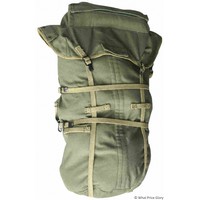
The Unsung Hero: Why the M1928 Haversack Attaching Strap is the Most Important Piece of Kit You're Missing
There's a certain feeling you get, deep in your gut, on the morning of a tactical event. The air is cold, biting at your knuckles as you cinch the last bits of your gear. You've spent months, maybe years, and a small fortune getting every detail right. The M1 Garand is clean. The M1938 leggings are laced just so. The wool feels authentic and itchy against your neck. You hoist your pack, and... something's wrong. A sag. A wobble. The whole weight of your existence feels unbalanced, insecure. That, my friends, is often the ghost in the machine of your GI impression: a missing or failed M1928 Haversack attaching strap.
More Than Just a Leather Strap: The Heart of the Doughboy's Load-Bearing System
It sounds trivial, doesn't it? A single strip of leather. But to dismiss it is to misunderstand the entire philosophy behind the US Army's M1928 Haversack and Pack Carrier system. This wasn't just a bag; it was a soldier's mobile home, a carefully engineered ecosystem of canvas and leather designed to carry everything from his C-rations to his shelter half. And this little strap? It's the lynchpin.
A Glimpse into the Past: What is the M1928 Haversack?
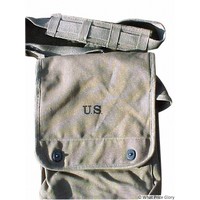
The M1928 system was an update to the M1910 model that American soldiers humped across France in the Great War. It was a marvel of complexity and, if we're being honest, a bit of a pain to assemble correctly. The main haversack sat high on the back, carrying rations, mess kit, and personal items. Below it, attached only when a full combat load was required, was the pack carrier—often called the "pack tail" or, less charitably, the "diaper." This carried the soldier's bedroll, shelter half, tent poles, and pins. It was the part of the kit that turned a light infantryman into a self-sufficient force.
The 'Pack Tail' Problem: Enter the Attaching Strap
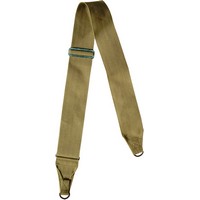
So how do you connect this heavy, unwieldy pack tail to the main haversack? You can't just use a bit of string. It required a specific, robust, and reliable solution. That solution was the M1928 Haversack Attaching Strap. This unassuming piece of leather threaded through loops on both components, cinching them together into a single, cohesive unit. Without it, the pack tail would flap uselessly, or worse, detach completely. It’s the grammatical comma of your field gear; without it, the whole sentence falls apart.
The Agony of the Incomplete: A Reenactor's Tale
I remember a particularly miserable event in the hills of Pennsylvania. The rain was coming down in sheets, turning the ground into a thick, greedy mud. We were on a forced march, and about two miles in, I heard a curse and a clatter from the guy behind me. His reproduction pack tail strap, made of some cheap, bonded leather, had stretched in the wet and finally given up the ghost. His entire bedroll and shelter half went tumbling into the muck. The rest of his day was spent fighting his gear instead of the "enemy," a perfect, miserable lesson in the importance of quality.
The Dreaded "Sack Sag"
Even if a poor-quality strap doesn't break, it will stretch. It will loosen. This leads to the dreaded "sack sag," where the pack carrier hangs low, bouncing and chafing with every step. It throws off your balance, puts a strain on your shoulders, and frankly, it just looks awful. It’s a dead giveaway of an inauthentic impression. You're waging a one-man war against "good enough," and this strap is a key battle.
Why Originality Matters
This is where finding a piece of history like this Original US M1928 Haversack Attaching Strap becomes so crucial. We're talking about an original, unused strap. Think about that. A piece of leather, cut and stitched likely before the invasion of Poland, that has sat waiting for eight decades to finally do its job. It's not just a reproduction; it's an 80-year-old promise of durability.
Holding It All Together: The Function and Feel of an Original Strap
When you hold one of these in your hand, you understand. It’s not just a purchase; it’s an acquisition. A piece of bona fide history that you can actually use.
The Scent of History: Unboxing a Piece of the Past
Opening the package is an experience. There’s that smell—not of cheap modern tanning chemicals, but of real, preserved leather and maybe a faint, phantom scent of cosmoline and old canvas. The leather is stiff, but supple. You can feel the dense grain. This isn't something that's going to stretch or tear when the rain starts falling. This is the real deal.
Built to Last: American Craftsmanship Under Pressure
The stitching is thick and confident. The hardware is simple and brutally effective. This strap was made with the understanding that a soldier's life could depend on his gear staying put. It was built to endure the mud of Italy, the hedgerows of Normandy, and the oppressive humidity of the Pacific. It was, in short, built to win a war. Attaching it to your haversack, you hear that satisfying *thunk* as the buckle engages. There is no wobble. No sag. Just solid, dependable security.
Completing Your Impression: From the Ardennes to the Airfield
Whether you're portraying an infantryman digging in near Bastogne, an Army Air Corps ground crewman, or a Marine island-hopping his way to Tokyo, the M1928 haversack was there. And for any early to mid-war impression, this strap is the final, vital piece of the puzzle. It’s the detail that separates the serious living historian from the casual enthusiast. It’s a small thing, sure. But history is made of small things. Small acts of bravery, small moments of misery, and small, tough-as-nails leather straps that held it all together.
Don't Let a Missing Strap Derail Your Authenticity
Stop fighting your gear. Stop accepting "good enough." The M1928 system was designed to work as a whole, and the authentic leather attaching strap is the component that makes it whole. It’s a small investment in your passion that pays huge dividends in authenticity, comfort, and peace of mind. Secure your gear the way the GIs did, and honor their legacy by getting the details right.