More Than Just a Fastener: The Unsung Story of the P-37 Brass Button
There’s a certain ritual to it, isn't there? The morning of a reenactment weekend. The air is cool, still smelling of dew and canvas. You pick up your Battledress blouse—the thick, familiar weight of the serge wool in your hands—and you begin to button up. It’s a small action, one repeated millions of times by men from Aldershot to El Alamein. And as your fingers find the cold, dished surface of a brass button, you’re not just fastening a jacket. You’re connecting with history.
I’ve been in this hobby for the better part of three decades. I’ve seen it all. But the one thing that separates a good impression from a truly great one? It’s the details. It's the small stuff. And few things are more fundamental, yet so often overlooked, as the humble UK P-37 Brass Button.
A Small Detail, A Massive Undertaking
Let's be honest. These buttons aren't glamorous. They don't have the deadly allure of a Fairbairn-Sykes dagger or the iconic silhouette of a Brodie helmet. They are, in essence, the humble rivets of the Commonwealth's army. But their story is the story of the British war effort in miniature: a tale of practicality, mass production, and quiet, unyielding service.
From Austerity to Utility: The Birth of the 1937 Pattern
Before the war clouds gathered in earnest, the British Army was a creature of spit-and-polish tradition. Uniforms often featured intricate, regimental-specific buttons that shone with pride. But modern warfare demanded a different approach. The 1937 Pattern Web Equipment—and the Battledress that went with it—was a masterclass in functional design. Everything had a purpose. There was no room for fussy ornamentation.
Enter the general service brass button. Simple, strong, and easy to produce by the tens of millions. Its introduction signaled a profound shift. The army was no longer a small, professional force; it was becoming a citizen's army, and it needed to be equipped on an industrial scale. This single, standardized button would fasten the tunics, trousers, and shorts of men from every corner of the Empire.
Why Brass? The Practicality Behind the Polish
You might wonder, why brass? In a time of rationing, it seems an odd choice. But brass offered a crucial combination of strength and corrosion resistance. It wouldn’t rust away in the damp foxholes of Europe or the humid jungles of Burma. And yes, while the "get it painted, get it green" mentality of wartime meant they were often dulled or covered, the brass was always there underneath. It was durable. It did the job. A soldier could lose a rifle, a helmet, even his nerve, but his buttons would likely remain, a silent testament to the 'make do and mend' spirit of the age.
The Feel of Authenticity: A Reenactor's Perspective
I remember my first "Frankenstein" tunic, cobbled together from various sources. It had a few original buttons, a couple of post-war plastic ones, and one that was just plain wrong. It never felt right. At a show, an old veteran—one of the last of his kind—looked me over, his eyes sharp. He pointed a crooked finger at my chest and just shook his head with a wry smile. He didn't say a word, but his meaning was crystal clear. The details matter. They are the story.
Getting it Right: The Dished Shape and Sturdy Shank
That's why a quality reproduction like these P-37 Brass Buttons is so essential. Look closely. They aren’t flat discs. They have that distinctive, shallow "dished" profile. This wasn't just for looks; it made them easier for cold, fumbling fingers to grasp and guide through a stubborn buttonhole in the thick serge. The shank on the back is solid, ready to be sewn on with heavy-duty thread that won't give up after one weekend in the field. These aren't just buttons; they're tiny brass anchors to history.
Beyond the Tunic: Buttons on Trousers, KD, and More
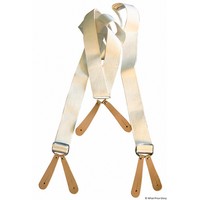
While most of us associate them with the iconic Battledress blouse, their service didn't end there. These were the standard buttons for P-37 trousers, holding up the braces that were a godsend after a long march. You'll find them on Khaki Drill (KD) shorts and tunics, their metallic gleam a stark contrast to the sun-bleached cotton of the North African and Far East campaigns. They were everywhere. A unifying, consistent piece of kit in a war that spanned the entire globe.
A Button's Life: Stories from the Field
Think of what these small metal discs have witnessed. The nervous fumbling as a soldier buttons his tunic before going over the top. The frantic unbuttoning to get to a field dressing. A man using a spare button to pay for a small favor in a liberated town, or trading it for a cigarette. Every soldier carried a "housewife"—a small sewing kit—for the sole purpose of reattaching these vital fasteners. Keeping your uniform in order, every button present and accounted for, was a small victory against the chaos of war. It was a piece of discipline, a sliver of home, in the most hostile places on Earth.
Restoring Your Kit: Why These Buttons Matter
Whether you're restoring a piece of original militaria that’s lost a few buttons to time, or you're building a top-tier reenactment impression from the ground up, you cannot compromise on the details. Using the wrong fasteners is like putting the wrong engine in a vintage Spitfire. It might look okay from a distance, but the soul of the machine is gone.
A set of high-quality, accurately reproduced P-37 brass buttons ensures your uniform tells the right story. It gives your kit the correct look, the correct weight, and most importantly, the correct feel. When you run your thumb over that dished surface, you should feel the echo of history.
Conclusion: The Weight of History in Your Hand
In the end, it’s just a small circle of stamped brass. It holds no rank, wins no medals, and fires no shots. But it held the British Army together, quite literally. It represents a monumental industrial effort, a commitment to practical design, and the shared experience of millions of soldiers.
The next time you prepare your kit, take a moment. Hold one of these buttons in your palm. Feel its slight weight. Consider its simple, perfect design. You’re not just holding a button. You’re holding a piece of the story. And getting that story right is what our hobby is all about.


No comments:
Post a Comment