Close your eyes for a moment. Picture the British Tommy of World War II. What do you see? I’ll wager it’s a figure huddled in a trench, the rough, khaki serge wool of his Battledress jacket pulled tight against the biting French wind. You can almost feel the damp chill, the scratch of the wool, the weight of it all. It’s an iconic image, burned into our collective memory.
Now, throw that image away.
Instead, imagine air so thick with humidity it feels like you're breathing water. The constant drone of insects is your soundtrack, a million unseen things buzzing, crawling, and biting. The sun isn't a welcome friend; it's a relentless, oppressive force beating down through a dense canopy of green. This was a different kind of war, fought in the jungles of Burma, across the arid hills of Italy, and in the sweltering heat of the Mediterranean. And for this war, the standard wool Battledress was not just uncomfortable—it was a liability.
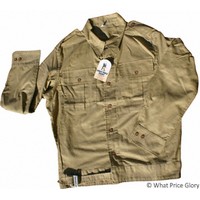
Beyond the Trenches: The Story of the British 1943 Tropical Battledress Trousers
Enter the hero of our story: the UK Khaki Tropical Battledress Trousers (1943). This garment is more than just a piece of clothing; it's a testament to adaptation, a silent nod to the soldiers of the "Forgotten Army" who fought in some of the most brutal conditions imaginable.
From Wool Serge to Aertex Cotton: A Necessary Evolution
The standard P'37 and later P'40 Battledress was a masterpiece of design for the temperate climates of Northern Europe. It was warm, durable, and practical. But in the Far East? It was a walking sauna. The heavy wool trapped moisture, leading to agonizing heat rash, fungal infections—what the troops grimly called "jungle rot"—and rapid exhaustion.
The Problem with Wool
Command quickly realized that you couldn't fight two enemies at once: the Japanese and the jungle itself. The existing Khaki Drill (KD) shorts and shirts were too flimsy for the punishing environment, offering little protection from insects and thorns. A new solution was needed, one that blended the practical design of the Battledress with a material that could actually breathe.
The Solution: The P'43 Tropical BD
The 1943 pattern was that solution. It kept the brilliant, functional layout of the standard Battledress trousers—the large map pocket on the front of the left leg, the smaller field dressing pocket on the front of the right hip, the brace attachments, and the button fly. All the familiar features were there. But the material? That was a revolution.
Crafted from lightweight cotton drill, often a cellular weave like Aertex, these trousers were liberatingly light. The fabric allowed air to circulate and, crucially, allowed sweat to evaporate. It wasn't just a design choice; it was a lifeline. No, that's not an exaggeration. For the soldier slogging through the Burmese monsoon, anything that offered a reprieve from the suffocating heat was a godsend.
Anatomy of a Jungle Fighter's Trousers
Let's get our hands dirty and look at the details, because for us reenactors, the details are everything. These aren't just any old khaki pants. The 1943 Pattern Tropical Trousers have a very specific DNA.
Key Features and Design
- The Pockets: The iconic large map pocket on the thigh is there, pleated for expansion. You can almost feel the weight of a folded, sweat-stained map inside. The field dressing pocket is smaller, positioned for quick access.
- The Fit: Like their woollen cousins, they were designed to be worn high on the waist, supported by braces. This wasn't a fashion statement; it kept them clear of the web belt and its attached pouches and bayonet, preventing chafing and ensuring mobility.
- The Material: This is the soul of the garment. The khaki cotton drill is tough but breathable. When you pick up a pair of quality reproductions, you can immediately feel the difference from the hefty weight of wool serge.
Not Just for Burma: The Mediterranean and Beyond
While forever linked with General Slim's 14th Army in the Far East, these trousers saw service far and wide. British and Commonwealth troops fighting their way up the boot of Italy during the hot summer months were issued tropical kit. They were spotted in North Africa, the Middle East, and across the Mediterranean theater. Wherever the British soldier faced relentless heat, the Tropical Battledress was a welcome sight.
Bringing History to Life: Reenacting with the P'43 Trousers
I remember my first Burma campaign reenactment. It was a humid August weekend in the Midwest, and the guys portraying the European theater in their wool BDs were wilting. You could see the misery on their faces. I, thankfully, had invested in a proper tropical impression, anchored by these very trousers. Believe me, the difference wasn't just comfort; it was a lesson in history. For the first time, I didn't just know why this gear existed—I *felt* it. I understood on a physical level the relief these trousers would have provided.
Building Your 14th Army Impression
If you're looking to build an impression beyond the well-trodden fields of Normandy, these trousers are your foundation. Paired with the matching Aertex shirt or bush jacket, a slouch hat, and the correct jungle-pattern webbing, you create a silhouette that is instantly recognizable and deeply respected. You're telling the story of the forgotten soldier, the one who fought snakes, leeches, and malaria with the same stoicism he fought the enemy.
The Feel of Authenticity
When you pull on a pair of high-quality reproduction tropical battledress trousers, you're not just putting on a costume. You're connecting with that history. The light fabric, the specific cut, the placement of the pockets—it all works together to transport you. It’s the key that unlocks a deeper understanding of what those men endured and achieved.
The Enduring Legacy of the "Jungle BD"
The UK Khaki Tropical Battledress Trousers of 1943 are more than just threads and buttons. They are a symbol of ingenuity in the face of extreme adversity. They represent a recognition that the soldier's environment is as formidable an enemy as any army. They are a silent testament to the resilience of the men who wore them, fighting in the forgotten corners of a global conflict.
For the historian, they are a fascinating chapter in the evolution of military uniforms. For the reenactor, they are an essential piece of kit for accurately and respectfully portraying the Commonwealth soldier in the jungle and Mediterranean theaters. They are a piece of history you can wear, a story you can help tell.


No comments:
Post a Comment