More Than a Bag: The Legendary USMC M1910 Haversack
There are pieces of gear, and then there are legends. Some items are just fabric and metal, functional tools for a dirty job. Others... others have a soul. They carry the weight of history in their very fibers. You pick one up, and you can almost feel the presence of the young man who humped it through hell and back. The Original USMC M1910 Haversack is one of those legends.
Before We Begin: It's Not Just a Backpack
Let's get one thing straight. Calling the M1910 system a "backpack" is like calling a battleship a "boat." It's technically true, but it misses the entire damn point. This was a fighting system. A convoluted, sometimes frustrating, but brilliantly modular piece of engineering designed to keep a man alive and killing on the move. I remember my own Drill Instructor—a salty old gunnery sergeant who’d seen the jungles of Vietnam—he used to scream that our gear was our life. He would have taken one look at this original WWI M1910 Haversack, the Marine Corps model, and given a slow, respectful nod. He'd know.
The Smell of History
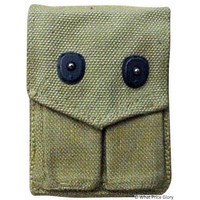
The first thing that hits you when you handle a genuine article like this isn't the look; it's the smell. A faint, dry scent of canvas, oil, and something else... something like old barracks and forgotten stories. Run your hand over the coarse, heavy-duty canvas. It’s stiff, unforgiving. You can feel the ghosts in this thing. The ghost of a 19-year-old kid from Pennsylvania, his knuckles raw, fumbling with the brass hooks in the pre-dawn chill of a French morning.
The "Devil Dog" Difference: Army vs. Marine Corps M1910
Now, any doughboy could tell you about the Army's M1910 haversack. But the Marine Corps, as always, had to do things a little differently. We still do. The USMC model had subtle but important distinctions. The details might seem minor to a civilian—the positioning of a strap, the specific "mustard" shade of the khaki dye that differed from the Army's pea green, the unique USMC markings—but to a collector, a historian, or a serious reenactor, these details are everything. They scream authenticity.
Built for the Fight
Why the changes? Because the Corps operated differently. Often equipped as a naval landing force, their gear had to be robust and self-contained. The M1910 haversack was designed to integrate perfectly with the M1910 cartridge belt, creating a load-bearing harness. The pack itself sat high on the back, above the belt, which was... well, let's just say it wasn't designed for ergonomic comfort. It was designed to keep your ammo and bayonet accessible while you were crawling through mud and wire.
From Belleau Wood to Your Collection
When you hold this piece, you're holding a direct link to the birth of the modern Marine Corps legend. This is the very model of haversack that Marines carried into the wheat fields of Belleau Wood in June 1918. It was on their backs when they earned the nickname "Teufel Hunden"—Devil Dogs—from their terrified German adversaries. It’s more than just stitched canvas and brass fittings; it's a piece of the Corps' soul forged in fire.
Unpacking the M1910: A Marine's Home on His Back
This wasn't just a bag for carrying your lunch. The M1910 was a Marine’s entire existence rolled, folded, and strapped into a tight bundle. The system consisted of the haversack itself for rations and personal items, and a "pack carrier" that attached below it. This carrier held the blanket roll, shelter half, and tent poles. Your entrenching tool and bayonet were affixed to the outside. It was a turtle shell for the Devil Dogs.
What Did They Carry?
Inside the main flap of an original M1910 Haversack, you'd find a world of grit and survival. A can of corned beef ("corned willie"), hardtack biscuits that could break a tooth, a bacon can, and a condiment can. Add to that a change of socks (the most valuable commodity in the trenches), a toothbrush, maybe a razor, and letters from home. Everything a man owned, everything that connected him to the world he'd left behind, was right there on his back.
Why This Piece Matters
In an age of reproductions, finding an original—especially a rare Marine Corps model in this kind of condition—is something special. It's a tangible connection to the past. For reenactors, it’s the keystone to an accurate impression. You can have the right rifle and the perfect uniform, but having original gear elevates the entire experience. It forces you to understand the struggles of the men who wore it first.
A Tangible Link to the "Old Corps"
This Original USMC M1910 Haversack is not just a collectible. It’s a tribute. It’s a history lesson you can hold in your hands. It’s a solemn reminder of the iron will and raw courage of the Marines who fought in the Great War, establishing a legacy of ferocity that every Marine since has strived to live up to. It’s a ghost whispering tales of mud, and iron, and unfathomable bravery. And it deserves a place of honor.


No comments:
Post a Comment