More Than Just Trousers: The Story of the WWII Officer's "Pinks"
There are certain images from the Second World War that are etched into our collective memory. A landing craft hitting the beach at Normandy. A flag being raised on Iwo Jima. And for those of us who study the era, there's another, quieter but no less powerful image: a US Army officer, standing tall in his service uniform, the sharp contrast of his olive drab coat and light-colored trousers cutting a profile of quiet authority. Those trousers, affectionately and universally known as "pinks," were more than just leg coverings; they were a statement.
I remember an old, dog-eared photo of my uncle, a young first lieutenant in the Ninth Army, standing by a jeep somewhere near the Rhine. He had that look... that confident, slightly weary officer's bearing. And it was the uniform, the unmistakable silhouette of his "Pinks and Greens," that just screamed 'leadership.' You could practically feel the fine wool of those US Army Officer "Pink" Trousers even through the faded black and white photograph. They weren't just part of a uniform; they were the uniform.
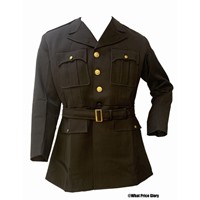
The Unmistakable Look of Leadership: What are "Pinks and Greens"?
The famous "Pinks and Greens" combination wasn't one single uniform, but the marriage of two separate items: the standard issue Officer's Service Coat in olive drab, and the privately purchased service trousers in a lighter, contrasting shade. This combination became the de facto service and dress uniform for officers throughout the war, seen everywhere from the halls of the Pentagon to the front-line command posts in Europe and the Pacific.
A Contrast Born of Necessity and Style
The Army, you see, was a practical institution. But its officers were also gentlemen, expected to maintain a certain standard of dress. The olive drab wool of the service coat was durable and appropriate for field and garrison duty. The trousers, however, offered a chance for a bit of sartorial flair. Officers purchased their own, and the preferred style quickly became these lighter-shade trousers. It was a look that set them apart, a visual cue of their rank and responsibility. It wasn't vanity, not really; it was morale, woven right into the uniform.
Why "Pink"? The Truth Behind the Hue
Let's clear something up right away. These trousers were never officially designated "pink." The Quartermaster Corps regulations listed them as "drab, light shade" or "taupe." So where did the nickname come from? It’s a matter of material and light. The fine wool fabric, often a blend called elastique, had a unique weave that, under certain lighting conditions and especially after a bit of wear and sun-fading, took on a subtle pinkish or rosy beige cast. It was a soldier's nickname, born in the barracks and on the streets of London, and it stuck. It became a whisper of rose in a sea of olive drab, a term of endearment for an iconic piece of gear.
Woven from History: The Feel of Wool Elastique
You can't talk about the famous WWII officer's "pink" trousers without talking about the fabric. Most were made from wool elastique, a distinctive material with a tightly woven whipcord or twill-like texture. If you run your hand over an original pair, you can feel the fine, diagonal ribs in the weave. This wasn't just for looks.
A Fabric Built for Duty and Dress
Wool elastique was a remarkable choice. It was tough, held a crease like nothing else, and resisted wrinkles, which was crucial for an officer who might go from a staff briefing to a dusty jeep in the span of an hour. But its best quality was a slight "give" or mechanical stretch, thanks to the weave. This made the trousers surprisingly comfortable for all-day wear. It was the perfect blend of parade-ground sharpness and campaign-ready practicality. It was, in short, the fabric of victory.
From Normandy to the Boardroom: The Legacy of the "Pinks"
When the war ended, the officers came home. Millions of them. And many of them kept wearing their Pinks and Greens. The uniform became a symbol of the "Greatest Generation" and the immense victory they had secured. The look was so sharp, so respected, that it influenced men's fashion for years. The combination of a dark sport coat and lighter trousers, still a classic today, owes a direct debt to the American officers of WWII.
A Symbol of the "Greatest Generation"
The "Pinks and Greens" became more than just a uniform; they represented an era of American confidence and capability. From General Eisenhower, whose iconic "Ike" jacket was almost always paired with his "pinks," to the countless captains and lieutenants who led platoons across Europe, this uniform was their signature. It evokes a sense of duty, honor, and quiet professionalism that still resonates today.
Getting it Right: Authenticity in Reenactment
For a historical reenactor or a serious collector, capturing that look is everything. It's about honoring the memory of the men who wore it. And the foundation of that look is a proper pair of trousers. You can’t just grab any pair of khaki pants and call it a day. It's the color, the cut, and most importantly, the material that matter.
Why Our Reproduction Stands Out
That’s why getting a pair made from 100% wool elastique is so critical. It’s the only way to get the right weight, the right drape, and that subtle texture that defines the original. When you put on a pair of properly reproduced officer's pink trousers, you feel it instantly. The substantial feel of the wool, the way they hang just right—it connects you to the past in a tangible way. It's the difference between a costume and a uniform. It's the difference between playing a part and paying tribute.
These trousers are not just a piece of clothing. They are a piece of history you can wear. They are a tribute to the leadership, sacrifice, and ultimate triumph of a generation that saved the world. When you pair them with an olive drab service coat, you’re not just recreating a uniform; you’re reviving a legend.


No comments:
Post a Comment