Monday, 16 March 2026

Original British P40 Greatcoat

Discover the history of the Original British P40 Greatcoat. This WWII icon, a symbol of austerity and Tommy resilience, is a vital piece for any reenactor.

More Than Wool: The Enduring Legacy of the Original British P40 Greatcoat

There’s a smell that every serious collector and reenactor knows. It’s the scent of history itself—a dry, earthy mix of old wool, canvas, and time. I remember the first time I held a piece of original kit. It wasn't a rifle or a helmet, but a greatcoat, heavy and imposing. As I slipped it on, the sheer, reassuring weight of it on my shoulders felt like a direct connection to the past, a handshake across eighty years. It’s a feeling you never forget. And it’s a feeling you get in spades from an unissued, Original British P40 Greatcoat.

Original British P40 Greatcoat

First Impressions: Unwrapping a Piece of History

Getting your hands on an unissued piece of WWII equipment is a rare treat. It’s a time capsule. When you unbox one of these P40s, you’re not just getting a coat; you’re getting the last thing a factory worker touched before sending it off to the Quartermaster, destined for a soldier who, by some twist of fate, it never reached. It’s a moment frozen in time.

The Smell and Feel of Authenticity

The first thing that hits you is that smell. It’s not musty or decayed, but clean, a testament to decades of proper storage. Then there’s the texture. This isn’t soft, modern-milled wool. This is proper, heavy-duty British serge, designed for durability above all else. It's scratchy, honest, and unbelievably dense. The large brown composition buttons feel solid under your thumb, and the stitching is thick and utilitarian. This is a garment built for a purpose, not for comfort—though comfort it would certainly provide on a bitter night in the Ardennes.

From Necessity's Loom: The Birth of the P40

You can't fully appreciate the P40 without understanding where it came from. It was a product of its time, born from the harsh arithmetic of war. Its predecessor, the Pattern 1937 Greatcoat, was a more tailored, some might say elegant, piece of kit. It featured details like a half-belt and an expanding box pleat in the back to allow for movement.

The P37's Austerity-Born Brother

But by 1940, with Britain standing alone and the war effort demanding every yard of fabric and every hour of labor, simplicity became the mother of invention. The Pattern 1940 Greatcoat was introduced as an "austerity" measure. The fancy pleats? Gone. The half-belt? Removed. The design was simplified, streamlined for faster, cheaper production. It was a reflection of the national mindset: strip away the non-essentials and focus on the fight.

A Coat for the Common Tommy

The result was a coat that perfectly embodied the British Tommy of the later war years: stubborn, no-nonsense, and utterly dependable. The P40 might have lacked the flair of its older brother, but it did its job. It kept the wind, rain, and snow off the men huddled in slit trenches from Normandy to the Rhine. It was a wearable piece of the national spirit.

Life in the P40: More Than Just a Uniform

For the soldier in the field, the greatcoat was far more than just clothing. It was a mobile shelter, a fortress of fabric against the elements. I've heard countless veterans' accounts, and they all say the same thing. Their greatcoat was their best friend when the temperature dropped.

A Soldier's Shelter

Soldiers used their P40s as blankets, rolling themselves up in the thick wool in freezing foxholes. They’d lay them over the top of a trench to create a makeshift roof against the rain. It was a groundsheet on damp earth and a pillow after a long march. It absorbed the smells of woodsmoke, sweat, and fear. It carried the stains of mud and meals. It was a silent witness to a soldier's war. Of course, it wasn't perfect. When the serge wool got soaked—and I can tell you from many a wet reenactment weekend, it *does* get soaked—it weighed a ton. But a heavy, wet coat was still a damn sight better than no coat at all.

A Word on Sizing: A Lesson from the Past

One of the most authentic things about an original P40 greatcoat is the fit. The product description notes they are "not a generous cut," and that’s the gospel truth. Wartime rationing didn't just apply to food; it applied to fabric. These coats were cut to fit the leaner physique of a 1940s soldier, with no wasted material. The shoulders are particularly snug, designed to be worn over a Battledress blouse and not much else. It's a key detail to remember, and it speaks volumes about the historical reality of the item.

The P40 in the Field Today: A Reenactor's Perspective

For a reenactor, authenticity is everything. It’s the difference between playing a part and truly inhabiting it. Pulling on a reproduction is one thing, but wearing an original, unissued P40 is another experience entirely. You feel the history. You stand a little straighter. You understand the weight—both literal and figurative—that the original soldiers carried.

Getting the Details Right

In a field full of khaki, it’s the fine points that matter. The specific weave of the serge, the exact shade of brown on the buttons, the simple, rugged cut of the P40—these are the details that separate a good impression from a great one. It shows you’ve done your research and you respect the history you're trying to portray.

A Garment That Carries Ghosts

The British P40 Greatcoat is more than a military surplus item. It’s a tangible link to the grit and sacrifice of a generation. It’s a symbol of a nation that tightened its belt, simplified its designs, and refused to break. Owning an unissued original is like holding a piece of that resilience in your hands. It’s a coat that was made for a war, but never had to fight one. It waits, silent and perfect, a testament to the millions of men who wore its brothers into history.

Experience a piece of history for yourself! Check out our authentic reproduction of Original British P40 Greatcoat here: Get Your Original British P40 Greatcoat

Sunday, 15 March 2026

UK Water Bottle Cork Replacement | Complete with Fittings

Discover the untold story of the British Army water bottle cork. Learn its vital WWI & WWII history and why this small part is crucial for any reenactor.

There are some sounds a man never forgets. The crack of a Lee-Enfield, the rumble of distant artillery, the shared laughter in a moment of quiet respite. But there's another sound, a simpler one, that meant the world: the gentle *pop* of a cork leaving the mouth of a water bottle.

It was the sound of relief. The promise of a brief escape from the grit, the fear, and the all-consuming thirst of the battlefield. It’s a small detail, isn’t it? A simple cork. Yet, in the grand, chaotic tapestry of war, these small details were everything. They were the difference between a moment of comfort and the creeping dread of dehydration.

UK Water Bottle Cork Replacement | Complete with Fittings

The Unsung Hero of the Trenches: Why the British Water Bottle Cork Matters

We often focus on the big things—the rifles, the helmets, the uniforms. They’re the iconic pieces, the stars of the show. But I’ve always been drawn to the humbler gear, the items that tell a more personal story. And few things are more personal than a soldier’s canteen. Today, we're talking about the very heart of that canteen: the UK Water Bottle Cork Replacement | Complete with Fittings.

It might seem like just a stopper, but this little piece of kit was the humble gatekeeper between a soldier and his salvation. Without a reliable seal, a soldier's precious water ration could leak away, ruining his food, soaking his ammunition pouches, and, worst of all, leaving him high and dry when he needed it most.

More Than Just a Stopper: The Anatomy of a Soldier's Lifeline

The standard issue British water bottle, the enamelled steel "Mark VI" or "Mark VII," was a brilliant piece of design. Wrapped in a rough wool felt cover, it used the simple science of evaporation to keep its contents cool. But the genius of the bottle was useless without an equally effective stopper. A proper one wasn't just a lump of cork; it was a symphony of simple materials, all working in concert.

The Heart of the Seal

The cork itself had to be just right. Not too porous, not too brittle. It needed to swell just enough to create a watertight seal against the metal lip of the canteen, holding fast whether a soldier was crawling through the mud of Passchendaele or marching under the blistering Egyptian sun. You can almost feel the slight resistance as you twist it free, smelling that faint, earthy scent mixed with the metallic tang of the water within.

A Tangle of Twine and Tin

What makes this complete cork replacement so essential for an authentic restoration is that it includes the fittings. The small metal loop embedded in the top and the crucial length of attaching twine weren't just for decoration. That twine, looped through the canteen’s lug, ensured the cork was never lost. In the dark, or with hands shaking from cold or adrenaline, a soldier could pull the cork free—sometimes with his teeth—and not have to worry about it falling into the muck. It was a simple, fool-proof system designed for the worst possible conditions.

A Gulp of History: The Canteen in the Great War and Beyond

Imagine being that Tommy in the trench. It's been hours. Your mouth is a desert, coated with dust and the taste of cordite. You reach for your water bottle, your fingers fumbling with the buckle on the webbing cradle. The rough, damp wool of the cover feels cool against your hand. You pull the cork, and the sound is a tiny, private victory. That gulp of lukewarm, slightly metallic water is the most delicious thing you've ever tasted. It’s a moment of pure, unadulterated life.

From the Somme to El Alamein: A Thirsty Man's Best Friend

This same basic canteen and cork system served the British soldier through two world wars. It saw action from the frozen trenches of the Western Front to the sweeping deserts of North Africa. The context changed, the enemy changed, but a soldier’s thirst remained a constant. I remember an old veteran from the Desert Rats telling me once... he said the worst sound in the world, worse than a Stuka's siren, was the drip-drip-drip of his last bit of water leaking from a faulty cork onto the sand. That, he said, was the sound of real fear.

Bringing Your Canteen Back from the Brink

For us—the historians, collectors, and reenactors—these canteens are more than just surplus. They are artifacts of desperate thirst and quiet relief. Many original canteens that survive today have lost their stoppers, or the original cork has rotted away to a crumbling mess. This presents a common reenactor's dilemma: how do you make a piece functional again without sacrificing its soul?

Why a Complete Replacement is Your Best Bet

Trying to cobble together a solution from a hardware store wine cork and a bit of string just won’t cut it. It won’t look right, it won’t feel right, and it probably won’t work right. You need a solution that respects the original design. This is where a faithful reproduction like the UK Water Bottle Cork Replacement shines. It has the correct-profile cork, the proper metal fittings, and the right kind of attaching twine to restore your canteen to its former glory.

It's about bridging the gap between a static display piece and a living piece of history. With a proper, functioning cork, your water bottle is no longer just a prop. It's a working piece of kit, ready for the field. It’s ready to offer that same simple, profound comfort it gave to a soldier a century ago. It allows you to complete the picture, to honor the small details that were so big to the men who relied on them.

So next time you shoulder your pack for an event, take a moment. Feel the weight of the canteen on your hip. It’s a connection, a tangible link to the past, all held together by a simple, perfect piece of cork and twine.

Experience a piece of history for yourself! Check out our authentic reproduction of UK Water Bottle Cork Replacement | Complete with Fittings here: Get Your UK Water Bottle Cork Replacement | Complete with Fittings

Saturday, 14 March 2026

UK "Cap Comforter" Wool Scarf/Cap (Reproduction)

Uncover the history of the legendary British Cap Comforter. Learn how this simple wool tube became a WW2 Commando classic and a reenactment essential.

More Than Just a Woolly Hat: The Legendary British Cap Comforter

There are some pieces of kit that just shout their purpose. A steel helmet. A bayonet. A gas mask. You know what they’re for the second you see them. And then, there are the quiet ones. The unsung heroes of the kitbag that, at first glance, don’t look like much at all. The British UK "Cap Comforter" Wool Scarf/Cap (Reproduction) is one of those.

It’s basically a knitted wool tube. Simple, right? But in that simplicity lies a kind of genius that only comes from hardship. To the uninitiated, it's a scarf. Or maybe a funny-looking hat. But to anyone who knows their WW2 history—especially the shadowy world of the British Commandos—this humble piece of wool is an icon. It’s a tube of knitted defiance.

UK Cap Comforter Wool Scarf/Cap (Reproduction)

From the Docks to the Dieppe Raid: An Unlikely Commando Icon

The Cap Comforter wasn’t born in a military design office. You can bet on that. It wasn’t dreamed up by some quartermaster in a tidy uniform. No, its origins are far more rugged. This was the headwear of British fishermen and dockworkers, men who spent their lives wrestling with the cold, biting spray of the North Sea. They needed something warm, practical, and utterly without frills. It wasn't designed in a boardroom; it was born on a trawler.

So, how did it end up on the heads of Britain’s most elite fighting men during World War II?

Simplicity Forged in Hardship

When the Commandos were formed in 1940, they were a new breed of soldier. They weren't about parade-ground polish; they were about getting a dirty job done in the dead of night. Their missions—silent raids on occupied coastlines, sabotage, and reconnaissance—demanded gear that was practical, versatile, and quiet. The standard issue steel helmet was fine for the trenches, but it was noisy, cumbersome, and reflected moonlight. For a ghost slipping ashore from a rubber dinghy, it was a liability.

The Cap Comforter, on the other hand, was perfect. It was soft, it was silent, and its dark, drab color—usually a deep khaki or olive green—melted into the shadows. It was a piece of civilian ingenuity, co-opted for the deadliest of military purposes.

The Dual-Purpose Design

Here’s the real beauty of it. Unrolled, the Cap Comforter is a long scarf. You could wrap it around your neck for warmth under your tunic during a long, miserable channel crossing. The wool, even when damp, retains a surprising amount of heat. I remember my first time wearing one on a cold, wet reenactment weekend. The feeling of that scratchy-but-comforting wool around my neck was a genuine comfort against the wind.

But with a few quick rolls from one end, it transforms. In seconds, you have a double-layered, snug-fitting watch cap. Pulled down low, it covered the ears and the back of the neck, cutting the wind and muffling sound. It kept your head warm without the bulk of a helmet. You see them in all the old photos: grim-faced men with blackened faces, Fairbairn-Sykes knives strapped to their legs, and the iconic Cap Comforter pulled down low, ready for action.

Feeling the Past: What It's Like to Wear a Piece of History

Putting on a piece of historical kit isn't just about looking the part. It's about feeling it. It connects you to the past in a way a book never can. The first time I handled a good reproduction of the British Commando Cap, I was struck by its weight—or lack thereof. It's nothing, really. But its utility is immense.

The Itch and the Warmth

Let's be honest, old-school wool isn't merino. It's got a bit of a scratch to it. But that’s part of the authenticity. I always tell new guys in my reenactment group, "If you're not a little bit uncomfortable, you're not doing it right." That initial itch quickly fades into a deep, steady warmth that seeps into your bones. On a cold night patrol exercise, with the damp air creeping into everything, that simple warmth is everything. It's the difference between focusing on your objective and focusing on how much you're shivering.

From Scarf to Cap in Seconds

I remember one night-time event years ago. It was November, and freezing. We were setting up a mock ambush, lying in a ditch for what felt like an eternity. A new lad with us was shivering so hard his teeth were chattering, his helmet doing nothing to keep him warm. I took off my comforter, unrolled it, wrapped it around his neck, and then showed him how to roll the end up into a cap. The look of relief on his face... that's when you *get* it. That's when you understand why this simple wool tube was so beloved.

Getting the Details Right: Why a Good Reproduction Matters

For a reenactor or a serious collector, authenticity is paramount. A cheap acrylic knock-off just won't cut it. It doesn't feel right, it doesn't perform right, and it certainly doesn't look right. You need the correct knit, the right drab color, and 100% wool construction. A proper reproduction like this Cap Comforter isn't just an accessory; it's a core part of an accurate impression, especially for a British Commando or Special Operations Executive (SOE) loadout.

The Enduring Legacy of the Cap Comforter

The Cap Comforter is more than just WW2 British headwear. It's a symbol. It represents the philosophy of the units that wore it: adaptable, unconventional, and brutally effective. It has no insignia, no fancy trim. Its value is in what it *does*, not what it looks like.

It’s a small piece of history that tells a big story—a story of cold nights, daring raids, and the quiet, rugged determination of the men who wore it. Whether you're a historian, a reenactor, or just someone who appreciates timeless, functional design, the Cap Comforter is a piece of kit that has well and truly earned its legendary status.

Experience a piece of history for yourself! Check out our authentic reproduction of UK "Cap Comforter" Wool Scarf/Cap (Reproduction) here: Get Your UK "Cap Comforter" Wool Scarf/Cap (Reproduction)

Friday, 13 March 2026

UK Mk II Helmet Liner (Reproduction) | Modern Materials

Discover the history of the British Mk II helmet liner. Learn why this unsung hero was vital for a Tommy in WWII and why modern reproductions are essential for reenactors.

More Than Just a Bap on the Head: The Unsung Hero Inside the British Tommy's Mk II Helmet

I remember one particularly scorching July event down near the old Chatham docks. We were doing a Home Guard drill, the sun beating down on our steel pots. Halfway through a bayonet charge—a simulated one, thankfully—I felt a sudden, unpleasant shift. My whole Mk II helmet slid forward, the rim clanging against the bridge of my nose. The rotten stitching on my original, seventy-year-old liner had finally given up the ghost. For the rest of the day, I had a wobbly, uncomfortable tin hat that felt less like military kit and more like a poorly balanced saucepan on my head.

That, my friends, is why we need to talk about the helmet liner. It’s the piece everyone forgets. We all love the iconic shape of the Brodie helmet, that distinctive "tin hat" silhouette that defined the British and Commonwealth soldier for decades. But the steel shell is only half the story. The real work, the part that made the helmet wearable and, you know, actually protective, was the liner. It's the soul of the helmet.

UK Mk II Helmet Liner (Reproduction) | Modern Materials

The Brains of the Brodie: A Quick History of the Mk II Liner

When the first Brodie helmets appeared in the trenches of the Great War, their liners were, to put it mildly, a bit basic. A simple leather and oilcloth affair, it did the job but wasn't exactly the pinnacle of comfort or stability. By the time the Mk II helmet became standard issue just before the Second World War, the liner had evolved into a much more sophisticated piece of engineering.

From Skull Cap to Shock Absorber

The Mk II liner was a clever system. It consisted of a round, pressed-fibre or plastic frame holding a web of oilcloth "fingers." These were all tied together at the top with a shoelace, allowing for some size adjustment. At the crown, a cruciform-shaped rubber or felt pad sat directly under the shell's top bolt. This wasn't just for comfort; it was a crucial shock absorber, designed to cushion the blow from shrapnel or debris falling from above. It was the difference between a nasty headache and a fatal injury. Small rubber buffers around the frame also kept it from rattling against the steel shell, a detail any soldier trying to maintain stealth would appreciate.

The Crucible of War: Why the Liner Mattered

In the chaos of combat, a soldier needs his kit to be reliable. A properly adjusted British Mk II helmet liner kept the helmet squarely on the Tommy’s head whether he was diving into a slit trench in the North African desert or storming a beach in Normandy. It provided the critical standoff between the skull and the steel, distributing the force of an impact. Without it, the helmet is just a steel bowl. With it, it becomes a genuine piece of life-saving equipment. Soldiers knew this—they’d often tuck letters, photos, or a spare pack of smokes between the liner and the shell, turning it into a personal locker.

The Feel of History: What Made the Original So Special (and finicky)

There's a certain romance to handling an original piece of kit. I've had a few original liners in my time. They have a specific smell—a mixture of old oilcloth, musty felt, and decades of history. You can feel the stiffness of the material, the slight grittiness of the webbing chinstrap. But let's be honest, authenticity is great until it falls apart on you mid-battle.

Originals were made from materials of their time. The oilcloth grows brittle, the rubber buffers perish and turn to black dust, and the stitching rots away from decades of sweat and damp storage. They were never meant to last three-quarters of a century, and they certainly weren't designed for the repeated rigors of modern reenactment.

A Modern Solution for the Modern Tommy: The Reproduction Mk II Liner

This is where we, as dedicated living historians, need to be smart. We want the look, the feel, the *spirit* of the original, but we need the performance for a full weekend in the field. This is precisely why a high-quality reproduction liner is one of the best investments you can make for your impression.

Built for the Battlefield, Today's Battlefield

The beauty of a piece like this UK Mk II Helmet Liner (Reproduction) is that it captures the exact look and function of the original but swaps out the perishable components for durable modern materials. The frame, the webbing, the pads—they’re all designed to withstand the sweat, the rain, and the rough-and-tumble of a reenactment weekend. It's built to last. You get all the historical accuracy in appearance without the constant worry that it’s going to disintegrate at the worst possible moment. This isn't your grandad's finicky, sweat-rotted original; it's a solid, reliable piece of gear made for active use.

Getting the Fit Just Right: Installation and Comfort

Installing a new liner is a straightforward job. You simply need a single bolt and nut to fix it into the helmet's crown. The real art is in the adjustment. Take your time with the drawstring at the top. Tighten or loosen it until the helmet sits level on your head, not too high and not too low. The brim should be about an inch above your eyebrows. A well-fitted helmet liner makes a world of difference. It transforms a wobbly tin hat into a stable, comfortable part of your kit. Believe me, after a long day on your feet, you'll be glad you took the five extra minutes to get it right.

The helmet liner is the unsung hero of the British Tommy’s most iconic piece of equipment. It represents the thoughtful engineering that went into protecting the common soldier. It’s the interface between man and steel, history and head. By choosing a well-made reproduction, you’re not just completing your impression; you’re ensuring that your kit is as reliable and ready for action as you are. Don't let a rotten liner ruin your event—give your steel pot the soul it deserves.

Experience a piece of history for yourself! Check out our authentic reproduction of UK Mk II Helmet Liner (Reproduction) | Modern Materials here: Get Your UK Mk II Helmet Liner (Reproduction) | Modern Materials

Thursday, 12 March 2026

Original UK Mk II Helmet Shell | Repainted Olive Green

Uncover the history of the iconic British Mk II 'Tommy' helmet. A deep dive into its design, wartime service, and legacy for reenactors and collectors alike.

More Than Steel: The Soul of the British Mk II 'Tommy' Helmet

There are certain objects that hum with the silent percussion of history. You pick them up, and you feel it—a weight that’s more than just metal and paint. It’s the gravity of stories, of moments lived and survived under their silent watch. I remember my grandfather, a quiet man who served with the Eighth Army, had his old Mk II helmet on a shelf in his dusty workshop. The weight of it surprised my young arms. He’d just tap its rim with a knuckle and say, "That thing saw a lot of good men home."

That very same shape, that same cold, reassuring weight, is what you find in this Original UK Mk II Helmet Shell. It isn't just a piece of kit. It's a steel halo of defiance, the most recognizable symbol of the British and Commonwealth soldier in the Second World War.

Original UK Mk II Helmet Shell | Repainted Olive Green

A Shape Forged in the Trenches

You can't talk about the Mk II without tipping your hat to its father, the Mk I "Brodie" helmet of the Great War. The Brodie was a revolution—a shallow, plate-like helmet designed by John Leopold Brodie to protect a soldier’s head and shoulders from the lethal rain of shrapnel in the trenches. It was a brilliant, simple design for a static, brutal war. But warfare, as it always does, evolved.

From the Great War's 'Brodie' to the Blitz's Guardian

By the time the clouds of another war gathered in the late 1930s, the old helmet needed an update. The result was the Mk II. The changes weren't radical, mind you. Why mess with a good thing? The iconic "dinner plate" shape remained, but the steel was improved, made from a non-magnetic manganese steel that offered better ballistic protection. The liner system was redesigned for greater comfort and stability, and a new, elasticated chinstrap was introduced. It was an evolution, not a revolution—a refinement for a new, more mobile kind of war. This was the helmet that would see service everywhere, from the evacuation beaches of Dunkirk to the humid jungles of Burma, from the desert plains of North Africa to the hedgerows of Normandy.

Holding History in Your Hands: The Anatomy of an Original Shell

Let's look closely at what we have here. This isn't a modern reproduction, stamped out by a machine last Tuesday. This is an original British WWII production Mk II helmet shell. Feel that? That's the real thing. It’s been through a life we can only imagine before being professionally cleaned and given a fresh, smooth coat of olive green paint. It's been resurrected, prepared for its next chapter.

What This Repainted Shell Tells Us

The smooth finish is significant. While many late-war helmets were painted with a textured, sand-mixed paint to reduce glare and create a non-reflective surface, the smooth finish was common in the earlier stages of the war and on helmets used by services like the Home Guard or civil defense units. It gives the helmet a clean, almost stoic appearance. You can run your hand over its curve and feel nothing but solid, dependable steel. There's a certain honesty to it.

Not Just a Helmet, but a Canvas

The beauty of receiving just the shell is that it becomes a blank slate—or rather, a green one. It’s the perfect foundation for a reenactor or a serious collector. You have the authentic, wartime-produced core. From here, you can source the precise type of liner and chinstrap you need to build out a helmet for a specific impression. Are you portraying a private in the British Expeditionary Force in 1940? Or a Canadian infantryman on Juno Beach in 1944? The shell is your starting point, a canvas for your own historical journey.

The Echoes of the Past: Voices Under the Steel Lid

A helmet wasn't just head protection. Good heavens, no. It was a multi-tool born of necessity. It was a washbasin for a much-needed shave with a bit of cold water. It was, in a pinch, a shallow entrenching tool to scrape out a bit of cover. I’ve even heard tales, though I wouldn't recommend it, of men trying to cook rations in them over a fire. It was a constant companion.

From the Beaches of Dunkirk to the Fields of Normandy

Imagine the sounds this helmet was designed to deflect. Not just the whistle of bullets, but the terrifying shriek of incoming artillery, the percussive *crump* of mortar fire, the drone of enemy bombers overhead. Imagine the sound of rain drumming on its steel surface during a miserable night on sentry duty in the Ardennes. Or the scrape of it against the stone wall of a Normandy farmhouse. This helmet was more than a piece of uniform; it was a piece of home, a small, personal shield against the chaos of the world. It was the last thing a soldier touched before going over the top, a final, reassuring tap.

Bringing the Legend to Life: The Mk II in Modern Reenactment

For today's reenactor, authenticity is everything. Starting with an original shell like this UK Mk II helmet shell is the single best step you can take towards a truly accurate impression. Modern reproductions, while good, often miss the subtle details—the specific grade of steel, the precise curvature, the feel and balance. An original shell provides a foundation that simply cannot be faked.

Building it out with a high-quality reproduction liner and chinstrap allows you to create a piece that is both historically accurate and safe for use. It’s the perfect marriage of past and present, allowing you to honor the history while participating in it.

A Legacy That Endures

The Mk II helmet was eventually replaced, succeeded by the turtle-shaped Mk III. But its silhouette remains etched into our collective memory. It is the helmet of victory parades, of defiant posters, of ordinary men doing extraordinary things. It represents the resilience and quiet determination of a generation that faced down tyranny.

Holding this shell, you’re not just holding a piece of military surplus. You’re holding a direct link to that generation. It’s a silent witness, ready to have its story told again. It's a piece of history, waiting for you.

Experience a piece of history for yourself! Check out our authentic reproduction of Original UK Mk II Helmet Shell | Repainted Olive Green here: Get Your Original UK Mk II Helmet Shell | Repainted Olive Green

Wednesday, 11 March 2026

Original UK Enfield Ammo Bandolier | .303 Ammunition

Uncover the history of the iconic UK Enfield Ammo Bandolier. A vital piece of WWI & WWII British kit, this original .303 bandolier connects you to the past.

More Than Stitches and Khaki: The Story of the Original UK Enfield Ammo Bandolier | .303 Ammunition

There are certain objects that hum with history. You pick them up, and you can almost feel the echoes of a bygone era. They aren't always the grand, polished things you see behind museum glass. Sometimes, they’re humble. Utilitarian. Made of simple cotton and thread. The Original UK Enfield Ammo Bandolier is one of those objects.

Original UK Enfield Ammo Bandolier | .303 Ammunition

I remember the first time I held one. It wasn't a pristine, unissued example like these. It was a tattered veteran, found in a dusty box at a militaria fair. The weight of it surprised me. It felt… significant. Not just the physical heft, but the weight of its purpose. This simple khaki caterpillar, slung across a soldier's chest, was a lifeline. It was 50 rounds of potential, 50 chances to fight back, 50 promises of a job to be done.

A Lifeline of Cotton and Brass

To understand the British or Commonwealth soldier of the first half of the 20th century, you have to understand his rifle: the legendary Lee-Enfield. And to understand the rifle, you must understand how it was fed. The .303 ammunition didn't just magically appear. It was carried, often in these unassuming cloth bandoliers.

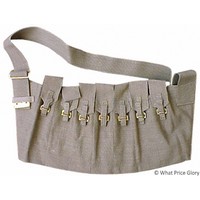
Each bandolier was designed to hold 50 rounds of .303 ammunition, neatly organized into ten individual pouches. Each pouch held a five-round "charger clip," a simple metal device that allowed a soldier to reload his ten-round magazine with two swift, practiced motions. Thump-thump, and he was back in the fight. The bandolier was the critical link in that chain of action.

From Boer War Necessity to a Global Standard

The concept wasn't new, but the British perfected it out of hard-won experience in the Second Boer War. They realized they needed a way for infantry, and especially mounted troops, to carry a large amount of ready-access ammunition without the bulk of traditional leather pouches. The cloth bandolier was the elegant solution: cheap to produce, lightweight, and incredibly effective. By the time the Great War erupted in 1914, the 50-round bandolier was a ubiquitous, iconic piece of a Tommy's kit, slung over his shoulder alongside his webbing and pack.

Unpacking an Original: What to Look For

What makes these original unissued bandoliers so special is that they are, in essence, time capsules. They were made for a single, violent purpose, yet they survived without ever fulfilling it. They are ghosts of a war that passed them by.

The Feel of History in Your Hands

Pick one up. The first thing you'll notice is the texture of the cotton cloth—it’s rough, durable, and completely no-nonsense. There’s a particular smell, too. Not of mold or decay, but the ghost-scent of a long-closed supply depot, a faint aroma of canvas and time itself. The stitching is heavy and robust, a testament to wartime manufacturing where function brutally trampled form. These weren't meant to be pretty; they were meant to hold together under the worst conditions imaginable.

Decoding the Stamps: A Detective's Game

Now, look closer. You'll see ink stamps. These markings are the quiet grammar of military logistics, and they tell a story. You might find a manufacturer's code, a date (these examples range from 1922 to 1945), and the iconic Broad Arrow, the mark of Crown property. Some were re-stamped after the war for continued service, adding another layer to their history. Each stamp is a clue, a breadcrumb leading back to a factory in Birmingham or a depot in Donnington, connecting you directly to the vast machinery of the British war effort.

The Bandolier in Action: From the Somme to El Alamein

Picture it. A young soldier in a muddy trench near Ypres, the rain soaking through his uniform. He reaches into a wooden crate and pulls out a fresh bandolier, the same kind you can hold today. He slings it over his shoulder, the weight a grim but familiar comfort. That bandolier might be his primary ammunition supply or a vital resupply for his section's Lewis gunner.

Now, jump forward two decades. A different soldier, this one in the sun-scorched desert of North Africa. His uniform is khaki drill, not wool serge, but draped across his chest is the very same pattern of bandolier. He lies in a shallow scrape, the air thick with dust and the crump of mortars, his hands reaching instinctively for another .303 clip. The bandolier served across every theatre, in every climate, a constant and reliable companion to the soldiers of Britain and the Commonwealth.

The Weight of Responsibility

For the soldier, the bandolier was more than just a piece of kit; it was a soldier’s promise. A promise to his mates that he had the means to cover their advance. A promise to his NCO that he was ready for the fight. Carrying it was a duty, a responsibility measured out in 50 brass-cased increments.

The Enfield Bandolier in Modern Reenactment

For the modern historical reenactor or living historian, details are everything. You can have the perfect uniform and a beautifully maintained rifle, but it's the small, authentic items that truly complete an impression. Using an original bandolier adds a layer of authenticity that a reproduction simply cannot match.

Achieving Authenticity

When you sling an original Enfield Ammo Bandolier over your shoulder, you feel that history. The way it hangs, the specific texture of the material—it’s all part of building a convincing and respectful portrayal. Because these are unissued, they are strong and durable enough for field use, allowing you to carry your blank rounds or dummy clips exactly as a soldier would have done 80 years ago. It’s the difference between looking the part and *feeling* the part.

A Tangible Link to the Past

In the end, the Original UK Enfield Ammo Bandolier is a simple object that tells a profound story. It's a story of industry, of logistics, of countless soldiers whose names we'll never know. It was designed to be disposable, a temporary vessel for the tools of war. Yet, here they are, decades later, silent witnesses to history. To own one isn't just to own a piece of military surplus; it's to hold a genuine, untouched artifact from a world-shaping conflict.

Experience a piece of history for yourself! Check out our authentic reproduction of Original UK Enfield Ammo Bandolier | .303 Ammunition here: Get Your Original UK Enfield Ammo Bandolier | .303 Ammunition

Tuesday, 10 March 2026

Original Canadian Enfield Web Sling | WWII Dated, Unissued

Discover the history and importance of the original WWII Canadian Enfield web sling. A deep dive for historians, collectors, and reenactors alike.

There are some things you just don't appreciate until you need them. I found that out the hard way during a particularly miserable tactical event a few years back. It was cold, the rain was coming in sideways, and we were slogging through what felt like a mile of Pennsylvania mud. My rifle, a beautiful No. 4 Mk I*, felt like it was gaining a pound with every step. And my sling—a cheap, flimsy reproduction—was digging into my shoulder like it had a personal grudge. Then, as I scrambled up a slick embankment, the buckle gave way. Just... popped. My rifle went sliding, and I was left holding a useless strip of canvas. In that moment, I promised myself: never again.

That's why I get a little emotional, a little reverent, when I handle something like this Original Canadian Enfield Web Sling | WWII Dated, Unissued. This isn't just an accessory. It's a promise. A piece of gear built with the understanding that a soldier's life might literally hang from it.

Original Canadian Enfield Web Sling | WWII Dated, Unissued

The Unsung Hero: Why the Canadian Enfield Web Sling is More Than Just a Strap

We obsess over the big things, don't we? The rifles, the helmets, the tunics. But the humble sling? It's often an afterthought. Yet, for the Commonwealth soldier slogging his way across Italy or Normandy, his sling was an indispensable companion. It was the unsung workhorse of his kit, and the ones made in Canada have a particularly fascinating story.

From the Factory Floor to the Front Line: A Sling's Journey

When you think of the arsenal of democracy, you might picture the sprawling factories of Detroit. But don't you dare forget the massive industrial effort north of the border. Canada was an absolute powerhouse, churning out vehicles, uniforms, and, of course, hundreds of thousands of Lee-Enfield rifles. And every single one of those rifles needed a sling.

Canada's Crucial Contribution

The WWII-dated Canadian web sling was a masterpiece of simple, rugged design. Made from tough-as-nails cotton webbing, it was designed to withstand the worst conditions imaginable—the damp of a trench, the abrasive sand of the desert, the freezing cold of a Dutch winter. The brass fittings were solid, meant to be operated by numb fingers without failing. There's an honesty to its construction, a sense of over-engineered purpose that you just don't find anymore.

More Than Just for Carrying

Here's something a lot of folks miss: the Lee-Enfield sling wasn't just a carrying strap. It was a vital shooting aid. A properly trained soldier knew how to wrap the sling around his support arm, creating a "hasty sling" that locked the rifle butt firmly into his shoulder. This technique turned the simple strap into a stabilizing force, dramatically improving accuracy, especially for long-range shots. It transformed the rifle from a heavy burden into an extension of the soldier's own body. It was a force multiplier, woven from canvas and brass.

The Feel of History: What "Unissued" Really Means

Now, let's talk about the magic word here: "unissued." Most surplus items you find have been there and done that. They're stained with sweat, grease, and the stories of a half-dozen owners. And that's wonderful. But unissued? That's a whole different animal.

A Time Capsule in Canvas

To hold an unissued piece of kit is to hold a ghost. This original Canadian Enfield web sling was made, inspected, and stamped with a date—1942, '43, '44. It was bundled, crated, and put into a quartermaster's store, waiting for a call-up that never came. It never felt the rain of the Scheldt or the dust of El Alamein. It's a perfect, pristine artifact. When you unroll it, you can still feel the starchy stiffness in the canvas. You can smell that faint, specific scent of old military stores—that mix of canvas, brass, and time itself. It whispers tales not of what happened, but of what *could have been*. It’s a time capsule you can hold in your hands.

Markings and Mysteries

Get your magnifying glass out. Check the webbing and the brass tip. You’ll likely find a C-Broad Arrow stamp, the definitive mark of Canadian military property. You'll find a manufacturer's code and a date. These aren't just markings; they are the item's birth certificate. They tie this simple object to a specific place and time, to a factory humming with wartime production and a nation fully committed to the fight for freedom.

Getting it Right: The Reenactor's Perspective

For those of us who spend our weekends trying to authentically recreate the past, details like this are everything. You can have the perfect uniform and a de-activated rifle, but if you're using a cheap, flimsy sling, the whole impression falls apart. It's not just a strap; it's a statement.

Why Authenticity in a Sling Matters

Using an original sling changes how you carry your rifle. It changes how you move. It even changes how you shoot, if you learn to use it as a stabilizer. It connects you to the past in a tangible way that a reproduction never can. When you feel that rough webbing on your shoulder, you're feeling what they felt. That connection, that authenticity, is the entire point of what we do. It’s the difference between wearing a costume and embodying a history.

Outfitting Your Lee-Enfield (and more)

This is, of course, the perfect, authentic sling for your Lee-Enfield No. 4 Mk I* or any other Commonwealth rifle of the era. The look, the feel, the materials—it's all spot-on, because it *is* the genuine article. Don't settle for "close enough." This is your chance to get the real thing, in a condition that's almost impossible to find.

A Tangible Link to the Past

In the end, this simple web sling is more than the sum of its parts. It's a testament to Canadian industry, a tool for the Commonwealth soldier, and a pristine artifact of the Second World War. It's a piece of history that wasn't just made; it was made to endure. And by some miracle of logistics and time, it has endured in perfect condition, just waiting to complete your collection or your impression.

Don't make the same mistake I did in the mud all those years ago. Trust the gear that was built to win a war. You won't regret it.

Experience a piece of history for yourself! Check out our authentic reproduction of Original Canadian Enfield Web Sling | WWII Dated, Unissued here: Get Your Original Canadian Enfield Web Sling | WWII Dated, Unissued

Monday, 9 March 2026

UK Leather Chinstrap for Pith Helmet & Slouch Hat | Repro

Discover the history of the UK Leather Chinstrap for pith helmets and slouch hats. A small detail that defines authenticity for any WWI or WWII reenactor.

More Than Just a Strap: The Unsung Story of the British Pith Helmet Chinstrap

Right then, listen up. Some lads in this hobby, they see the big picture. The rifle, the tunic, the webbing. They get the silhouette right. And that’s a decent start, I’ll grant you. But it’s the small things, the tiny, almost forgotten details, that separate the serious historian from the chap just playing dress-up. And let me tell you, there are few details more crucial, yet more overlooked, than a proper UK Leather Chinstrap for Pith Helmet & Slouch Hat.

UK Leather Chinstrap for Pith Helmet & Slouch Hat | Repro

A Sliver of Leather Against an Empire's Sun

Close your eyes for a moment. Picture it. The sun isn’t just warm; it’s a physical weight on your shoulders. The air is thick with dust, the smell of hot canvas, and something else… something uniquely colonial. On your head, the Wolseley pattern pith helmet feels like a godsend, a personal patch of shade in a world bleached by light. Now, what’s securing that vital piece of kit to your bonce? A thin strip of tan leather. That, my friends, is where our story begins.

This wasn't just any old strap. This was a piece of imperial engineering. It had to be tough enough to survive the monsoon rains of Burma, the dry heat of the Sudan, and the abrasive sands of the North African desert. It couldn’t crack, it couldn’t rot, and it absolutely could not fail when a sudden gust of wind threatened to send a man’s only protection from sunstroke cartwheeling across the veldt.

The Feel of History: Getting the Details Right

When you hold a good reproduction, like this standard tan leather chinstrap, you can almost feel that history. The leather is supple but strong. It has that faint, honest smell of proper tanning. It’s not a flimsy, costume-shop accessory. It’s a tool. It attaches to the internal hooks of the helmet liner, just as it should, providing a secure, reliable fit. Getting this right is the final stitch in a tapestry of authenticity. It’s the difference between looking like a soldier and feeling like one.

From the North-West Frontier to the Trenches of the Somme

The chinstrap’s service life is a map of the British Empire at its height and through its most trying times. You’d see it holding a pith helmet steady on a cavalryman patrolling the Khyber Pass. You’d find it looped over the brim of a slouch hat on an ANZAC Digger, a silent testament to his readiness. They were ubiquitous.

Not Just for Pith Helmets: The Versatile Slouch Hat

And that’s a key point. While we often associate this strap with the iconic pith helmet of the Anglo-Zulu War or the campaigns in Egypt, its use on the slouch hat is just as important. For Australian, New Zealand, and even some British units, the slouch hat was a symbol of their identity. The leather chinstrap was the functional piece that made it a viable piece of field kit, keeping it clamped down in a squall or during a frantic charge. I remember my own grandfather, a veteran of Tobruk, showing me his old slouch hat. The chinstrap was dark with age and sweat, cracked like an old map, but it was still there. He told me, "This bit of leather saw more than most politicians." He wasn't wrong.

The Gurkha Connection: A Mark of Distinction

We can't forget the Gurkhas. Their distinctive headwear, a variation of the slouch hat, also utilized this very style of chinstrap. For a Gurkha, every piece of his uniform is worn with immense pride. The chinstrap wasn’t just a functional item; it was part of the whole, a piece of the fearsome identity of the world's finest infantry. So if you’re putting together a Gurkha impression, this strap isn’t just an option—it’s a necessity.

The Reenactor's Conundrum: Why This Small Detail Matters So Much

So, why do I go on about a simple leather strap? Because in reenacting, we are curators of memory. We are trying to present a picture of the past that is as true and respectful as we can make it. And truth, believe you me, is found in the details.

When an inspecting officer—or a sharp-eyed member of the public—looks at your kit, their eyes are drawn to the things that are out of place. A modern buckle, a plastic strap, the wrong colour leather… it all shatters the illusion. It’s a disservice to the memory of the men we seek to portray. Your helmet might be perfect, your puttees wrapped just so, but if the chinstrap is wrong, the whole impression wobbles.

Securing Your Impression

This is your anchor point. The part that literally and figuratively secures your headwear and, by extension, your entire presentation. When you’re on the field, marching for hours under that same sun, you’ll be glad for the sturdy, reliable hold of a proper leather chinstrap. It won’t dig in, it won’t snap, and it will look, feel, and function exactly as it should.

Our Reproduction: A Faithful Nod to the Past

Look, finding original, usable chinstraps from that era is next to impossible. Leather is a natural material; it perishes. What we need are top-quality reproductions that honor the original design without compromise. And that’s what we have here.

Built for Authenticity

This reproduction UK leather chinstrap has been crafted to match the specifications of the originals. The colour, the thickness of the leather, the method of attachment—it’s all been done with an eye for historical accuracy. It’s a small investment that pays massive dividends in the quality of your impression. It's not just a strap; it's a whisper of history, a crucial link connecting you to the soldiers who relied on this very piece of kit a century ago.

Experience a piece of history for yourself! Check out our authentic reproduction of UK Leather Chinstrap for Pith Helmet & Slouch Hat | Repro here: Get Your UK Leather Chinstrap for Pith Helmet & Slouch Hat | Repro

Sunday, 8 March 2026

UK Khaki & Scarlet Hose Tops (Original) | 1956 Dated Infantry

Discover the history behind original 1956-dated British infantry hose tops. A deep dive into the regimental tradition and why this unissued kit is a must-have.

The Unseen Detail: Why British Infantry Hose Tops Tell a Story of Pride and Tradition

There's a certain smell to history. It's not just the scent of old books or dusty museums. It’s the earthy, slightly lanolin-tinged aroma of unissued wool, a scent that speaks of barracks stores, neatly folded bundles, and soldiers who never were. I've spent a lifetime chasing that scent, and every so often, you stumble upon a true time capsule. Today, we're talking about just such a treasure: the UK Khaki & Scarlet Hose Tops (Original) | 1956 Dated Infantry.

UK Khaki & Scarlet Hose Tops (Original) | 1956 Dated Infantry

More Than Just Socks: A Splash of Scarlet in a World of Khaki

At first glance, what are they? Simple woollen tubes. Khaki for the most part, with a bold, almost defiant slash of scarlet at the top. But to anyone who knows their British military history, that flash of red is a shout, not a whisper. It screams "Infantry." It’s a direct, unbroken line to the Redcoats who stood at Waterloo and the Tommies who went over the top on the Somme. It’s the silent language of the uniform, a small but powerful statement of identity.

These aren't mere socks. They are hose tops, designed to be worn with anklets or gaiters, with the coloured portion folded down over the top to display the regimental hue. In the vast, drab, and brutally practical world of mid-20th-century military attire, these small details were everything. They were a nod to tradition, a source of immense pride, and a way to distinguish one's corps from another at a glance. They were, and are, the unsung hero of the British soldier's "best foot forward."

From the Trenches to the Cold War: A Brief History of Regimental Hues

The practice of using colour to denote a soldier's role is as old as uniformed armies themselves. While the scarlet tunic had largely given way to khaki by the First World War, the traditions didn't just vanish. They simply went underground—or rather, down to the ankles. Puttees and, later, hose tops became the new canvas for these distinctions. Scarlet for the infantry, royal blue for artillery, a darker blue for engineers... each had its colour. It was a system of heraldry worn on the leg, a subtle code that every soldier understood.

The evolution from the long, cumbersome puttees of WWI to the more practical gaiters and hose tops of WWII and beyond was a matter of efficiency. But the British Army, ever a stickler for tradition, refused to let go of the regimental flash. The hose top was the perfect compromise: modern practicality married to centuries-old pride.

Unboxing History: The 1956 Dated Original Khaki & Scarlet Hose Tops

Now, let's talk about this specific find. What makes these 1956-dated hose tops so special? It's the combination of three perfect factors: they are original, they are unissued, and they are dated.

A Time Capsule in Wool: What "Unissued" Really Means

Unissued. "New old stock," as some call it. This means they were manufactured, bundled up—probably tied with that coarse, unforgiving army-issue string—and then sat in a quartermaster's store for decades. They've never been blanched, never felt the mud of a training exercise, never been worn by a soldier. The wool is still coarse and robust, not softened by wear. The scarlet is as vibrant as the day it was dyed. Holding a pair is like shaking hands with a ghost from 1956, a pivotal year that saw the eruption of the Suez Crisis. You can’t help but wonder, were these destined for a young national serviceman heading for the Canal Zone?

The Feel of Authenticity

There is a texture to the real thing that no reproduction can quite capture. Slide one on, and you feel the reassuring roughness of the khaki wool, a material designed for durability, not luxury. It’s a tangible connection to the past. I remember my own early reenacting days, kitted out in mostly reproduction gear. It looked right, but it never *felt* quite right. It was an old timer, a veteran of the hobby, who clued me in. "It's the little bits of original kit that sell the whole impression," he grumbled, pointing at my boots. "You've got to have something that was actually *there*." He was right. Incorporating original pieces, especially something as personal as hosiery, grounds your entire kit in reality.

Getting the Details Right: The Reenactor's Edge

For the serious reenactor, historian, or collector, details are paramount. Portraying a post-war British infantryman, perhaps from a regiment involved in one of the many "brushfire wars" of the 1950s and 60s, requires this level of accuracy. Your mates in your unit will notice. The public you're educating will appreciate it. But most importantly, *you'll* know.

Why Original Kit Matters

Wearing an original piece of kit changes your posture. It changes your mindset. You're not just wearing a costume; you're carrying a piece of history. These hose tops aren't just threads; they're echoes of a muster call that rang out over 60 years ago. They connect you to the long line of infantrymen who wore that same defiant splash of scarlet, a symbol of their courage and their corps.

A Legacy Worn on the Ankle

In the end, it’s easy to focus on the big, dramatic pieces of military hardware—the rifles, the helmets, the web gear. But the soul of a soldier's experience is often found in the small, intimate items. The things they wore day in and day out. These original, unissued 1956-dated khaki and scarlet hose tops are more than just surplus; they are a perfectly preserved piece of a proud tradition. They are a story waiting to be told, a detail waiting to complete an impression, and a genuine piece of history you can hold, smell, and wear.

Experience a piece of history for yourself! Check out our authentic reproduction of UK Khaki & Scarlet Hose Tops (Original) | 1956 Dated Infantry here: Get Your UK Khaki & Scarlet Hose Tops (Original) | 1956 Dated Infantry

Saturday, 7 March 2026

Original Australian Khaki Wool Hose Tops | Unissued Surplus

Discover the story behind original Australian Khaki Wool Hose Tops. Learn why this unissued surplus is a must-have for any WWII reenactor or collector.

There's a certain ritual to it, isn't there? The methodical process of putting on the kit before an event. The weight of the webbing, the familiar scent of blanco, the stiff leather of the boots. We spend fortunes on getting the tunic right, the rifle perfect, the helmet pristine. But I’ll tell you a secret an old-timer shared with me years ago, a lesson that has stuck with me ever since. He took one look at my otherwise immaculate Digger impression, pointed down, and grunted, "It's all in the details, mate. And you've forgotten the most important ones." He was pointing at my feet.

He was right. It’s the small things, the unsung heroes of a soldier's kit, that truly tell the story. And few items are more overlooked, yet more essential, than a proper pair of Original Australian Khaki Wool Hose Tops | Unissued Surplus.

Original Australian Khaki Wool Hose Tops | Unissued Surplus

The Anatomy of a Digger's Foundation

At first glance, they might just look like… well, sock tops. But pick one up. Go on. Feel the texture. This isn’t the soft, flimsy merino of modern hiking socks. This is a robust, coarse, and undeniably honest wool. You can feel the lanolin, that slight oily residue that made the wool so water-resistant. The knit is tight, designed for durability, not for a fashion show. The color is that perfect, earthy khaki that could blend into the dust of North Africa or the mud of the Kokoda Trail.

These aren't just socks; they are a purpose-built piece of military engineering. A time capsule in khaki wool.

Not Your Grandad's Dress Socks: The Wool and Weave

The Australian wool industry was the backbone of the Commonwealth's textile production during the World Wars. The wool used in these hose tops was selected for its incredible properties. It’s a fantastic insulator, keeping feet warm in the freezing mud of the Western Front. But it also breathes and wicks moisture away, a godsend in the suffocating humidity of the Pacific jungles. It sounds counter-intuitive to wear wool in the jungle, right? But the Diggers knew that wet feet led to blisters, infection, and worse. Wool was their first line of defense.

The Practical Purpose: More Than Just a Sock

Why "hose tops" and not just "socks"? The answer lies in the rest of the uniform. These were designed to be worn with puttees, the long strips of cloth wrapped around the lower leg for support and protection. The hose tops would be folded down over the top of the puttees, creating a neat, sealed, and regulation finish. This prevented dirt, rocks, and—let’s be honest—all sorts of nasty critters from getting into a soldier's boots. A small detail, but one that could make the difference between a comfortable march and a trip to the medical tent.

From the Deserts of Beersheba to the Jungles of New Guinea

The design of these hose tops saw service across the globe. You can picture them on the legs of the Australian Light Horsemen charging across the sands in WWI, a crucial part of a uniform that had to withstand punishing extremes of temperature. Fast forward two decades, and the same fundamental piece of equipment is on the legs of the brave men fighting tooth and nail in WWII.

They are a common thread, quite literally, that runs through the story of the Anzac. They represent the rugged practicality and no-nonsense attitude of the Australian soldier. While uniforms evolved and equipment changed, the fundamental need for reliable, durable foot-coverings remained a constant.

The Collector's Dream: What "Unissued Surplus" Really Means

Here’s the part that really gets my heart racing. These aren't reproductions. They aren't even items that have been worn, returned to the quartermaster, and stored. These are unissued surplus. Think about that for a moment.

These hose tops were manufactured, bundled, and crated, ready to be sent to a soldier who was waiting for them. But for whatever reason—the end of a contract, the end of the war—they never made it. They sat, perfectly preserved, in a military warehouse for decades. They are, in essence, brand new items that are over 70 years old. They smell of the factory and the storage crate, not of mud and sweat. For a collector or a reenactor, finding original kit in this condition is the holy grail. It’s a direct, untouched link to the past.

Getting It Right: The Reenactor's Final 10%

I go back to that old-timer at my first event. The lesson he taught me was about respect. Respect for the history, respect for the men who wore the uniform for real. Getting the big items right is easy. But achieving that final 10% of authenticity, the part that makes an impression truly believable, comes down to details like these genuine Australian wool hose tops.

When you fold these over your puttees, you're not just completing a look. You are experiencing a piece of the past. You understand how the uniform worked as a system. You feel the slight, comforting scratch of the wool and appreciate the sheer, rugged functionality of the design. It’s a feeling you simply cannot get from modern reproductions. It connects you to the history you're trying to portray in a tangible, deeply personal way.

A Thread of History

So, are they just socks? Absolutely not. They are a piece of history, a testament to Australian manufacturing, and an essential component of the iconic Digger uniform. They are the foundation upon which the soldier stood, marched, and fought. For anyone serious about collecting or reenacting the Australian military experience of the World Wars, owning an unissued, original pair isn't a luxury. It's an essential.

Experience a piece of history for yourself! Check out our authentic Original Australian Khaki Wool Hose Tops | Unissued Surplus here: Get Your Original Australian Khaki Wool Hose Tops | Unissued Surplus

Friday, 6 March 2026

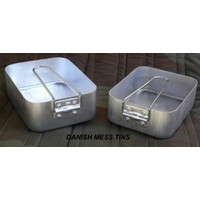
UK-Style Mess Tins | Danish Postwar Aluminum

Discover the history of the British WWII mess tin. Learn why this near-identical Danish postwar version is the perfect, safe choice for reenactors and historians.

The Unsung Hero of the British Tommy: More Than Just a Tin Can

There’s a sound every seasoned reenactor knows. It’s not the crack of a rifle or the rumble of a half-track. It’s quieter, more personal. It’s the gentle, rhythmic clatter of a mess tin against a water bottle as you march. It’s the unsung percussion of the PBI (Poor Bloody Infantry), a sound that tells you a man is equipped, that he’s ready for the long haul. And at the end of that haul, that same simple piece of metal becomes the most important bit of kit he owns.

UK-Style Mess Tins | Danish Postwar Aluminum

First Impressions: It’s Not Just a Lunchbox

Look at it. The iconic kidney shape, designed to nestle snugly against the curve of a man's hip inside his haversack. The two-piece, nesting design. The wire handle that swings up to lock the set together or serve as a bail for hanging over a fire. This isn't just a container; it's a perfectly engineered piece of field equipment, born from decades of experience. The UK-Style Mess Tins | Danish Postwar Aluminum we have here are a spitting image of the late-war British pattern, a testament to a design so good it was copied for decades.

When you hold one, you can feel the sheer practicality. It’s lightweight but sturdy. The larger tin is for your main course – your stew, your "Maconochie's." The smaller lid serves as a frying pan, a side plate, or, most importantly, the vessel for your brew. It’s the humble, kidney-shaped heart of the British soldier’s kit.

The Evolution of the British Mess Tin

The design didn't just appear out of nowhere, of course. Early versions from the Boer War and the Great War were often made of tinned steel, heavier and prone to rust. By World War II, the British Army had refined the pattern. The early war saw the introduction of the Mk. VI water bottle and the skeleton carrier, and the mess tin was right there, an integral part of the 1937 Pattern Web Equipment. By late in the war, aluminum became more common, and the design was perfected. It was so successful that after the war, other nations—like Denmark—adopted the exact same pattern for their own armies. And that, my friends, is why these Danish tins are such a find.

A Hot Meal in a Cold Trench: The Mess Tin in Action

Let's get one thing straight. In the field, this tin is your lifeline. It's a crucible for morale. I’ve been at events where the rain hasn't stopped for 48 hours, where you're cold to the bone and everything you own is some shade of damp. And in that moment, the ability to get your little "Tommy cooker" going and heat up some soup or brew a scalding hot tea in your mess tin… well, it’s the difference between packing it in and sticking it out.

You can imagine the scene in Normandy, 1944. A brief lull in the fighting. A couple of Tommies hunker down behind a shattered wall. Out come the mess tins. One lad fries up a few rashers of bacon he’s been saving, the smell cutting through the cordite-laced air. His mate boils water for a brew-up, dropping precious tea leaves and a spoonful of sugar into the steaming tin. For a few minutes, they aren’t just soldiers. They’re men enjoying a small, warm comfort in a world gone mad. That’s the power of the WWII mess kit.

From Bully Beef to Bacon and Tea: What a Tommy Ate

These tins saw it all. They were used to heat the infamous bully beef, to cook up slices of tinned bacon, and to boil the endless gallons of tea that fueled the British Army. Soldiers would use the larger tin to cook their main ration and the lid to brew their tea simultaneously over a small fire. It was also their plate, their bowl, their washbasin, and their shaving mug. I’ve even heard tales of them being used to dig with in a pinch. It was the ultimate multi-tool, a piece of kit a soldier came to depend on utterly.

The Reenactor’s Dilemma: Authenticity vs. Practicality

Now, we all strive for 100% authenticity. But sometimes, practicality has to have a say. I remember one particularly miserable event at The Victory Show. Rained all weekend. My original, 1944-dated tin—a prized possession—decided to reveal a pinhole leak right as my stew was getting hot. Let's just say a lapful of hot, watery beef wasn't the morale boost I was looking for.

That’s the risk with originals. They’re 80 years old. They can have hidden corrosion, questionable solder (sometimes with lead), and they carry a hefty price tag. You’re always a bit afraid to really use them, to scrape them out, to put them in the embers of a fire.

Why This Danish Postwar Tin is Your Best Bet

This is where these UK-Style Mess Tins come in. They are, for all intents and purposes, the same late-war pattern. But they're postwar production, made from clean, food-safe aluminum and are in near-new condition. You get the perfect look for your late-war impression without any of the drawbacks.

  • They are safe: No mystery metals or lead solder. You can cook and eat from them with confidence.
  • They are durable: No pinhole leaks or rusted-out bottoms. They’re ready for the rigors of a weekend battle.
  • They are authentic-looking: To anyone but the most eagle-eyed collector checking the stamps, they are indistinguishable from an original British tin once they’re in your haversack.

They are, quite simply, the smartest choice for a reenactor who actually *uses* their kit. It’s the difference between a museum piece and a functional tool.

A Piece of History in Your Haversack

Every time you pack your gear, every time that tin clatters against your canteen, you’re connecting with the past. Every time you use it to heat a meal after a long day in the field, you’re experiencing a fraction of what those soldiers did. The British mess tin wasn’t a weapon, but it was essential for victory. It kept men going. It provided comfort, warmth, and a taste of home in the most inhospitable of places.

This isn't just a piece of military surplus; it's a functional artifact, a gateway to a Tommy's scoff. It’s a chance to hold a piece of history that’s not too fragile to use, and to honor the men who relied on these simple, brilliant cans for their very survival.

Experience a piece of history for yourself! Check out our authentic reproduction of UK-Style Mess Tins | Danish Postwar Aluminum here: Get Your UK-Style Mess Tins | Danish Postwar Aluminum

Thursday, 5 March 2026

Original UK Bren Gun Spare Barrel Bag | WWII Dated, Unissued

Discover the history behind the Original UK Bren Gun Spare Barrel Bag. An essential, unissued WWII item for collectors and reenactors. Learn its story.

More Than Just a Bag: The Unsung Hero of the Bren Gun Team

There are some pieces of kit that just feel right in your hands. You pick them up, and a jolt of connection—a strange, tangible echo of the past—runs right through you. It’s not always the big, flashy items, either. Sometimes, it’s the quiet, unassuming gear that tells the most profound stories. And let me tell you, this Original UK Bren Gun Spare Barrel Bag | WWII Dated, Unissued is one of those pieces.

Original UK Bren Gun Spare Barrel Bag | WWII Dated, Unissued

The Smell of History: First Impressions of an Original Barrel Bag

The moment you pull this bag from its packaging, you know. You just know. It’s not the crisp, sterile feel of a modern reproduction. No, this is different. There's a particular scent—that unique, musty perfume of decades-old canvas, military surplus, and time itself locked away in a depot somewhere in Britain. It’s the smell of history.

The khaki canvas is stiff, rugged, and unyielding. It hasn't been softened by rain-soaked patrols in Normandy or scuffed by desperate crawls through the Dutch countryside. It’s a time capsule. You can see the thick, utilitarian stitching, designed not for beauty but for brutal, uncompromising durability. This bag was made to do a job, and even after 80 years of slumber, it feels ready to be issued.

Why a Spare Barrel? The Fiery Heart of the Bren Gun

So, why did one of the most reliable light machine guns of the Second World War even need a spare barrel, let alone a dedicated bag for it? The answer is simple: heat. The Bren Gun, a masterpiece of design born from Czech ingenuity and British manufacturing, could spit out .303 rounds at a blistering 500 rounds per minute. Sustained fire like that turns a precision-engineered barrel into something dangerously close to a glowing bar of steel.

An overheated barrel doesn’t just glow; it warps. It loses accuracy, and in the worst-case scenario, it fails completely. That’s a death sentence for an infantry section relying on the Bren for covering fire.

Enter the "Number 2." Every Bren Gun team had one. While the Number 1 was the gunner, the Number 2 was his lifeline. His job was to feed the gun with fresh magazines and, crucially, to carry the spare barrel in this very bag. When the gunner yelled “Change barrels!”, the Number 2 would spring into action. In a practiced, lightning-fast drill, he’d unlock the old barrel, pull it out with a gloved hand (or a scrap of cloth if he was unlucky), and slam the cool, fresh one into place. The whole process took mere seconds. This simple khaki canvas bag wasn't an accessory; it was an essential component in keeping the fiery heart of the Bren beating.

Built for the Battlefield: A Look at the Bag's Design

There are no frills here. The design of the Bren Gun Spare Barrel Bag is a masterclass in military pragmatism. It's a simple, long canvas pouch with a fold-over flap secured by a single strap and buckle. It's tough as nails, designed to protect the spare barrel from mud, dirt, and dings while being slung over a soldier's shoulder as he ran, crawled, and fought. It's a perfect example of the 37 Pattern webbing philosophy: everything has a purpose, and nothing is wasted.

"Unissued" - A Time Capsule from the 1940s

I remember the first time I got my hands on a real piece of unissued WWII kit. The feeling was electric. It’s one thing to own something that went through the war, bearing the scars of its service. It’s another thing entirely to hold an item just as it left the factory, waiting for a soldier who never came to collect it.

That's what this bag represents. It’s a ghost. It was manufactured during the largest conflict in human history, part of a vast logistical effort to equip millions. But for whatever reason—the war's end, a surplus in supply—it was never handed over. It sat, waiting. This isn't just a bag; it's a silent veteran of the home front, a testament to the industrial might that underpinned the Allied victory. Finding an original, WWII-dated, and unissued piece of British Army kit like this is becoming a true rarity.

Completing Your Impression: The Reenactor's Perspective

For those of us dedicated to historical reenactment, details matter. Anyone can get the rifle and the helmet right. But it's the small things, the specialist equipment, that truly sell an impression. If you’re building a British or Commonwealth infantry Bren Gunner or Number 2 loadout, this bag is not just a nice-to-have; it’s essential.

Having an original piece of WWII Bren Gun equipment elevates your entire kit. It adds a layer of authenticity that reproductions, however good, can never quite capture. It's the difference between looking the part and *feeling* the part. When you sling this bag over your shoulder, you’re not just carrying a canvas tube. You're carrying the weight of its intended purpose and honoring the memory of the men who carried them for real.

A Tangible Link to the Past

This isn't just a product in a webshop. It's a key that unlocks a deeper understanding of the past. It’s a direct link to the Tommy in the slit trench, waiting for the whistle to go over the top, his mate next to him with this very bag at his side. It's more than just stitching and fabric; it’s a story waiting to be told. For the collector, it’s a pristine artifact. For the reenactor, it's the final, perfect piece of the puzzle. An incredible, unissued survivor of a bygone era.

Experience a piece of history for yourself! Check out our authentic reproduction of Original UK Bren Gun Spare Barrel Bag | WWII Dated, Unissued here: Get Your Original UK Bren Gun Spare Barrel Bag | WWII Dated, Unissued

Wednesday, 4 March 2026

UK Officer Service Dress Cap

Discover the history and symbolism of the UK Officer Service Dress Cap. A deep dive for military historians and reenactors into an iconic piece of WWI/WWII kit.

More Than a Hat: The Story and Symbolism of the UK Officer Service Dress Cap

There are certain objects that seem to hold history within their very fibres. They possess a sort of gravity. I remember my grandfather keeping his old service cap on the top shelf of his wardrobe, next to a small box of medals. It wasn't to be played with. It was an object of almost religious reverence, smelling faintly of Brasso and old wool. He’d take it down on occasion, turn it over in his hands, his mind a thousand miles and fifty years away. That cap wasn't just headwear; it was a testament. It was the UK Officer Service Dress Cap, and it was the silent witness to his entire world.

UK Officer Service Dress Cap

First Impressions: The Weight of Command

To understand this cap, you must first understand the man who wore it. A newly commissioned Second Lieutenant, perhaps barely out of his teens, would have purchased his own uniform from a regimental tailor. The first time he placed that cap on his head, he wasn't just getting dressed. He was assuming a mantle of responsibility for the lives of other men. It’s not just stitched wool and leather; it’s a piece of stitched-in-time authority.

The Feel of Barathea Wool

The first thing you notice about a quality reproduction is the material. This isn't flimsy felt. It's proper Khaki Barathea wool. Run your fingers over it. There’s a tight, fine weave with a slight ribbed texture that gives it a subtle, dignified sheen. It feels substantial, durable. This was a material designed to look sharp on the parade ground yet withstand the rigours of a campaign. It had to survive the damp chill of a Flanders dugout and the baking sun of the North African desert, all while maintaining the officer's bearing.

Details That Define a Leader

Then, the details emerge. The stiff, polished leather peak, angled just so. The faint, clean scent of the real leather chinstrap—known as a 'Kersey strap'—held in place by two brass General Service buttons bearing the King's Crown. That crown is crucial. It firmly places the cap in the 1902-1953 period, the era of two world-spanning conflicts. It’s a small detail, but for anyone serious about history, it’s everything. These weren't mere decorations; they were the subtle geometry of command, instantly marking a man out as a leader.

A Cap for Two Wars: The Evolution of an Icon

The Service Dress cap was the quintessential piece of British officer's headwear for the first half of the 20th century. While its basic form remained, it saw its share of evolution, both official and... well, unofficial.

From the Somme to El Alamein

In the Great War, the stiff, formal cap was often a liability in the trenches. It made a fine target for snipers. Officers began removing the wire stiffener from the crown, creating a much softer, more comfortable cap they could crush and stuff into a pocket. This field-modified version became affectionately known as the "gor blimey" cap, a trademark of the battle-hardened veteran. By World War II, this softer style had become more or less standard issue, a practical lesson learned in the mud of the Western Front.

Decoding the Details: Crown, Chinstrap, and Character

The way the cap was worn said a lot about the man. Regulations demanded it be worn squarely on the head, but a slight, rakish tilt forward was often the sign of an experienced officer. The chinstrap was rarely, if ever, worn under the chin; its purpose was to sit snugly on the peak, a polished line of dark leather. To wear it down was a sign of extreme weather or, to the more cynical old hands, a sign of a very green officer. This piece of kit wasn't just uniform; it was a canvas for subtle expressions of identity and experience.

Getting the Look Right: The Reenactor's Responsibility

For those of us who strive to keep this history alive through reenactment, authenticity is paramount. You simply cannot create a convincing British officer impression from WWI or WWII without the correct headwear. It’s the finishing touch that frames the entire uniform. And let me be blunt: quality matters.

Why Quality Matters in Your Impression

A cheap, poorly made cap stands out a mile away. The shape is wrong, the materials feel fake, and the details are sloppy. It betrays the memory of the men you’re trying to portray. A well-made reproduction of the UK Officer Service Dress cap, with its accurate Barathea wool and brass fittings, completes the silhouette. It sits on your head correctly. It has the right weight, the right feel. This isn't just about dressing up; it's a duty of memory, and that duty demands we get the details right.

A Link to the Past

When you hold a cap like this, you’re holding more than a piece of militaria. You're holding the ghost of a thousand salutes. You feel the pride of a commission, the fear of an assault, the quiet determination of a leader on a long and difficult road. It is a direct, tangible link to the past, to the grandfathers and great-uncles who wore the original upon which it is based.

It’s more than a hat. It always was.

Experience a piece of history for yourself! Check out our authentic reproduction of UK Officer Service Dress Cap here: Get Your UK Officer Service Dress Cap

Tuesday, 3 March 2026

Sykes-Fairbairn 2nd Pattern Commando Dagger

Unsheathe the history of the Sykes-Fairbairn Commando Dagger. A deep dive into the iconic WW2 fighting knife used by Commandos, Rangers, and the OSS.

The Silent Partner: Unsheathing the Story of the Sykes-Fairbairn Commando Dagger

There are some pieces of kit that just… sing. You pick them up, and a current runs through you. It’s the weight of history, the echo of purpose. For me, few items hum with that kind of energy more than the Sykes-Fairbairn 2nd Pattern Commando Dagger. It’s more than just a knife. It's a statement. It’s a key that unlocks a very specific, very dangerous chapter of World War II history.

Sykes-Fairbairn 2nd Pattern Commando Dagger

I remember the first time I handled an original. It was at a militaria fair years ago, a grizzled old veteran, a former Commando, watching me with sharp eyes as I held his personal F-S knife. The grip, a precise pattern of diamond knurling, felt cold and brutally efficient in my palm. It wasn't heavy, but it had a presence. A perfect, almost unnatural balance. It felt less like a tool and more like an extension of your own will. That feeling... well, that's what we chase in reenacting, isn't it? Authenticity. Not just looking the part, but feeling it.

More Than Just a Blade: The Birth of an Icon

You can't talk about the Fairbairn-Sykes without talking about the men who gave it their names: William Ewart Fairbairn and Eric Anthony Sykes. These two weren't soldiers, not initially. They were policemen in the blood-soaked streets of 1920s and '30s Shanghai—one of the most dangerous cities in the world at the time. There, they pioneered what we now call modern close-quarters combat. They weren't theorists; their methods were developed in back-alley brawls and life-or-death struggles.

From Shanghai Gutters to Normandy Beaches

When WWII ignited, Britain needed men who could operate in the shadows, who could strike without warning. They needed Commandos. And these new elite forces needed a weapon to match their mission. Fairbairn and Sykes were brought in to train these men in their own lethal brand of fighting, and they designed the perfect tool for the job. The F-S knife was born—a stiletto with a university education in lethality.

It was a pure killing weapon. No frills. It wasn't for prying open ammo cans or cutting rope. Its slender, needle-pointed blade was designed for one thing: penetration. The training was just as grimly focused, teaching soldiers to use the knife for silent, devastating strikes.

The Anatomy of a Killer: Why the 2nd Pattern is Special

The very first F-S knives, the 1st Pattern, are incredibly rare collector's items. But the 2nd Pattern Fairbairn-Sykes dagger is the one that truly defines the war. The design was simplified for mass production—the elegant S-shaped crossguard of the first model was replaced by a straight, functional one. This is the knife that was tucked into the belts of Commandos on the shores of Dieppe, dropped with SOE agents behind enemy lines in France, and carried by US Army Rangers scaling the cliffs of Pointe du Hoc.

The straight crossguard, the diamond-knurled grip, the 7-inch blade... this is the silhouette that became a symbol of Allied special forces. It was a badge of honor, a sign that you were one of the best, one of the most feared.

Holding History in Your Hand: A Reenactor's Perspective

For a reenactor, getting the details right is everything. It’s the difference between a good impression and a great one. And if you’re kitting out as a British Commando, an OSS operative, or an early US Ranger, this dagger isn't optional. It's the punctuation mark at the end of a very short, very violent sentence that was your whole mission statement.

The Weight of It All

When you slide a quality reproduction F-S knife from its leather sheath, there's a distinct sound—a soft *shing* of steel on leather. That's the first step. Then there’s the balance. A proper F-S knife should feel blade-heavy, but alive in your hand. This reproduction captures that. The cold touch of the nickel or the discreet threat of the blacked-out finish... it instantly connects you to the mindset of the soldier who carried it. You feel the gravity of it. You stand a little straighter.

Getting the Details Right for Your Kit

Strapping this to your belt or, more accurately, stitching the sheath directly to the leg of your battledress trousers, completes the picture. It's a detail that tells a story. It says you're not just a regular infantryman. It says you've had specialized training. It says you operate in the dark. Paired with a Denison smock and a fighting spirit, the Sykes-Fairbairn 2nd Pattern Commando Dagger is more than an accessory; it’s a character statement.

A Legacy Forged in Steel

The Fairbairn-Sykes Fighting Knife is the grim godfather of all modern combat knives. Its DNA can be seen in countless blades that followed. It represents a turning point in warfare, where the individual soldier, armed with specialized tools and ruthless training, could have a strategic impact far beyond their numbers.

It’s a stark, beautiful, and terrifying piece of history. It’s a reminder of a time when victory depended on small groups of brave men doing difficult things in the dead of night. Holding one, even a reproduction as fine as this, is to hold a piece of that shadow war. It’s a connection to the quiet professionals who carried them, the silent partners on their lonely missions.

Experience a piece of history for yourself! Check out our authentic reproduction of Sykes-Fairbairn 2nd Pattern Commando Dagger here: Get Your Sykes-Fairbairn 2nd Pattern Commando Dagger

Monday, 2 March 2026

UK Sten Gun Magazine Bandolier (Reproduction) | Long Strap

A deep dive into the history and importance of the UK Sten Gun Magazine Bandolier for WWII reenactors. Discover why this piece of kit is a must-have.

The Unsung Workhorse: Why the Sten Gun Magazine Bandolier is a Reenactor's Best Friend

There are some pieces of kit that just feel right. You sling them over your shoulder, and suddenly, the years fall away. The weight, the texture, the simple, undeniable purpose of the thing… it connects you to the past. For anyone portraying a British or Commonwealth soldier in World War II, few items do this better than the humble, hardworking 7-pocket bandolier for Sten gun magazines.

UK Sten Gun Magazine Bandolier (Reproduction) | Long Strap

It’s not glamorous. It doesn't have the rugged charm of a leather jerkin or the iconic silhouette of a Brodie helmet. But let me tell you, after years in this hobby, you learn to appreciate the gear that simply works. The bandolier is the silent partner to the infamous "Plumber's Nightmare," and getting a good one is absolutely crucial for an authentic impression. And frankly, for not losing your precious magazines in the middle of a mock battle.

More Than Just a Pouch: A Glimpse into the Bandolier's Past

You can’t talk about this bandolier without first talking about the gun it served. The Sten was a marvel of wartime expediency—cheap, crude, and churned out by the millions. It was a weapon for desperate times, and it needed equipment to match. Forget finely stitched leather pouches; the British Tommy needed a way to carry a whole lot of 9mm ammunition, and he needed it yesterday.

Born of Necessity: The Sten and its Simple, Brilliant Kit

And so, the 7-pocket bandolier was born. Made from simple cotton duck canvas, it was a masterpiece of function over form. Seven pockets, each designed to hold a single 32-round Sten magazine. A simple shoulder strap. That's it. No complex buckles, no unnecessary frills. It was designed to be produced quickly and cheaply by factories that, just months before, might have been making tablecloths or tents. This was the genius of the British war effort—a symphony of crude, effective engineering.

Think about the firepower it represented. With one magazine in the gun and seven in the UK Sten Gun Magazine Bandolier, a soldier carried 256 rounds. For the commandos, paratroopers, and resistance fighters who favored the Sten's compact size and rate of fire, this bandolier wasn't just a piece of webbing; it was their lifeline.

Life on the Front Line: Carrying the Weight of War

Imagine the feel of it. The rough canvas chafing against a wool battledress tunic. The cold, hard weight of seven fully loaded steel magazines—we’re talking nearly 4 kilograms of ammo—pulling down on your shoulder as you crouch in a muddy slit trench in Normandy. You can almost hear the metallic clatter as you pull a fresh mag, the sound muffled by the din of battle. It’s the kind of gear that doesn't ask for attention, it just does its job, holding the tools of the trade until they’re needed most.

From the Ardennes to Your Kitbag: What Makes a Great Reproduction?

As reenactors, we are custodians of this history. We strive for an accuracy that honors the memory of those who wore this kit for real. That's why the quality of a reproduction matters so much. I’ve seen my share of shoddy ones over the years—thin material, weak stitching, and straps that feel like they’d snap if you looked at them too hard.

Getting the Details Right: Authenticity Matters

A quality reproduction, like this UK Sten Gun Magazine Bandolier (Reproduction) | Long Strap, gets the fundamentals spot on. The weave of the canvas, the color, the construction of the pockets—it all has to look and feel correct. It’s about creating that seamless impression where, from a few feet away, your kit is indistinguishable from an original photograph. This is where you separate the serious enthusiast from the casual hobbyist.

The Modern Touch: A Nod to Today's Reenactor

But here's a bit of hard-won wisdom for you. While we strive for historical accuracy, we're not 18-year-old conscripts from 1944. We're… well, we’re a bit bigger. One of the biggest frustrations with original or poorly made repro gear is that it simply doesn't fit. That's what makes the "long strap" feature on this particular bandolier so brilliant. It’s a small, practical concession to the modern physique that makes the kit comfortable and usable without compromising the historical look. It means you can wear it correctly over your battledress and other webbing, just as a Tommy would have, without it cutting off your circulation.

Field-Testing the Legacy: Why This Bandolier Belongs in Your Impression

So, what does this all mean when you're in the field? It means confidence. It means not having to worry about a pocket ripping or a magazine falling out while you’re scrambling for cover. It means the weight is distributed properly, letting you focus on the event, not on your uncomfortable gear.

A Personal Reflection: The Weight of History

I remember one of my first big events. It was a cold, wet weekend near Salisbury Plain, and I was using a fragile, original bandolier I’d paid far too much for. Right as we were forming up for a mock assault, I bent down to adjust my gaiters and heard a sickening *rip*. The main strap, brittle with age, had given way. My magazines went everywhere. It was a sharp lesson in the difference between a museum piece and functional field kit. A good reproduction isn't a compromise; it's a necessity for anyone who actually wants to *use* their equipment.

This reproduction bandolier is more than just stitches and canvas; it’s a direct line to the past, built with the strength to be used today. It lets you carry that history, to feel that weight on your shoulder, and to do it with the confidence that your gear is as ready as you are.

Equipping the Modern Tommy

In the end, the Sten gun magazine bandolier is a perfect symbol of the soldier it served: unassuming, practical, and utterly essential. It was a workhorse, a quiet contributor to the eventual victory. For the modern reenactor, having a high-quality, well-fitting reproduction is non-negotiable. It’s the foundation upon which an authentic and reliable British infantry impression is built.

Experience a piece of history for yourself! Check out our authentic reproduction of UK Sten Gun Magazine Bandolier (Reproduction) | Long Strap here: Get Your UK Sten Gun Magazine Bandolier (Reproduction) | Long Strap

UK String Vest (Reproduction) | Cold Weather Underwear

Discover the history of the UK String Vest, the unsung hero of British soldiers in WWII. Learn how this ingenious underwear kept Tommies wa...