There are some pieces of gear that just scream "WWII." The M1 Garand, the "pineapple" grenade, the classic steel pot helmet. But then there are the unsung heroes. The gear that didn't just look the part, but solved a fundamental problem on the battlefield. Today, we're talking about one of my absolute favorites: the leather-and-brass solution to a steel-and-blood problem, the US M3 Shoulder Holster for the .45 Auto Pistol.

The Unsung Hero on Your Chest: A Deep Dive into the US M3 Shoulder Holster
Close your eyes for a second. Imagine you're the commander of a Sherman tank, buttoned up and rumbling across the Normandy hedgerows. The air is thick with the smell of diesel, hot steel, and nervous sweat. Space is a luxury you don't have. Every inch of the turret is packed with equipment, ammunition, and your crew. Now, imagine trying to draw a .45 pistol from a standard hip holster in that metal coffin. It's a clumsy, snag-prone nightmare. This, right here, is the problem the M3 holster was born to solve.
More Than Just Leather: The Genesis of the M3 Holster
Before 1942, if you were issued an M1911A1 pistol, you were likely issued an M1916 hip holster. A fine piece of kit for an infantryman on the march, but a disaster for anyone sitting down. Pilots couldn't access it in a cramped cockpit. Paratroopers found it snagged on everything during a jump. And as for our tanker friend? Forget about it. The Army needed something better, something faster, something that kept the .45 out of the way but always within reach.
A Problem of Space and Speed
The "Holster, Shoulder, M-3" was the elegant answer. Initially developed for the Army Air Forces, its genius was immediately apparent. By shifting the pistol from the hip to the torso, it freed up the user's waistline and put the weapon in a prime location for a quick, seated draw. It didn't take long for Armored Divisions and Airborne units to see the M3 and say, "I'll take one of those." It quickly became the iconic "tanker holster" or "pilot holster," a badge of honor for specialized troops.
Built for a Fight: Anatomy of a Classic
What I've always admired about wartime gear is its brutal simplicity. There are no frills, no unnecessary gadgets. Every stitch, every rivet has a purpose. The M3 is a perfect example.
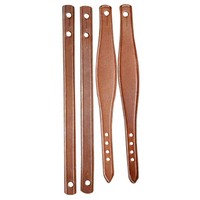
Crafted from heavy, durable saddle leather, it was designed to withstand the abuse of a combat environment. The smell of that thick, oiled leather is a scent that transports you right back in time. The design is minimalist: a form-fitted holster pocket, a simple leather shoulder strap, and a chest strap to keep it from flopping around. The open-top design, secured by a simple snap strap, was all about speed. No cumbersome flaps to wrestle with when seconds counted. The satisfying *thump* of an M1911A1 seating into a well-made M3 is a sound every enthusiast should know.
In the Hands of Heroes: Who Carried the M3?
When you see an original photo of a GI wearing an M3, you know you're looking at someone at the sharp end of the spear. You see them slung over the shoulders of P-47 Thunderbolt pilots, their hands resting near the grip as they scan the skies over Germany. You see them on the chest of grizzled tank sergeants, peering from the cupola of their Sherman, the brass "U.S." embossed on the leather a small point of pride.
From Normandy to the Pacific: The M3 in Action
I remember my old drill sergeant, a man who'd forgotten more about gear than I'll ever know, talking about the "economy of motion." Every piece of kit had to have a purpose and couldn't get in the way. The M3 holster... now that's a masterclass in economy of motion. It didn't just carry a weapon; it carried confidence. For a paratrooper of the 101st Airborne, dropping behind enemy lines on D-Day, that holster meant his sidearm was secure during the jump and ready the moment his boots hit the ground. That's not just a piece of equipment; that's a lifeline.
The Reenactor's Choice: Why This Reproduction Hits the Mark
Now, let's talk about bringing this history to life. As a reenactor or a serious collector, authenticity is everything. You want gear that looks, feels, and functions like the real deal. That's where a high-quality reproduction like this US M3 Shoulder Holster comes in.
It's made from the correct heavy saddle leather, not the flimsy costume-grade stuff you see elsewhere. The stitching, the "U.S." stamp, the hardware—it's all spot-on. But here’s the best part, and it's a detail many reproductions miss: it's built for modern soldiers. Let's be honest, the average man today is a bit broader in the chest and shoulders than the average GI from 1944. This reproduction features a longer strap, ensuring a proper, comfortable fit without having to punch extra holes or strain the leather. It’s a small, thoughtful detail that makes a world of difference when you’re wearing it all weekend.
This isn't just a prop. It's a functional, durable piece of kit that completes your impression and honors the brilliant design of the original. It’s the kind of gear that makes you stand a little taller, the rhythmic creak of the leather against your fatigues a constant reminder of the history you're representing.
The US M3 shoulder holster is more than a museum piece; it's a piece of living history. It tells a story of innovation, practicality, and the American soldier's ability to adapt and overcome. It’s a testament to the idea that sometimes, the simplest solutions are the most effective, enduring long after the battle is over.