Thursday, 16 October 2025

US M3 Shoulder Holster for .45 Auto Pistol

A deep dive into the history and design of the WWII US M3 Shoulder Holster. Learn why this iconic .45 holster was the choice for tankers, pilots, and paratroopers.

There are some pieces of gear that just scream "WWII." The M1 Garand, the "pineapple" grenade, the classic steel pot helmet. But then there are the unsung heroes. The gear that didn't just look the part, but solved a fundamental problem on the battlefield. Today, we're talking about one of my absolute favorites: the leather-and-brass solution to a steel-and-blood problem, the US M3 Shoulder Holster for the .45 Auto Pistol.

US M3 Shoulder Holster for .45 Auto Pistol

The Unsung Hero on Your Chest: A Deep Dive into the US M3 Shoulder Holster

Close your eyes for a second. Imagine you're the commander of a Sherman tank, buttoned up and rumbling across the Normandy hedgerows. The air is thick with the smell of diesel, hot steel, and nervous sweat. Space is a luxury you don't have. Every inch of the turret is packed with equipment, ammunition, and your crew. Now, imagine trying to draw a .45 pistol from a standard hip holster in that metal coffin. It's a clumsy, snag-prone nightmare. This, right here, is the problem the M3 holster was born to solve.

More Than Just Leather: The Genesis of the M3 Holster

Before 1942, if you were issued an M1911A1 pistol, you were likely issued an M1916 hip holster. A fine piece of kit for an infantryman on the march, but a disaster for anyone sitting down. Pilots couldn't access it in a cramped cockpit. Paratroopers found it snagged on everything during a jump. And as for our tanker friend? Forget about it. The Army needed something better, something faster, something that kept the .45 out of the way but always within reach.

A Problem of Space and Speed

The "Holster, Shoulder, M-3" was the elegant answer. Initially developed for the Army Air Forces, its genius was immediately apparent. By shifting the pistol from the hip to the torso, it freed up the user's waistline and put the weapon in a prime location for a quick, seated draw. It didn't take long for Armored Divisions and Airborne units to see the M3 and say, "I'll take one of those." It quickly became the iconic "tanker holster" or "pilot holster," a badge of honor for specialized troops.

Built for a Fight: Anatomy of a Classic

What I've always admired about wartime gear is its brutal simplicity. There are no frills, no unnecessary gadgets. Every stitch, every rivet has a purpose. The M3 is a perfect example.

Crafted from heavy, durable saddle leather, it was designed to withstand the abuse of a combat environment. The smell of that thick, oiled leather is a scent that transports you right back in time. The design is minimalist: a form-fitted holster pocket, a simple leather shoulder strap, and a chest strap to keep it from flopping around. The open-top design, secured by a simple snap strap, was all about speed. No cumbersome flaps to wrestle with when seconds counted. The satisfying *thump* of an M1911A1 seating into a well-made M3 is a sound every enthusiast should know.

In the Hands of Heroes: Who Carried the M3?

When you see an original photo of a GI wearing an M3, you know you're looking at someone at the sharp end of the spear. You see them slung over the shoulders of P-47 Thunderbolt pilots, their hands resting near the grip as they scan the skies over Germany. You see them on the chest of grizzled tank sergeants, peering from the cupola of their Sherman, the brass "U.S." embossed on the leather a small point of pride.

From Normandy to the Pacific: The M3 in Action

I remember my old drill sergeant, a man who'd forgotten more about gear than I'll ever know, talking about the "economy of motion." Every piece of kit had to have a purpose and couldn't get in the way. The M3 holster... now that's a masterclass in economy of motion. It didn't just carry a weapon; it carried confidence. For a paratrooper of the 101st Airborne, dropping behind enemy lines on D-Day, that holster meant his sidearm was secure during the jump and ready the moment his boots hit the ground. That's not just a piece of equipment; that's a lifeline.

The Reenactor's Choice: Why This Reproduction Hits the Mark

Now, let's talk about bringing this history to life. As a reenactor or a serious collector, authenticity is everything. You want gear that looks, feels, and functions like the real deal. That's where a high-quality reproduction like this US M3 Shoulder Holster comes in.

It's made from the correct heavy saddle leather, not the flimsy costume-grade stuff you see elsewhere. The stitching, the "U.S." stamp, the hardware—it's all spot-on. But here’s the best part, and it's a detail many reproductions miss: it's built for modern soldiers. Let's be honest, the average man today is a bit broader in the chest and shoulders than the average GI from 1944. This reproduction features a longer strap, ensuring a proper, comfortable fit without having to punch extra holes or strain the leather. It’s a small, thoughtful detail that makes a world of difference when you’re wearing it all weekend.

This isn't just a prop. It's a functional, durable piece of kit that completes your impression and honors the brilliant design of the original. It’s the kind of gear that makes you stand a little taller, the rhythmic creak of the leather against your fatigues a constant reminder of the history you're representing.

The US M3 shoulder holster is more than a museum piece; it's a piece of living history. It tells a story of innovation, practicality, and the American soldier's ability to adapt and overcome. It’s a testament to the idea that sometimes, the simplest solutions are the most effective, enduring long after the battle is over.

Experience a piece of history for yourself! Check out our authentic reproduction of US M3 Shoulder Holster for .45 Auto Pistol here: Get Your US M3 Shoulder Holster for .45 Auto Pistol

Wednesday, 15 October 2025

US Enlisted Trouser Belt (Repro) | Custom Size OD#3 Web

A deep dive into the history of the US Enlisted Trouser Belt of WWII. Discover why the M1937 belt in OD#3 is a crucial detail for any reenactor.

More Than Just a Belt: The Unsung Hero of the WWII GI's Uniform

You can smell it before you see it. That distinct aroma of damp wool, canvas, and old leather. It’s the scent of history. You pull on the scratchy M1937 wool trousers, the weight of them familiar and grounding. You’ve got the shirt, the boots, the field jacket. But the uniform isn’t complete. It feels loose, unfinished. Then you grab it—a simple strip of olive drab cotton with a plain, blackened metal buckle. You thread it through the loops, pull it snug, and hear that satisfying, solid click as the friction buckle bites down. Now, you’re ready. Now, the impression feels whole.

That simple piece of gear, the US Enlisted Trouser Belt (Repro) | Custom Size OD#3 Web, is more than just a way to hold your pants up. It’s the quiet anchor of the whole damn uniform. It's the punctuation mark on a sentence of authenticity.

US Enlisted Trouser Belt (Repro) | Custom Size OD#3 Web

First Impressions: Why the M1937 Trouser Belt Matters

In the world of historical reenacting, we obsess over the big things. The correct M1 Garand, the right helmet shell, the perfect pair of rough-out boots. And we should. But authenticity is a game of inches, built from a thousand tiny, correct details. The M-1937 Trouser Belt is one of those details that separates the rookies from the veterans.

Officially designated "Belt, Trouser, M-1937," this was the standard issue belt for nearly every enlisted man in the U.S. Army during World War II. It was designed to be worn with the service uniform's wool trousers. Simple, rugged, and mass-produced, it was a ubiquitous piece of equipment. From the training fields of Fort Benning to the bloody sands of Omaha Beach and the frozen forests of the Ardennes, this belt was there. It was a silent witness to history, a humble workhorse that did its job without fanfare.

Getting the Details Right: The Soul of Authenticity

It's a small thing, right? A belt is a belt. But that's where you'd be wrong. The devil, as they say, is in the details, and for a WWII impression, the details on this belt are crucial.

The Perfect Shade: What is "OD #3"?

Let's talk color. The reproduction we're looking at is made from correct OD #3 webbing. What does that mean? OD #3, or Olive Drab shade number 3, was the standard color for a lot of early to mid-war web gear. It’s a distinct, almost khaki-tan color with a hint of green. It's not the darker, greener OD #7 that became common later in the war. Using an OD #7 belt with an early-war (think North Africa or Sicily) impression is a common, glaring mistake. Getting that OD #3 shade right instantly adds a layer of historical accuracy that seasoned reenactors will notice and appreciate.

The Feel of History: Webbing and Hardware

Then there’s the material itself. This isn’t some flimsy nylon knock-off. It's woven cotton webbing, just like the originals. It has a certain stiffness and texture that feels correct in your hands. The buckle is another key point. A simple, open-faced frame buckle, usually blackened brass or steel, designed for pure function. No flash, no frills. It was meant to be durable, easy to adjust with cold or wet fingers, and, most importantly, cheap to produce by the millions. This high-quality reproduction nails that feel, from the weave of the web to the finish on the buckle.

A Story Woven in Cotton: The Belt in the Field

I remember my first public event, years and years ago. I was nervous, my kit felt strange and new. An old gentleman, walking with a cane, stopped at our 29th Infantry Division display. He was quiet, his eyes scanning everything with a knowing gaze that made my palms sweat. He didn't look at the rifles or the helmets first. He pointed a shaky finger right at my buddy’s waist. "Now that's the right color," he rasped, his voice thick with age. "We weren't all dark green, you know. I remember that khaki color. Held up my damn pants from Normandy all the way to the Elbe."

That moment stuck with me. This simple belt wasn’t just a piece of gear; it was a connection. It was a tangible piece of that veteran's memory. It did more than hold up his trousers. It carried the weight of his C-rations, his canteen when he wasn't wearing his pistol belt, and maybe even a tucked-away letter from home. It was part of the fabric of his daily life in the most extraordinary of circumstances.

From Normandy to Your Wardrobe: The Modern Reenactor's Choice

For us today, this belt is the foundation of a correct impression. And getting the fit right is just as important as the color. That's why a custom-sized belt is such a game-changer. The original Quartermaster specifications were precise. This isn't a one-size-fits-all affair. A proper US Enlisted Trouser Belt should have a specific amount of "tail" after it's been buckled. Ordering one cut specifically to your waist size, with that extra length built-in, is another one of those small details that adds up to a big difference in presentation.

The Foundation of Your Impression

So, as you build your kit, don't overlook the small stuff. The M-1937 Trouser Belt is more than an accessory. It's a fundamental component of the enlisted man’s uniform, a piece with a rich history of service and sacrifice. Choosing a faithful reproduction, with the correct OD #3 webbing, proper hardware, and a custom fit, shows a commitment to honoring the men who wore them first. It’s the starting point, the unsung hero that, quite literally, holds the entire impression together.

Experience a piece of history for yourself! Check out our authentic reproduction of US Enlisted Trouser Belt (Repro) | Custom Size OD#3 Web here: Get Your US Enlisted Trouser Belt (Repro) | Custom Size OD#3 Web

Tuesday, 14 October 2025

US M7 Rubberized Assault Bag for M5 Gas Mask

Uncover the history of the US M7 Rubberized Assault Bag. Learn why this D-Day essential was crucial for G.I.s and is a must-have for WWII reenactors.

The Unsung Hero of D-Day: A Deep Dive into the US M7 Rubberized Assault Bag for M5 Gas Mask

You can talk about the M1 Garand, the "Jeep," the steel pot helmet. Everyone does. They’re the rockstars of World War II equipment. But I want to talk about something else. Something quieter, something that doesn't get the glory but was just as vital on a cold, grey morning in June 1944. I want to talk about a simple rubber bag.

Close your eyes for a second. Imagine the metallic tang of salt spray in the air, the deep, gut-rumbling groan of a Higgins boat engine. You're crammed shoulder-to-shoulder with other G.I.s, the rough wool of your uniform scratching your neck. Slung over your shoulder, cold and slick against your side, is a strange, dark satchel. It has a peculiar, acrid smell—a mixture of rubber and canvas that cuts through the scent of diesel and seawater. That, my friends, is the smell of the invasion. And that is the US M7 Rubberized Assault Bag.

More Than Just a Bag: The Smell of Invasion Morning

It’s easy to look at this piece of kit and dismiss it. It's a bag. But for the men huddled in those landing craft, heading for shores named Utah and Omaha, it was a lifeline. It was a rubberized shield against the Fates, designed for one critical, terrifying purpose: to keep their M5 Assault Gas Mask bone dry during an amphibious landing.

US M7 Rubberized Assault Bag for M5 Gas Mask

Born from Necessity: The Genesis of the M7 Assault Bag

History, especially military history, is a story of problems and solutions. The M7 bag is a perfect example of this. As Allied planners looked toward the fortress of Europe, they knew any invasion would have to come from the sea.

The Problem: Water, Gas, and the Amphibious Threat

Standard canvas gas mask carriers were fine for the march, but they'd be soaked through in seconds during a beach landing. A wet filter is a useless filter. And with the very real fear that the Germans would deploy chemical weapons on the beaches—a last, desperate gamble to repel an invasion—a functioning gas mask was not optional. It was life or death. The M5 Gas Mask was a solid piece of equipment, but it was vulnerable.

The Solution: Rubber, Seams, and a Lifesaving Design

Enter the M7 Assault Bag. Unlike its predecessors, it wasn't just stitched canvas. It was constructed from a heavy-duty, rubberized fabric. Every seam was sealed, every closure designed to keep the brutal Atlantic out. The design was brutally simple and ruthlessly effective. It was built to be submerged, dragged through sand, and slammed against the side of a landing craft, and still deliver a perfectly dry, ready-to-use M5 gas mask to the soldier who needed it. It was, in essence, a promise of a fighting chance against an unseen enemy.

A G.I.'s Constant Companion: The M7 in Action

This humble bag became an iconic piece of D-Day equipment, slung over the shoulder or worn high on the chest by assault troops to keep it clear of the water as they waded ashore.

From the Beaches of Normandy to the Sands of Iwo Jima

While forever linked with the Normandy landings, the M7 Gas Mask Bag saw service far beyond the fields of France. It was an essential part of the kit for U.S. Marines during the brutal island-hopping campaigns in the Pacific. In that sweltering, humid environment, keeping equipment dry and free of rot was a constant battle, and the rubberized M7 proved its worth time and time again. It was a true workhorse of WWII gas mask carriers.

What Was Inside? More Than Just the M5 Gas Mask

Here’s a little secret for the aspiring living historian. Once the immediate threat of a gas attack passed on the beaches, the G.I. was, as always, a practical man. The M5 mask and its filter were heavy. Many were... well, let's say "misplaced" to lighten the load. But the bag? The bag was too useful to discard. Its waterproof properties made it the perfect container for extra rations, dry socks (a luxury beyond price), letters from home, or extra clips for a Garand. It transformed from a piece of life-saving equipment to a soldier's personal hold-all, a silent partner in the long slog inland.

Getting it Right: The Reenactor's Challenge

For those of us in the reenactment hobby, details matter. Getting the look and feel of an ETO infantryman or a Pacific Marine right comes down to items like the M7. For years, finding a good reproduction was tough. Originals are rare, expensive, and often too brittle for field use.

Why Authenticity Matters (And Why Modern Comfort Helps)

I remember my first time handling an original M7. The thing was stiff as a board, and the straps felt like they’d been made for a 17-year-old kid from 1944—which, of course, they were. They barely fit. It's one of those little things that gives you a deep appreciation for what those men endured. That's why a high-quality reproduction like this M7 rubberized assault bag is so crucial. It captures the look, the feel, even that specific heft of the original. But it also makes a small, crucial concession to the modern reenactor: lengthened straps. Trust me, your shoulders will thank you after a long day in the field. It’s the perfect blend of museum-quality accuracy and practical field use.

The Legacy of a Simple Rubber Bag

So, the next time you see a photo of American troops storming the beaches of Normandy, look past the rifles and the helmets. Look for that dark, unassuming satchel slung at their side. It's not just a bag. It's a piece of innovative design, a soldier's trusted companion, and an artifact humming with the history of the most pivotal moments of the 20th century. It’s the unsung hero of D-Day, and a tangible connection to the courage of a generation.

Experience a piece of history for yourself! Check out our authentic reproduction of US M7 Rubberized Assault Bag for M5 Gas Mask here: Get Your US M7 Rubberized Assault Bag for M5 Gas Mask

Monday, 13 October 2025

US M1 Helmet Net (Reproduction) | Khaki or OD Green

Discover the hidden history of the US M1 helmet net. Learn why GIs used British-made nets, the difference between Khaki and OD, and its vital role in WWII.

More Than Just String: The Unsung Story of the US M1 Helmet Net

You can feel it, can’t you? The heft of the M1 helmet on your head, the slight sway of the liner, the satisfying *clink* of the chinstrap bale. It’s an iconic piece of gear. But look closer. What’s that stretched over the steel pot? That simple, knotted web of string. It seems so insignificant, so basic. An afterthought, maybe. But let me tell you, that humble net is one of the most crucial, and historically fascinating, pieces of kit a GI ever wore. And getting it right… well, that’s where the real story begins.

US M1 Helmet Net (Reproduction) | Khaki or OD Green

From Britain with Love: An Unexpected Alliance in Camouflage

Here’s a piece of trivia that trips up a lot of new guys in the hobby. When American troops first waded into the European and North African theaters, they had a problem. The M1 helmet, a masterpiece of protective design, was also a perfect, round, shoot-me signal. Its smooth, curved surface could catch the sun and glint for miles. The Army needed a way to break up that distinctive silhouette, but they didn't have a standardized, mass-issued solution of their own. Not yet.

Enter our allies across the pond. The British had been in this fight for a while, and they’d learned a thing or two about fieldcraft the hard way. They already had a simple, effective helmet net in mass production. And so, through the mechanisms of Lend-Lease and British-American cooperation, a spiderweb of knotted cord made in a British factory found its way onto the steel pots of countless American GIs. That’s right—one of the most common features of the early-to-mid-war US infantryman’s look was, in fact, British-made.

Why British-Made? The Logistics of War

It boils down to simple, brutal wartime logistics. Why reinvent the wheel when your closest ally has a warehouse full of them? It was faster and more efficient to source the nets from the UK than to design, test, and manufacture a brand-new American version from scratch. This practical decision forged a unique and often overlooked link between the two armies, right there on the frontline soldier’s head. It’s a detail that speaks volumes about the frantic, make-do-and-mend reality of global warfare.

The Devil's in the Details: Khaki vs. OD Green

Now, this is where it gets interesting for us reenactors. It’s not just about having *a* net; it’s about having the *right* net for your impression. And that often comes down to color.

Early War Grit: The Khaki Net

If you’re portraying a GI slogging through North Africa, Sicily, or even the hedgerows of Normandy in June ’44, the khaki net is your go-to. This sandy, tan-colored net was the predominant type supplied by the British early on. It blended beautifully with the arid landscapes of the Mediterranean and the sun-scorched fields of France. When I see a well-fitted khaki M1 helmet net, I don’t just see a piece of gear; I see Kasserine Pass and the bloody beaches of Gela.

ETO Standard: The OD Green Net

As the war dragged on and American production ramped up (with US-made nets eventually appearing), the color palette shifted. The Olive Drab (OD) green net became more common, especially in the later stages of the war in Europe. Think Battle of the Bulge, the Hürtgen Forest, the final push into Germany. The darker green was better suited for the deep woods and muddy, overcast battlefields of late 1944 and 1945. Choosing between Khaki and OD isn't just a style choice; it’s a statement about where and when your GI is fighting.

A Tangled Web of Deception: How the M1 Net Saved Lives

It wasn’t just about looking the part—well, that’s part of it for us, of course—but for them, it was about survival. A simple net performed two life-saving functions.

Breaking the "Steel Pot" Silhouette

First, as we mentioned, it broke up that perfect, helmet-shaped outline. A sniper or a machine gunner isn't just looking for a person; they’re looking for shapes they recognize. A smooth, round dome screams "head." But a dome covered in a coarse, irregular net? That shape melts into the background, becoming just another lump or shadow in a complex environment. It’s the humble, hard-working soul of fieldcraft.

A Canvas for the Field: Foliage and Scrim

Second, and just as important, the net was a framework. It was a canvas for improvisation. GIs would shove leaves, twigs, grass, and strips of burlap or cloth (known as scrim) into the netting to match their immediate surroundings. A soldier hunkered down in a lush, green hedgerow could make his helmet disappear. One in a shell-torn, muddy field could use darker foliage and cloth to blend in. The net turned a static piece of armor into a dynamic camouflage system. It was also a handy place to stick personal items—a pack of Lucky Strikes, a spoon handle, or even a morphine syrette for easy access. The possibilities were endless.

Getting it Right: The Reenactor's Perspective

I remember my first public event, years ago. A veteran—one of the real old-timers from the 29th Division—walked up to me. He didn't check my rifle or my boots first. He tapped my helmet, right on the net. "British-made," he grunted, feeling the tight fit. "Good. That's how we had 'em." That one little detail, that tight, authentic fit of a good reproduction US M1 Helmet Net, made all the difference. It’s not just a piece of string; it’s a nod to the history, a sign that you’ve done your homework. A loose, sloppy net just looks wrong. You want one that hugs the steel pot tight, just like the originals.

The Legacy of a Simple Net

From the shores of England to the forests of Germany, the British-made M1 helmet net was there. It was a simple solution to a deadly problem, a testament to allied ingenuity and the gritty reality of war. It didn't fire a single shot, but it saved countless lives by making its wearers just a little harder to see, a little harder to kill. The next time you settle that M1 on your head, take a moment to appreciate that web of knotted cord. It’s more than an accessory; it was a lifeline.

Experience a piece of history for yourself! Check out our authentic reproduction of US M1 Helmet Net (Reproduction) | Khaki or OD Green here: Get Your US M1 Helmet Net (Reproduction) | Khaki or OD Green

Saturday, 11 October 2025

US Army Hat Cord - Cavalry (Yellow) | Reproduction

Uncover the rich history of the US Army Cavalry's yellow hat cord. A vital piece of the WWI uniform, this iconic item is more than a string—it's a legacy.

More Than a String: The Story of the US Army Cavalry's Yellow Hat Cord

Pull up a footlocker and listen up. Some things in this world look simple, but they carry the weight of history in their fibers. A faded photograph. A rusty canteen. And sometimes, it's just a simple piece of colored cord. I remember my grandfather, a Doughboy from the Big Red One, talking about the men on horseback. "You always knew the Cavalry," he'd say, his voice getting quiet. "Even caked in mud, miles from home, you'd see that flash of yellow on their hats. They had a certain swagger."

That flash of yellow was the US Army Hat Cord - Cavalry (Yellow). And let me tell you, it was more than just decoration. It was a declaration.

US Army Hat Cord - Cavalry (Yellow) | Reproduction

A Flash of Gold on a Field of Khaki

In the early 20th century, the US Army was a kaleidoscope of colors. Not the camouflage we know today, but a system of branch insignia that told you who a man was and what he did at a single glance. It was a language spoken in thread and dye.

The Language of Colors

Every branch had its color. Infantry was light blue, Artillery was scarlet, and the Medical Corps was maroon. This wasn't just for parades; it was about unit cohesion, pride, and rapid identification in a chaotic world. But of all the colors, none was more iconic, more tied to the romance and grit of the American military, than the vibrant yellow of the United States Cavalry.

Yellow had been the Cavalry's color for decades, a tradition carried over from the hard-riding days of the Indian Wars. It was the color of dust-choked patrols under a brassy sun, of guidons snapping in the prairie wind. It was the color of audacity.

The Montana Peak and Its Finishing Touch

The cord itself was designed for the M1911 Campaign Hat, that famous "Montana Peak" hat that has become synonymous with the American soldier of the era. The hat was practical, sure—kept the sun off your neck and the rain out of your eyes. But the hat cord? That gave it its soul.

This simple, braided yellow hat cord was looped around the base of the crown, its acorns and keeper cinched just so. For the enlisted man, it was a badge of honor, a thin line of golden defiance that separated his branch from all the others. It didn't just hold the hat's shape; it held an identity.

Riding with the Ghosts of the 1st Cav

Close your eyes for a second. Picture it. It’s 1916. You’re with the 7th Cavalry, riding with Pershing's Punitive Expedition deep into Mexico, hunting for Pancho Villa. The air is thick with dust and the smell of horse leather. The sun beats down on your campaign hat. The only brilliant color for miles is the yellow cord encircling your hat, a vibrant promise of the regiment at your back.

From the Punitive Expedition to the Meuse-Argonne

A few years later, you're in France. The world has changed. The horse is giving way to the machine gun and the artillery shell. The Great War was a brutal, grinding affair, and the role of horse-mounted cavalry was shrinking fast. But the tradition endured.

Even as cavalrymen dismounted to fight in the trenches of the Western Front, they kept their symbols. They were still the Cavalry. That yellow cord, perhaps a bit faded and stained with French mud now, was a stubborn reminder of their unique heritage. It was a whisper of the old frontier in the middle of an industrial nightmare.

A Symbol of Daring and Tradition

The Cavalry trooper was seen as a breed apart. They were the scouts, the raiders, the fast-movers. Their symbol had to match. The bright, confident yellow of their hat cord perfectly encapsulated that spirit. It was bold. Unapologetic. It was the mark of a man who rode toward the sound of the guns, not away from it.

Getting it Right: The Reenactor's Duty

Now, let's talk about why this matters today. For those of us who strive to keep this history alive—the reenactors, the living historians, the collectors—the soul of the uniform is in the details. You can have the rifle, the tunic, the boots... but if you're portraying a trooper from the 1st or 2nd Cavalry Division in WWI, and you're missing that specific shade of yellow on your hat? Well, you're just a guy in an old-timey costume.

Why This Little Cord Matters

Getting the details right is a form of respect. It’s a nod to the men who actually wore these uniforms. It shows you’ve done your research, that you understand the significance of what you’re wearing. A proper, well-made reproduction of the Cavalry hat cord isn't an accessory; it's a centerpiece. It's the period at the end of a historical sentence.

Crafting Your Impression

When you cinch that cord around the crown of your campaign hat, you’re not just finishing a look. You're connecting with a legacy. You feel the faint echo of that swagger my grandfather talked about. You stand a little taller. It’s the final, crucial piece that transforms a collection of gear into an authentic impression of a US Army Cavalryman.

It’s a simple thing, a yellow string. But it’s also the story of a changing world, of a legendary branch of service, and of the pride of the American soldier. It's history, twisted into form.

Experience a piece of history for yourself! Check out our authentic reproduction of US Army Hat Cord - Cavalry (Yellow) | Reproduction here: Get Your US Army Hat Cord - Cavalry (Yellow) | Reproduction

Friday, 10 October 2025

US Morphine Syrette Box (Reproduction) | Medical Kit Item

Uncover the history of the WWII Morphine Syrette. Learn why this small box is a crucial detail for any serious WWII medic reenactor's first aid kit.

The Tiny Box That Held a Universe of Pain Relief: A Look at the WWII Morphine Syrette

There are things you can learn from books, and then there are things you only understand by feel. The rough, reassuring weight of the M1 Garand in your hands. The cold, metallic snap of a K-ration tin. For those of us who portray medics, it’s the specific heft of the canvas aid bag, its contents a carefully organized collection of life-saving tools. And tucked away in one of those pouches, there’s a small cardboard box. It doesn't weigh much, but historically, it carried the weight of the world.

I'm talking about the US Morphine Syrette Box. A little thing, easily overlooked. But in the midst of chaos, under the shriek of artillery and the crack of small arms fire, this tiny box held a dose of mercy.

US Morphine Syrette Box (Reproduction) | Medical Kit Item

More Than Just a Box: The Symbolism of the Syrette

You see, that box represented a promise. A promise that if the worst happened, relief was possible. It wasn't a cure; it was a ceasefire with agony, a temporary truce that allowed a wounded GI to be moved from the front line to an aid station without the all-consuming fire of his injuries overwhelming him. For the medic, it was one of the most powerful—and dangerous—tools in his kit. Wielding it required judgment, courage, and a steady hand when the world was anything but steady.

A Shot in the Dark: The Birth of the Syrette

Before World War II, battlefield pain management was a grim affair. Reusable glass syringes and vials were fragile, clumsy, and nearly impossible to keep sterile in the filth of a trench. A new solution was desperately needed—something fast, disposable, and simple enough for a medic, or even a soldier, to use on himself under extreme duress.

Squibb's Innovation

Enter the pharmaceutical company E.R. Squibb & Sons. They developed a brilliant piece of medical engineering: the syrette. It was essentially a small, collapsible metal tube, like a miniature toothpaste tube, with a sterile needle attached and protected by a transparent sheath. To use it, you’d simply break a seal, remove the guard, and inject. The design was revolutionary. It was sterile, pre-measured, and could be operated with one hand. No fumbling with vials in the dark. Just pure, brutal efficiency.

"M" for Morphine

Inside that tube was one-half grain (about 32 mg) of Morphine Tartrate. The syrette was marked, and the box it came in, the US Morphine Syrette box, was clearly labeled to avoid any confusion. This wasn't something you used for a sprain. This was for catastrophic, battlefield trauma—compound fractures, severe burns, penetrating wounds. It was the last resort and the first real comfort a severely wounded soldier might feel.

In the Hands of Heroes: The Syrette in Action

Close your eyes and picture it. A Normandy hedgerow, the air thick with the smell of cordite and damp earth. A GI is down, his leg torn open by shrapnel. The medic is there in seconds. He hasn't got time for ceremony. He tears open a packet, his hands working from pure muscle memory. He pulls out the syrette from its simple cardboard box. A quick jab into the soldier's thigh, a squeeze of the tube, and it's done. That’s the reality.

I remember my first big event as a medic reenactor years ago. I thought I had my kit squared away—bandages, sulfa powder, the works. A seasoned guy, a real stickler for details who’d served as a corpsman in his youth, came over and asked to see my aid bag. He rummaged through it, his face unreadable. Then he grunted. "Where's your morphine?" he asked, his voice low. I didn't have a reproduction box. It felt like I'd failed a crucial test. It taught me a lesson I never forgot: authenticity is about honoring the complete story, especially the small, grim details.

A Double-Edged Sword

Morphine was a powerful ally, but medics were trained to respect its danger. Administer it to a man with a serious head injury, and you could kill him by depressing his respiration. Give too much, and you'd cause a fatal overdose. This led to a grim but effective system: once a medic administered the dose, he would pin the empty syrette to the wounded soldier's collar. It was the silent language of the battlefield. It told the next medic or doctor down the line, "This man has received a dose. Do not give him more." In some units, they'd even scrawl a large "M" on the soldier's forehead. It’s a chilling thought, but it saved lives.

Getting it Right: The Reenactor's Detail

For us in the reenacting community, these details are everything. We strive to create a living picture of history, to honor the men who wore the uniform. And to portray a WWII medic accurately, you absolutely must have the proper contents in your aid kit. Your impression is only as good as your smallest detail.

Why Our Reproduction Stands Out

That’s why a high-quality reproduction like this US Morphine Syrette Box is so essential. It’s not just an empty box; it's a passport to authenticity. The font is correct. The dimensions are precise. The color and texture of the cardboard are spot-on. When another reenactor, a visitor, or—most importantly—a veteran looks into your kit, they will see that you've done your homework. They'll see that you care enough to get it right. It’s a small piece of paper and ink that speaks volumes about your dedication to the hobby and your respect for the history.

A Legacy in a Little Box

The original morphine syrette was a tool born of necessity, a tiny beacon of relief in an ocean of pain. Today, it serves a different purpose. For historians, collectors, and reenactors, it’s a tangible link to the past. It’s a reminder of the incredible bravery of the medics who carried them and the profound suffering of the soldiers they treated. It’s a symbol of both the terrible cost of war and the incredible compassion found in the midst of it.

Adding one to your kit isn’t just about completing a checklist. It’s about holding a piece of that solemn legacy in your hands.

Experience a piece of history for yourself! Check out our authentic reproduction of US Morphine Syrette Box (Reproduction) | Medical Kit Item here: Get Your US Morphine Syrette Box (Reproduction) | Medical Kit Item

Thursday, 9 October 2025

US D-Ration Box (Reproduction) | Single Bar Box

Uncover the history of the WWII D-Ration, the life-saving 'un-candy bar' of the US Army. A must-read for historians, collectors, and reenactors.

More Than Just Chocolate: The Story of the US Army D-Ration

There are some things you just get a feel for. The familiar heft of an M1 Garand in your hands. The rough texture of herringbone twill against your skin. The specific, metallic click of a canteen cup locking onto its stand. For those of us who strive to recreate the world of the American GI, these details are everything. But there’s one detail, often overlooked, that sits in a soldier's pocket, a small, unassuming block of sustenance that tells a massive story: the D-Ration.

US D-Ration Box (Reproduction) | Single Bar Box

We're not just talking about the chocolate itself—which we’ll get to—but the whole package. The humble, wax-coated cardboard box that protected this culinary weapon of war. It's a piece of history you can hold in your hand, a tangible link to the grit and reality of life on the front lines.

Forging a Weapon of Sustenance

Before it ever reached a GI’s haversack, the D-Ration was born from a very specific, very urgent need. In 1937, with the world teetering on the brink of war, US Army Quartermaster Colonel Paul Logan walked into the Hershey Chocolate Company with a strange request. He didn't want a sweet treat. He wanted an emergency ration. A survival tool.

The requirements were tough, almost contradictory for a chocolate bar:

  • It had to weigh 4 ounces.
  • It had to be high in food energy value.
  • It had to withstand high temperatures.
  • And the kicker: it had to taste "a little better than a boiled potato."

Why the strange taste requirement? Simple. This wasn't a candy bar for snack time. This was a last-ditch source of calories, to be eaten only when all other food was gone. The Army knew that if it tasted too good, soldiers would eat it as a treat, defeating its entire purpose. It was, by design, the un-candy bar.

The Hershey Connection: A Bitter Beginning

Hershey’s chief chemist, Samuel Hinks, took on the challenge. Creating a chocolate bar that wouldn't melt in a pocket or a Pacific jungle was no easy feat. The final formula was a dense, semi-sweet chocolate paste blended with oat flour and cocoa fat. They had to invent new production methods just to churn out these rock-hard blocks of energy. The result was formally known as the "U.S. Army Field Ration D," but the GIs who had to eat it had other, less-flattering names for it.

"A Little Taste of Hell" - What Did it Actually Taste Like?

Imagine trying to bite into a brick. That was the first challenge. The D-Ration was so dense that instructions often suggested shaving it into a canteen cup with hot water to make a drink. The flavor? Bitter. Chalky. It was a long, long way from the candy bars back home. But in a frozen foxhole in the Ardennes or a sweltering landing craft approaching a hostile beach, those 600 calories were a brick of bitter hope. It was fuel, plain and simple.

The Lifesaving Bar in Your Pocket

From the first landings in North Africa to the final push into Germany, the D-Ration was there. Tucked into pockets, ration kits, and parachute packs, it was an omnipresent part of a soldier's loadout. Think about it for a second—no, really, picture it. A young man, thousands of miles from home, cold, scared, and hungry. Reaching into his pocket, he doesn't pull out a weapon, but this small, familiar box. It’s a moment of quiet resilience.

From Normandy Beaches to Pacific Jungles

The D-Ration was a universal soldier. Its ability to resist heat made it invaluable in the Pacific Theater, where standard chocolate would have turned to soup. It was dropped by the crate-load to surrounded units, like the 101st Airborne at Bastogne during the Battle of the Bulge. It wasn't loved, but it was deeply respected for what it was: a lifeline.

Beyond Sustenance: A Tool for Morale and Bartering

Interestingly, the D-Ration also became a strange sort of currency. GIs would trade the bars with local children, who were often fascinated by this bizarre American "chocolate." It became a tool for goodwill, a small gesture of humanity in the midst of chaos. It was also a morale item in its own way. Getting a ration pack with a D-Ration was standard, but finding one with a more desirable Hershey's Tropical Bar or a Charms candy was like hitting the jackpot.

Getting the Details Right: Authenticity in Reenactment

This brings me back to why we do what we do. As reenactors, our job is to tell the story of these soldiers. And that story is told through details.

I'll never forget my first Normandy event. I had my M1, my web gear was perfect, but an old veteran who was visiting came up, pointed at the modern candy bar peeking out of my pack, and said with a wry smile, "We didn't have those, son." That moment stuck with me. It’s not just about looking the part; it's about respecting the reality of their experience. The small things matter.

Why the Box Matters

And that’s where an item like this US D-Ration Box (Reproduction) becomes so essential. You can put a modern protein bar inside it for your own sustenance during a long event, but the outside tells the authentic story. It’s the correct size, the correct color, the correct font. It’s a cardboard time machine that transforms your impression from "good" to "unimpeachable." It’s the kind of detail that makes another historian nod in appreciation, the kind that honors the veteran who remembers pulling the real thing from his pocket.

Completing Your Impression

Whether you’re setting up a static display of a GI’s personal effects or filling out your K-Ration for a tactical event, this single D-Ration box is a must-have. It’s a small investment that pays huge dividends in authenticity. It shows you’ve done your homework. It shows you care about the little things—because, in the end, a soldier's life was made up of them.

The Legacy of Logan's Bar

The D-Ration was eventually phased out, succeeded by more palatable and specialized rations. But its legacy endures. It represents a pivotal moment in military logistics, a time when food truly became an engineered weapon of war. It stands as a testament to American ingenuity and the incredible industrial effort that supported millions of soldiers across the globe.

It’s more than a box. It’s more than bitter chocolate. It's a symbol of survival. It's a piece of the story. And for us, it's a way to keep that story alive, one authentic detail at a time.

Experience a piece of history for yourself! Check out our authentic reproduction of US D-Ration Box (Reproduction) | Single Bar Box here: Get Your US D-Ration Box (Reproduction) | Single Bar Box

US K-Ration Boxes (Reproduction) | Breakfast, Dinner, Supper

Uncover the history of the WWII K-Ration. Learn why these humble boxes were vital for GIs and how authentic reproductions are essential for reenactors.

Fueling the Frontline: The Humble, Heroic History of the US K-Ration

There's a certain quiet that settles over a historical reenactment field just before dawn. You can smell the damp earth and gun oil, feel the chill seeping through your wool uniform. In that moment, as you huddle with your unit, the big picture of history—the grand strategies, the famous battles—fades away. It all comes down to the small things. The weight of the M1 in your hands, the camaraderie of the guys next to you, and the simple, profound comfort of your next meal. And for millions of GIs in World War II, that meal came in a simple cardboard box: the K-Ration.

US K-Ration Boxes (Reproduction) | Breakfast, Dinner, Supper

More Than Just a Meal: What Was the K-Ration?

You hear the term thrown around, but what exactly was this mundane miracle of logistics? It wasn't just a can of beans. The K-Ration was a complete, self-contained, individual daily combat ration, designed from the ground up to be lightweight enough for mobile troops like paratroopers and armored infantry to carry with them into the thick of it. It was, quite literally, the pocket-sized promise of another few miles, another ridgeline, another day.

The Brainchild of Ancel Keys

Believe it or not, the story starts in a laboratory. In 1941, the U.S. War Department tasked a University of Minnesota physiologist, Ancel Keys (yes, the same man who later championed the Mediterranean diet), with a monumental task: create a stable, palatable, high-calorie ration that could fit in a soldier’s pocket. He and his team scoured a local Minneapolis grocery store, tested various combinations on themselves, and eventually landed on a prototype. This prototype evolved into the three-meal system that would fuel soldiers from the beaches of Normandy to the jungles of the Pacific: the K-Ration.

Breakfast, Dinner, and Supper: A Day in a Box

The system was deceptively simple. Each day, a soldier would get three distinct, color-coded boxes. The Breakfast unit (often containing a canned meat product, biscuits, a fruit bar, and instant coffee), the Dinner unit (more canned meat or cheese, biscuits, and confectionary), and the Supper unit (again, canned meat, biscuits, and perhaps a bouillon packet and some chewing gum). It wasn't home cooking, not by a long shot. But it was 2,830 calories of life-sustaining fuel, a cardboard cornerstone of the Allied victory.

From Plain Jane to Printed Menus: The Evolution of the K-Ration Box

Just like any piece of military gear, the K-Ration evolved. When you're building your impression, this is a detail you absolutely cannot miss. The earliest versions of the boxes were plain, sturdy cardboard, distinguished only by a simple text block identifying the meal unit. These are what you would have seen in the early campaigns in North Africa and Italy.

As the war dragged on, however, the Quartermaster Corps made a simple but brilliant change. They started printing the full contents directly on the outside of the late-war boxes. Why? Morale. It was a small thing, but knowing exactly what was inside—whether you were getting the processed cheese or the canned ham and eggs—gave a GI a tiny bit of control and certainty in a world defined by chaos. For reenactors, choosing between an early war (plain) or late war (printed menu) box is a critical detail that grounds your impression in a specific time and place.

The Taste of Authenticity: Why the Box Matters

I’ve been doing this a long time. I’ve seen it all. And let me tell you, nothing breaks the spell of a well-crafted historical moment faster than seeing someone pull a modern, shiny foil energy bar out of their haversack. It just shatters the illusion.

It's All in the Details

Authenticity—true immersion—is built from the ground up, in the small, often-overlooked details. It's the grammar of our hobby. Having the correct, period-accurate ration box in your kit is just as important as having the right insignia on your sleeve. When you hold one of these high-quality reproduction K-Ration boxes, you feel it. The distinct, waxy feel of the cardboard, the precise font, the iconic olive-drab coloring… it all works together to transport you.

I remember a reenactment down in Virginia, a real mud-fest. A new guy pulls out some snack from his modern life. The unit CO just looked at him, then at me as I opened my proper K-Ration Dinner unit. The kid learned a lesson in immersion that day without a word being said. It's about respecting the experience of the men we portray. They didn't have fancy snacks; they had these boxes.

Getting It Right for Your Impression

So, which one is for you? If you’re portraying a paratrooper in Operation Husky or an infantryman slogging through the Kasserine Pass, you’ll want the stark simplicity of the early war boxes. If your impression is set during the Battle of the Bulge or the final push into Germany, the late war box with its printed menu is your go-to.

These aren't just empty containers; they are props that tell a story. Filling these US K-Ration Boxes with period-appropriate contents (or modern equivalents) completes one of the most fundamental aspects of a soldier's daily life. It’s a touchpoint to the past that is both deeply personal and universally understood.

The K-Ration wasn't a feast. It was often monotonous, and GIs famously griped about it. But it was there. In the freezing cold of Bastogne, in the sweltering heat of a Pacific island, it was a tangible link to the massive logistical machine that supported them. It was a promise that they weren't alone. Holding one of these faithful reproductions in your hand, you can almost feel the weight of that history.

Experience a piece of history for yourself! Check out our authentic reproduction of US K-Ration Boxes (Reproduction) | Breakfast, Dinner, Supper here: Get Your US K-Ration Boxes (Reproduction) | Breakfast, Dinner, Supper

Wednesday, 8 October 2025

US M1A1 Bazooka

Discover the history of the US M1A1 Bazooka, the WWII anti-tank weapon that changed infantry combat. A guide for historians and reenactors.

The Stovepipe That Changed the World: A Grunt’s Guide to the US M1A1 Bazooka

I’ll never forget the first time I hefted one. It was at a reenactment just outside of Reading, Pennsylvania, on a blistering July afternoon. The air was thick with the smell of canvas and damp wool. I remember wrapping my hands around the cold, smooth steel of the launch tube, feeling the surprising heft of the wooden furniture against my shoulder. It wasn't just a prop; it was a connection. In that moment, the weight on my shoulder felt real, a direct link to the thousands of GIs who carried the genuine article through the frozen Ardennes and the volcanic sands of Iwo Jima. I’m talking, of course, about the M1A1 Bazooka.

US M1A1 Bazooka

From a Sketch on a Napkin to a Tank Killer

It’s hard to overstate how much of a game-changer this simple "stovepipe" truly was. Before its introduction, the average infantryman had precious little to say to an enemy tank besides a prayer. The boys on the ground were facing a crisis of confidence, a creeping dread that came to be known as "Panzer panic." Then, from the minds of Army officers Leslie Skinner and Edward Uhl, a revolutionary idea took shape: a man-portable rocket launcher.

The Problem: Panzer Panic

Imagine it. You're a GI in a shallow foxhole somewhere in the hedgerows of Normandy. The ground begins to tremble. You hear the tell-tale clatter and squeal of steel treads. Through the morning mist, a slate-gray monster emerges—a Panzer IV, its long 75mm cannon seeming to look right at you. What do you have? A rifle that can’t scratch its paint and a few grenades that you’d have to get suicidally close to use. That was the reality. That was terror.

The Solution: A Rocket in a Tube

The Bazooka changed that equation entirely. Officially the "Launcher, Rocket, Anti-Tank, M1," it earned its famous nickname from its resemblance to a novelty musical instrument played by comedian Bob Burns. The M1A1 model, the workhorse of the mid-to-late war, refined the design. It replaced the finicky battery-powered ignition system of the M1 with a much more reliable trigger-operated magneto. Simple, effective, and just powerful enough to give a GI a fighting chance. Suddenly, one or two men could form a hunter-killer team, stalking the metal beasts that had once seemed invincible. It was the great equalizer.

Holding History: The Feel of the M1A1

When you hold a quality replica like this museum-quality M1A1 Bazooka, the first thing that strikes you is its utilitarian simplicity. It's a weapon stripped down to its bare essentials. You feel the grain of the wooden stock, the solid click of the latch as you break it down into two pieces for transport—a detail crucial for paratroopers jumping into Sainte-Mère-Église. Every part has a purpose.

Not Just a Prop: The Details That Matter

For a reenactor or a serious collector, authenticity is everything. It’s the correct placement of the wire stock, the simple iron sights, the feel of the trigger assembly. This isn't just a tube; it’s a piece of history. A non-firing replica allows you to experience the weight, the balance, and the mechanics of the weapon without any of the legal or safety headaches. It completes an impression, turning a uniform into the story of a soldier. It’s the steel backbone of an anti-tank squad display.

The Bazooka in Action: Stories from the Hedgerows

The M1A1 wasn't a fire-and-forget wonder weapon. Oh no. It demanded courage, teamwork, and a healthy dose of sheer guts. This was a close-in weapon. You had to get near enough to smell the diesel fumes of the tank you were hunting. And the backblast? It was a fiery, smoky calling card that screamed, "Here I am!" to every enemy machine gunner in the area.

A Two-Man Symphony of Destruction

Operating the Bazooka was a two-man job, a partnership built on absolute trust. You had the gunner, who shouldered the weapon, aimed, and tried to keep his nerves from fraying. Behind him was the loader, whose job was arguably even more terrifying. He had to handle the 2.36-inch rockets, connect the contact wires, and load the projectile into the back of the tube—all while completely exposed to enemy fire. You had to trust your loader. I mean, *really* trust him to get it right and to watch your back.

More Than Just a Tank Buster

While its primary role was busting tanks, clever GIs found all sorts of other uses for it. They called it the "infantryman's pocket artillery." It could knock out machine gun nests, blow holes in fortified buildings, and disrupt enemy formations. In the Pacific, Marines used it to seal Japanese bunkers and caves with devastating effect. It was versatile, a testament to the ingenuity of the American soldier.

Bringing the M1A1 to Life in Reenactments

In the world of WWII reenacting, the Bazooka team is a vital component of any US infantry platoon. It adds a crucial dynamic to tactical scenarios. Having a non-firing, historically accurate M1A1 Bazooka allows a unit to realistically portray anti-tank tactics. It's a centerpiece for public displays, a tool to educate people on how a GI squad actually functioned and fought. It sparks conversations and brings the black-and-white photos of the past into vivid, tangible color.

The Legacy of the "Stovepipe"

The M1A1 Bazooka wasn't perfect. The Germans even reverse-engineered a captured one to create their bigger, more powerful Panzerschreck. But the Bazooka was there first. It was a weapon that embodied the American philosophy of empowering the individual soldier. It gave them the confidence and the capability to stand their ground against armor. It was more than a weapon; it was a promise that no matter how big the threat, the grunt in the foxhole would always have a fighting chance.

Holding one today, even a replica, is to hold that legacy. It’s a tribute to the two-man teams who stalked steel monsters in the forests and fields of a world at war. It's a reminder of the ingenuity that can turn a simple tube into a legend.

Experience a piece of history for yourself! Check out our authentic reproduction of US M1A1 Bazooka here: Get Your US M1A1 Bazooka

Tuesday, 7 October 2025

US M1 Garand Ammo Bandolier (Repro) | OD3 Poplin

Uncover the history of the M1 Garand ammo bandolier. A deep dive into its design, use in WWII, and why this OD3 poplin reproduction is a must-have for reenactors.

There's a certain weight to history you can feel in your hands. It's not just the heft of steel or wood, but the texture of coarse-woven fabric, the faint smell of canvas, and the ghost of a purpose long past. I've spent more years than I care to count studying, handling, and—yes—wearing the gear of the American GI. And let me tell you, few items are as simple, as brilliant, and as emblematic of the soldier's daily reality as the humble ammunition bandolier.

US M1 Garand Ammo Bandolier (Repro) | OD3 Poplin

More Than Just a Cloth Carrier: The Story of the M1 Garand Ammo Bandolier

Before we dive into the stitches and fabric of this thing, let's set the stage. The year is 1943. Somewhere in the hedgerows of Normandy or the volcanic sands of a Pacific island, a GI is running low. He hears that iconic, metallic *PING*—the sound of his M1 Garand ejecting its empty 8-round en bloc clip. It's a sound that brings both relief and a sudden, sharp urgency. He needs more rounds. Now.

He isn't fumbling in a deep pocket or a complicated pouch. Slung across his chest is his lifeline: a simple cloth contrivance holding six pockets of pure, unadulterated firepower. This is the M1 Garand ammo bandolier, and it was the unsung workhorse of the infantryman’s arsenal.

The "Ping" Heard 'Round the World, and How You Carried It

General George S. Patton called the M1 Garand "the greatest battle implement ever devised." It was a masterpiece of engineering, but it was hungry. That semi-automatic firepower chewed through ammunition, and the standard M1923 cartridge belt, with its ten pockets holding 80 rounds, was often not enough for a prolonged firefight. The Army needed a simple, cheap, and effective way to get more ammo to the front.

The solution was the bandolier. A lightweight, disposable carrier designed to be issued straight from the ammunition crate. Each bandolier held six en bloc clips, giving the soldier an additional 48 rounds. A rifleman might go into combat with his cartridge belt full and two of these bandoliers slung across his chest, a formidable 176 rounds at the ready. It was a crucial piece of WWII US ammo bandolier issue, a simple answer to a complex logistical problem.

A GI’s Best Friend: Unpacking the M1 Garand Bandolier

When you look at a quality reproduction like this US M1 Garand Ammo Bandolier in OD3 Poplin, you’re looking at more than just a piece of cloth. You’re looking at a carefully considered design born from battlefield necessity. I remember my first reenactment years ago, fumbling with a cheap, flimsy bandolier that felt more like a costume piece. The clips snagged, the color was wrong... it taught me a valuable lesson. The details matter. They tell the real story.

Fabric and Function: The OD#3 Poplin Design

This particular reproduction gets a key detail absolutely right: the material. It’s crafted from OD #3 poplin. Now, to the uninitiated, that might sound like jargon. But to a historian or a serious reenactor, it’s music to our ears. Olive Drab shade #3 was the classic early to mid-war color, a slightly lighter, more khaki-green than the later, darker OD #7. Using poplin, a strong, plain-weave cotton fabric, meant it was durable enough for the field but inexpensive enough to be considered disposable.

You can almost feel the rough texture under your fingertips, a far cry from modern synthetic materials. This was a tool, not an accessory. The single shoulder strap was wide enough to distribute the weight of 48 rounds without digging in too much, whether you wore it slung over a shoulder or crisscrossed "Pancho Villa" style for better stability on the move.

More Than Meets the Eye: The Cardboard Inserts and Safety Pin

Here’s where a truly great piece of reproduction M1 Garand gear separates itself from the pack. This bandolier comes with two small, almost forgettable items: cardboard inserts and a black safety pin. These aren't just pack-in extras; they are historically vital components.

Each of the six pockets contains a small cardboard sleeve. Why? The edges of an M1 en bloc clip can be sharp. Over time, they could wear through the cotton fabric. The cardboard inserts protected the poplin, reinforced the pocket, and—critically—made it far easier for a soldier with cold, muddy, or panicked hands to smoothly draw a fresh clip. It’s a tiny detail that speaks volumes about the thought that went into a GI's equipment.

And the safety pin? That little black-painted pin had a job, too. It was used to secure the bandolier to a soldier's haversack or other gear, preventing it from flapping and bouncing around during a run. It could also be used for field-expedient gear repairs. It's the kind of practical, low-tech solution that defined the era.

From the Factory to the Front Lines

Imagine the journey of these bandoliers. Filled with clips at an ordnance plant in the United States, packed into wooden spam cans, then into crates. They crossed the Atlantic in the holds of Liberty ships, were unloaded onto the beaches of Normandy, and handed to a young man about to move inland. He’d tear open the can, sling one or two bandoliers over his shoulder, and stuff his pockets with the rest. The bandolier was the final link in an immense logistical chain that armed the Allied victory.

Getting the Impression Right: The Bandolier in Modern Reenactment

For those of us dedicated to keeping this history alive, authenticity is everything. An OD3 poplin bandolier is essential for any early to mid-war US Army reenactment impression. This repro is unmarked, which is a fantastic feature. It allows you to add your own lot numbers with replica ink stamps for a specific event or leave it blank, just as many originals were. It's a blank canvas for your historical portrayal.

When you load this bandolier with replica en bloc clips, you feel the weight and the purpose. It completes the silhouette of the WWII GI. It hangs just right. It’s a core component of any accurate kit, as fundamental as the helmet and the rifle itself.

A Tangible Link to the Past

In the end, this bandolier is more than just a container for ammunition. It’s a symbol. It represents the industrial might of a nation, the ingenuity of military logistics, and the simple, deadly needs of the infantryman. It’s a piece of gear that was present at every major engagement, from the Kasserine Pass to the Rhine. Holding one, even a perfect reproduction like this, is to hold a piece of that story.

It’s the silent partner to the M1 Garand, the rhythm section to the infantryman’s orchestra. It’s a humble, brilliant piece of history woven from cotton thread, and it deserves its place of honor in any collection or reenactor's kit.

Experience a piece of history for yourself! Check out our authentic reproduction of US M1 Garand Ammo Bandolier (Repro) | OD3 Poplin here: Get Your US M1 Garand Ammo Bandolier (Repro) | OD3 Poplin

Monday, 6 October 2025

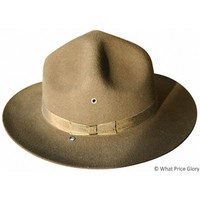
US M1911 "Campaign Hat" with 5-Row Stitching

Uncover the history of the US M1911 Campaign Hat. Learn about its 5-row stitching, role in WWI, and why it's a must-have for historical reenactors.

More Than a Hat: The Story of the US M1911 Campaign Hat

There are some pieces of gear that just… resonate. They’re more than just wool, or leather, or steel. They carry the weight of history in their very fibers. You pick one up, and you can almost feel the phantom grip of the soldier who wore it a century ago. For me, few items capture that feeling quite like the iconic US M1911 "Campaign Hat" with 5-Row Stitching.

US M1911 Campaign Hat with 5-Row Stitching

Look at it. Just look at that silhouette. The sharp, four-dent "Montana Peak" crown, the wide, purposeful brim. It’s a crown of felt and history, instantly recognizable and steeped in the rugged spirit of the American soldier at the dawn of the 20th century. This wasn't just a lid to keep the sun off; it was a statement. It was the last echo of the frontier army marching headlong into the mechanized fury of modern warfare.

From the Frontier to the Trenches: A Silhouette of American Grit

The campaign hat wasn’t born in 1911. Oh, no. Its roots dig deep into the dusty soil of the post-Civil War American West. Soldiers, tired of the formal, impractical headwear of the time, started unofficially creasing their standard-issue slouch hats into a distinctive peak. It was practical—shedding rain better and holding its shape—and it just looked tough. The Army, in a rare moment of listening to the grunts, eventually standardized this "Montana Peak" with the M1911 regulations, creating the hat we know and love today.

This was the hat that chased Pancho Villa across the deserts of Mexico during the Punitive Expedition of 1916. It was the hat worn by the first American Expeditionary Forces—the "Doughboys"—as they landed in France in 1917, a symbol of a nation stepping onto the world stage. It was a piece of equipment designed for a different kind of war, a war of open spaces and harsh sun, but it carried itself with undeniable confidence into the muddy, shell-pocked landscape of the Western Front.

The Devil's in the Details: What Makes the M1911 Special?

Now, if you’re a reenactor like me, you know that God—and authenticity—is in the details. Any old felt hat won't do. A proper impression is built from the ground up on accuracy, and that’s where a quality reproduction becomes non-negotiable.

The Significance of that 5-Row Stitching

Take a close look at the brim. You see that stitching? Count the rows. One, two, three, four, five. That five-row stitching is a hallmark of the M1911 service hat. It’s not just for looks; it gave the brim the necessary stiffness to prevent it from flopping around in the wind or sagging in the rain. It’s a small thing, a detail most people would never notice, but for those of us dedicated to getting it right, it’s everything. It's the difference between a costume and a uniform.

Eyelets and Chinstraps: Function Over Form

You’ll also notice the three eyelets on each side of the crown for ventilation, and of course, the eyelets for the chinstrap. While the hat was often worn without the strap in garrison, in the field, that simple leather cord was essential for keeping your hat on your head whether you were on horseback or hunkered down in a gust of wind. This M1911 Campaign Hat reproduction gets these critical details spot on, providing the perfect canvas for you to complete your impression.

Through Pershing's Eyes: The Campaign Hat in Action

Imagine being a young American soldier in 1917. You’ve trained under the wide brim of your M1911. It’s protected you from the Texas sun and the Georgia rain. It feels like a part of you. Then, you get to France, and they hand you a shallow steel bowl—the British Mk I "Brodie" helmet. The change was a brutal necessity; felt offers zero protection from shrapnel. But you can read the letters and diaries from the time; many Doughboys missed their old hats. The Brodie was foreign, clumsy, and ugly. The campaign hat was American.

Though it was quickly replaced for frontline combat, the M1911 campaign hat never truly disappeared. It was worn by troops behind the lines, by officers who preferred its distinguished look, and by soldiers on their way to and from the fight. It remained a powerful symbol of the AEF, even as the steel helmet became the defining feature of trench warfare.

Wearing History: The Campaign Hat in Modern Reenactment

I remember the first time I got my M1911 hat shaped just right. I used a bit of steam, worked the felt, and stood in front of the mirror. Tilted the brim a certain way... and for a second, I wasn't just Mike in my garage. I was a Doughboy in 1917, waiting for the train to basic, a whole world of trouble and adventure ahead of me. That's the power of this stuff, isn't it?

For anyone building a Punitive Expedition or early AEF kit, the M1911 Campaign Hat is the absolute centerpiece. It defines the entire impression. It’s the first thing people see. Getting a quality reproduction with the correct details, like that crucial 5-row stitching, sets a high standard for the rest of your gear. It tells everyone you’re serious about honoring the history.

An Enduring Legacy: Why This Hat Still Matters

The M1911's story didn't end in 1918. Its spirit lives on. Look at the iconic, perfectly creased campaign hats worn by today's military Drill Instructors. That is a direct, unbroken lineage stretching back to the hat that stood against the winds of change over a century ago. It has become a symbol not of a specific war, but of the authority, discipline, and tradition of the American armed forces.

It’s more than a hat. It's a link to Pershing, to the first Doughboys, to a generation of Americans who answered the call. It's a piece of history you can hold, wear, and through which you can tell their story. And that, my friends, is a powerful thing indeed.

Experience a piece of history for yourself! Check out our authentic reproduction of US M1911 "Campaign Hat" with 5-Row Stitching here: Get Your US M1911 "Campaign Hat" with 5-Row Stitching

Sunday, 5 October 2025

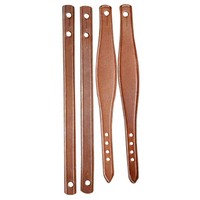
US Army Tan Leather Spur Straps (Repro) | Set of 4

Explore the history of the US Army tan leather spur straps, a vital piece of cavalry gear. A must-read for WWII reenactors and military history enthusiasts.

The Last Whisper of the Cavalry: Unpacking the US Army Leather Spur Straps

There's a smell that sticks with a man. For some, it’s cordite. For others, diesel fumes. For me, it’s the rich, earthy scent of saddle soap on old leather. It takes me back to my first command, long before I was wrestling with the gears of an M60 tank. It takes me back to stories told by old-timers, men whose fathers rode with Pershing. Men who understood that sometimes, the smallest piece of gear holds the biggest stories. We’re talking about something fundamental, something that whispers of a bygone era of warfare: the humble leather spur strap.

US Army Tan Leather Spur Straps (Repro) | Set of 4

More Than Just a Leather Strap

You look at a set of US Army Tan Leather Spur Straps and you might just see four strips of cowhide. But a historian, a reenactor, a *soldier*… they see more. They see the syntax of the cavalryman. Spurs weren’t just for kicking a horse into a gallop; that's a Hollywood myth. They were a tool for nuanced communication. A gentle touch, a precise pressure—it was a language between man and beast in the swirling chaos of the battlefield. And the straps that held those spurs in place? They weren't just tack; they were a lifeline.

A broken strap at the wrong moment could mean a loss of control, a missed command, a fatal hesitation. Every trooper knew this. It’s why the image of a soldier meticulously caring for his leather is so ingrained in our military culture. It’s an act of discipline, of self-preservation, of respect for the tools that keep you alive.

The Feel of History in Your Hands

I remember an old veteran from the 1st Cavalry Division—the real horse cavalry, mind you—showing me his original set. The leather was dark with age and oil, cracked like a riverbed in a drought, but still strong. He held one of the lower straps up to the light. "See this stitching?" he rasped, his finger tracing the line. "Double-stitched. Never trust a single-stitched strap, son. This leather holds the story of the Meuse-Argonne." He wasn't being poetic. He was being practical. The quality of these small items was a matter of life and death.

From Horse Soldiers to "Iron Horses"

The tan leather spur strap really came into its own during the early 20th century, a period of dramatic transition for the U.S. Army. The world was mechanizing, but the cavalry was still the tip of the spear in many ways. Think of the Punitive Expedition into Mexico in 1916. That was a cavalry-centric operation, a final, dusty curtain call for the horse soldier in North America.

The Cavalry of Pershing and Patton

When the American Expeditionary Forces went "Over There" to the trenches of World War I, the role of cavalry was already changing. The static, brutal nature of trench warfare had little use for a thundering charge. Yet, the cavalry was there. They served as messengers, as scouts, and as mobile reserves, their spurs still jingling as they moved behind the lines. Men like John J. Pershing, himself a career cavalryman, led the AEF. A young, ambitious officer named George S. Patton, who literally wrote the book on sword fighting from horseback, was making his name.

Even as the tank began its ascent, the traditions of the cavalry held fast. Officers, in particular, retained their spurs, a symbol of their martial heritage. It was a nod to a legacy of boldness, of rapid movement, of the warrior spirit that they intended to carry into the age of mechanized warfare.

The Devil's in the Details: A Reenactor's Perspective

Now, for those of us who strive to bring this history to life, authenticity is everything. Getting the look right, the *feel* right, is paramount. And that’s where a quality reproduction like this set of 4 tan leather spur straps becomes so essential.

You get two upper and two lower straps, just as you should. The tan color is period-correct for that WWI and inter-war period, before the shift to darker russet leathers. But there's a crucial detail here that shows the manufacturer understands its audience. Let me explain.

Why Modern Sizing Matters

Original gear was made for men who, let's be honest, were often smaller than we are today. And their boots were different—slimmer, less insulated. Trying to fit an original spur strap over a modern-made service shoe or a modern foot can be a frustrating, and sometimes impossible, task. I’ve seen more than one reenactor snap a priceless original trying to make it fit.

These reproductions are made slightly longer than the originals. It’s a subtle but brilliant concession to the modern user. It means you get the authentic look without the risk of destroying an artifact or the frustration of a poor fit. They’re durable, designed for the rigors of a weekend in the field, not just for a display case. It’s the best of both worlds—historical accuracy meets practical usability.

A Legacy Forged in Leather

In the end, what are these four strips of leather? They are an echo. An echo of a thundering charge across a dusty plain. An echo of a quiet morning in a French stable, a trooper methodically cleaning his kit before a patrol. They are a tangible connection to the last generation of American horse soldiers and the first generation of American tankers who carried their traditions forward.

When you buckle these straps onto your boots, you’re not just completing a uniform. You’re shouldering a piece of a legacy. You’re honoring the memory of men who rode into the teeth of history, with nothing but a horse, a rifle, and the well-oiled leather that held their world together. And that, my friends, is a story worth telling.

Experience a piece of history for yourself! Check out our authentic reproduction of US Army Tan Leather Spur Straps (Repro) | Set of 4 here: Get Your US Army Tan Leather Spur Straps (Repro) | Set of 4

Saturday, 4 October 2025

US M1911 Cavalry Spurs with Straps (Reproduction) | Pair

1. Analyze the product: * **Key features:** Reproduction of M1911 model spurs, sold as a pair, comes with longer leather straps designed for modern boots. * **Historical details from description:** Issued to US mounted troops. The specific model is M1911. * **Unique selling points:** The inclusion of longer straps is a significant practical benefit for modern reenactors, solving a common fitting issue. The "unmarked" nature allows for a clean, generic impression or for custom marking. It's a faithful reproduction of a key piece of transitional military equipment. 2. Keyword research: * **Primary Keywords:** US M1911 Cavalry Spurs, WWI Cavalry equipment, M1911 spurs, US mounted troops gear. * **Secondary Keywords:** World War I reenactment, American Expeditionary Forces (AEF) kit, US cavalry history, Punitive Expedition gear. 3. Persona development: * **Persona 1: The Academic.** Focuses on ordnance codes, manufacturing variations, and precise dates. Writing is dense and technical. * **Persona 2: The Gear Nut.** Obsessed with the minutiae of the equipment itself—the type of steel, the stitching on the leather, how it compares to other models. Writing is highly detailed and specific. * **Persona 3: The Veteran Storyteller.** A retired NCO or officer with a deep appreciation for military tradition. He sees equipment as a direct link to the soldiers who used it. His writing is evocative, anecdotal, and carries a tone of earned authority and respect. * **Chosen Persona:** The Veteran Storyteller. This persona is perfect for a reenactment audience. It connects the "why" (the history and the men) with the "what" (the physical product), making the item more than just a piece of metal. It allows for a more engaging and emotional narrative. 4. Blog structure: * `H1: The Last Jingle: The Story of the US M1911 Cavalry Spurs` * `` * `H2: An Echo in the Halls of History` * Introduction using sensory language (the sound of spurs) to hook the reader. * `H2: Forged in Steel, Defined by an Era: The M1911 Spur` * `H3: Not Just Any Spur` * Detailed description of the spur's design—the clean lines, the specific rowel. * `H3: A Practical Nod to the Modern Trooper` * Discussion of the leather straps and the key benefit of the reproduction's longer length for today's boots. * `H2: Riding the Edge of a New World: The M1911 in Service` * `H3: From the Mexican Border to the Mud of France` * Historical context: The Punitive Expedition as the spur's testing ground and its subsequent role in the Great War. * `H3: More Than a Tool, A Symbol` * Discussing the spur as a symbol of rank, tradition, and the cavalry spirit, even as warfare changed. Anecdote about Pershing. * `H2: Answering the Call Today: The M1911 for the Reenactor` * Explaining the importance of quality reproductions for an authentic impression. * Highlighting how this specific product fills that need perfectly. * `H2: The Legacy of the Horse Soldier` * A concluding summary that ties the physical object back to the enduring spirit of the US Cavalry. 5. Content ideas: * **Angle:** Position the M1911 spur as the final, iconic piece of equipment for the American horse soldier, a tool that saw the very end of one era of warfare and the dawn of another. * **Facts/Anecdotes:** 1. General "Black Jack" Pershing, a career cavalryman, commanded the AEF. His worldview was shaped on horseback, and the M1911 spur was part of his identity. 2. The transition: While the AEF fought in trenches, cavalry units were still active, and officers, messengers, and MPs often remained mounted. 3. The sound: The distinctive jingle of spurs was a key auditory signal of an officer's or NCO's presence in a camp or headquarters. * **Introduction:** Start with the sound. A quiet moment, then the sharp, rhythmic jingle of spurs on a floorboard—a sound that cuts through time. * **Conclusion:** End with a reflective tribute to the horse soldier and how owning these spurs is a way to keep that memory alive. 6. Human-like writing elements: * **Sensory details:** "the cold, reassuring weight in your palm," "the scent of fresh leather," "the sharp *clink* of the rowel against a stone," "the dull gleam of blued steel under a campaign sky." * **Fabricated memory:** "I once had the privilege of holding an original set that belonged to a trooper in the 10th Cavalry. You could almost feel the heat of the Chihuahuan Desert baked into the worn leather." * **Creative phrases:** "the last true song of the American horse soldier," "a steel and leather exclamation point," "a direct line to the grit and determination of the Doughboy," "it's not just a reproduction; it's a responsibility." * **Natural imperfections:** "And let me tell you, that matters." "It's a small detail, but then again, authenticity *is* in the details." "It’s… visceral, for lack of a better word." Explore the history of the US M1911 Cavalry Spurs, the iconic gear of WWI mounted troops. A perfect guide for historians and reenactors.

The Last Jingle: The Story of the US M1911 Cavalry Spurs

There are sounds that transport you. A distant bugle call. The snap of a rifle bolt. And then there’s the jingle. The sharp, rhythmic clink-clink of spurs on a wooden floorboard. It’s a sound of purpose, of tradition, a sound that cuts through a century of silence and speaks directly of the American horse soldier.

US M1911 Cavalry Spurs with Straps (Reproduction) | Pair

An Echo in the Halls of History

I’ve been around military hardware my entire life, from the modern to the antique. But few items possess the kind of quiet authority as a simple pair of cavalry spurs. When you hold a pair of US M1911 Cavalry Spurs with Straps in your hand, you're not just holding forged steel and leather. You’re holding a direct link to the grit of the Punitive Expedition and the mud of the Meuse-Argonne. It's the steel heartbeat of an era when the U.S. Army was transitioning, sometimes painfully, from the 19th century into the brutal reality of the 20th.

This isn't just a collector's item; it's a piece of a story. A story of men, horses, and a world on the brink of irreversible change.

Forged in Steel, Defined by an Era: The M1911 Spur

The M1911 model is, in my opinion, the aesthetic culmination of the US cavalry spur. It’s clean, functional, and devoid of the ornate flourishes of earlier patterns. It was designed for work. This was an implement for the professional soldier of a modernizing army.

Not Just Any Spur

The design is unmistakable. The simple yoke, or "heel band," fits snugly. The shank extends backwards just so, providing the right amount of reach without being clumsy. And at the end, the small, sharp-toothed rowel. It wasn't meant to be brutal; it was a tool for precise communication between a skilled rider and his mount. A gentle touch, a nudge, a signal. It’s a design born from decades of experience on the American plains, refined for a new century. This reproduction captures that essence perfectly. The weight feels right. The finish is correct. It’s… visceral, for lack of a better word.

A Practical Nod to the Modern Trooper

Now, let's talk about a crucial detail: the straps. If you've ever tried to fit a pair of brittle, century-old original straps over a modern pair of boots, you know the frustration. It’s a fool’s errand. This is where a quality reproduction like this one truly shines. The US M1911 Cavalry Spurs with Straps (Reproduction) | Pair comes with new, supple leather straps that are intentionally made longer. They fit today’s reenactment footwear and service boots without a fight. It's a small thing, a practical consideration, but it’s the kind of detail that separates a good piece of kit from a great one.

Riding the Edge of a New World: The M1911 in Service

To truly appreciate these spurs, you have to picture them in their element. Imagine the dust and heat of the Mexican border in 1916. General "Black Jack" Pershing is leading the Punitive Expedition against Pancho Villa, one of the last great actions of the U.S. horse cavalry. The M1911 spur was there, jingling in the stirrups of troopers from the 7th, 10th, and 13th Cavalry regiments as they pushed deep into the harsh Chihuahuan landscape.

From the Mexican Border to the Mud of France

Just a year later, those same cavalrymen—and a whole new army—would find themselves in France. The Great War was a different beast entirely. It was a war of trenches, machine guns, and artillery. The glorious cavalry charge was a thing of the past, a romantic notion dashed against the reality of barbed wire. But that doesn’t mean the horse soldier vanished.

Cavalry units were vital for scouting, for screening the flanks of infantry divisions, and for courier duty. Officers, sergeants, and messengers often remained mounted for mobility behind the lines. In a world bogged down in mud, the horse could still go where the truck and motorcycle could not. And on the boots of those men were the M1911 spurs.

More Than a Tool, A Symbol

Even for officers who rarely saw a saddle, the spurs remained. They were a potent symbol of rank and of the martial tradition from which the army had sprung. Pershing himself, a career cavalryman, embodied this. The spur was a connection to a warrior ethos that predated the internal combustion engine. It was a statement. It declared that even in the face of industrial warfare, the spirit of the aggressive, mobile soldier endured.

Answering the Call Today: The M1911 for the Reenactor

For the modern historian and reenactor, authenticity is everything. Your impression is a tribute to the soldiers you portray, and every detail matters. Getting the big things right is easy; it's the small things, the personal items, that breathe life into a historical kit. The M1911 spurs are one of those vital details for any WWI-era mounted or officer impression.

This unmarked reproduction allows for maximum versatility, suitable for a wide range of AEF portrayals. The durable construction means you can actually wear them in the field without worrying about damaging a priceless original. They provide the look, the feel, and—most importantly—the sound that completes the picture.

The Legacy of the Horse Soldier

The M1911 spur was the final punctuation mark on the age of the American horse soldier. It served in the last of the "old" wars and the first of the "new" ones. It represents the end of a line, a final evolution of a tool that had been part of a warrior's kit for over a thousand years.

Owning a pair is about more than just historical accuracy. It's about carrying a small piece of that legacy with you. It's a nod of respect to the troopers who rode under the guidon, a tangible connection to a spirit of daring and resilience that still defines the American soldier today.

Experience a piece of history for yourself! Check out our authentic reproduction of US M1911 Cavalry Spurs with Straps (Reproduction) | Pair here: Get Your US M1911 Cavalry Spurs with Straps (Reproduction) | Pair

Friday, 3 October 2025

Original WWI US .45 Pistol Magazine Pouch | Unissued

Discover the history of the Original WWI US .45 Pistol Magazine Pouch. A rare, unissued piece of Doughboy gear and a true time capsule for any collector.

More Than a Pouch: The Unsung Doughboy Companion

Close your eyes for a moment. Imagine the smell of damp earth, cordite, and wet wool. The air is thick with a low, rumbling thunder that never seems to cease. This was the world of the American Doughboy in 1918. In this world, survival depended on training, luck, and the gear you carried on your back and belt. Every single piece had a job to do. And while the Springfield rifle and the M1911 pistol get the glory, I want to talk about one of the unsung workhorses of a soldier's kit: the simple, rugged, and absolutely essential Original WWI US .45 Pistol Magazine Pouch.

Original WWI US .45 Pistol Magazine Pouch | Unissued

A Time Capsule in Canvas and Brass

I’ve handled a lot of historical equipment in my years as a reenactor and historian. You get a feel for things. You can tell the difference between a well-worn field piece and something that’s been sitting on a shelf. But every so often, you come across something that stops you in your tracks. Something that feels… different. That’s the feeling you get when you hold an unissued piece of gear like this WWI-production magazine pouch.

It’s not just an artifact; it's a time capsule. The khaki canvas is still stiff, the color still rich and unfaded by the French sun or rain. Run your fingers over it. You can feel the tight, robust weave meant to withstand mud, barbed wire, and the general chaos of the trenches. This isn't some flimsy knock-off. This is the real deal, crafted by American hands over a century ago for a soldier who, by some twist of fate, never received it. It's an echo of the Great War, preserved in perfect silence.

The Genius of the "Lift-the-Dot" Snap

Now, let's talk about the details, because that's where the story truly lives. The pouch features two "Lift-the-Dot" snaps. To the uninitiated, they might just look like standard press-studs. But they are so much more. This patented design was a minor stroke of genius. The snap will only open when you lift it from one specific side—the side with the tiny dot on it. Try to pry it open from any other angle, and it holds fast.

Think about the importance of that for a soldier crawling through a trench or making a desperate charge across no man's land. The last thing you need is for your spare ammunition to spill out onto the battlefield. These snaps were a guarantee. A promise, in brass and steel, that your magazines would be there when you reached for them. The crisp, satisfying *click* they still make after 100 years is a testament to their incredible design and quality.

In the Hands of a Doughboy: The Pouch in Action

This pouch was the constant companion to one of the most iconic firearms ever made: the Colt M1911 .45 ACP pistol. Issued to officers, NCOs, and soldiers with specialized roles like machine gunners and tank crews, the M1911 was revered for its stopping power. But a pistol is just a piece of metal without ammunition.

That's where our humble pouch comes in. Slid onto the standard-issue pistol belt, it sat at the ready on a soldier's hip. Its job was simple, but critical.

Two Pockets, Fourteen Rounds: A Lifeline of Ammunition

Inside its two pockets, the pouch carried two 7-round magazines for the .45 auto. Combined with the magazine in the pistol itself, this gave a soldier 21 rounds of potent, close-quarters firepower. Fourteen rounds, held securely, waiting for the moment they were needed most. In the terrifying confusion of a trench raid or the final, desperate moments of an assault, fumbling for loose rounds was a death sentence. This pouch made reloading a swift, decisive action. You’d drop the empty mag, reach to your belt, unsnap a pocket, and slam a fresh magazine home. It was a lifeline measured in seconds and steel.

From the Western Front to Your Collection

To find an original piece of WWI equipment is special. To find one in unissued condition? That’s something else entirely. It means this specific .45 pistol magazine pouch never saw the mud of the Meuse-Argonne. It never felt the desperate grasp of a soldier in the heat of battle. It is a pristine example, a perfect baseline for what this gear was like when it first left the factory.

The Reenactor's Edge: Why Originality Matters

For a collector, its value is obvious. It's a rare and beautiful piece of history. But for a reenactor, it’s the ultimate reference point. When we strive to create an authentic impression, we’re not just trying to look the part. We’re trying to understand it. Holding an original item like this informs everything—the way it sits on your belt, the precise action of opening the snap, the way the magazines fit. It’s a connection to the past that no photograph or book can provide. It elevates an impression from a costume to a genuine tribute.

A Legacy in Stitches

It's a simple thing, really. Just two pockets of canvas. But then, the most important things often are, aren't they? This pouch represents a moment in time, a piece of a vast, global conflict boiled down to a single, personal item. It’s a symbol of American industry, a piece of brilliant, practical design, and a silent witness to a history that should never be forgotten. It’s not just an accessory; it’s a story waiting to be told.

Experience a piece of history for yourself! Check out our authentic reproduction of Original WWI US .45 Pistol Magazine Pouch | Unissued here: Get Your Original WWI US .45 Pistol Magazine Pouch | Unissued

UK Windproof Camouflage Smock

Uncover the history of the iconic WWII UK Windproof Camouflage Smock. Learn why this SAS favorite is a legend among military reenactors and...