Friday, 3 April 2026

UK String Vest (Reproduction) | Cold Weather Underwear

Discover the history of the UK String Vest, the unsung hero of British soldiers in WWII. Learn how this ingenious underwear kept Tommies warm in the coldest conditions.

There's a particular kind of cold that seeps right into your bones. It’s the damp, clinging chill of a European winter morning, the kind that promises misery before the first shot is even fired. I remember my grandfather, a man of few words about his time in the service, once pulling a strange, web-like garment from his old kit bag. "Looks daft, I know," he'd said, his voice a low rumble. "But this bloody thing... this kept me alive in the Ardennes." He was holding his old army-issue string vest.

At first glance, it seems like a prank. The ghost of a shirt. A piece of underwear seemingly more hole than fabric. Yet, for countless British and Commonwealth soldiers during the Second World War, this garment of glorious contradictions was a vital piece of kit. It was, and is, a masterpiece of simple, effective design.

UK String Vest (Reproduction) | Cold Weather Underwear

The Unsung Hero of the British Tommy: The Curious Case of the String Vest

When you’re thinking about the iconic equipment of the British Tommy, your mind probably jumps to the Brodie helmet or the formidable Lee-Enfield rifle. You might even picture the scratchy wool of the Battle Dress uniform. But underneath it all, against the skin, lay one of the most effective pieces of cold-weather technology of the era: the UK String Vest (Reproduction) | Cold Weather Underwear.

More Than Just Holes: The Ingenious Science of Staying Warm

So, how on earth does a vest full of holes keep you warm? It’s a question that baffles many, but the answer lies in a simple principle of physics. It’s not the material itself that insulates you; it’s the air the material traps.

Trapping Air: A Lesson in Thermodynamics

Your body is a furnace, constantly generating heat. The challenge in a cold environment is keeping that heat close. The open-mesh design of the string vest creates thousands of tiny pockets. When you layer another garment, like a standard wool undershirt, over it, these pockets trap a substantial layer of air. Your body heat warms this trapped air, creating a surprisingly effective insulating barrier between your skin and the cold outside. It’s the same principle used by modern, high-tech "fishnet" base layers. The British Army, however, perfected it with simple cotton string decades earlier.

From Norwegian Fishermen to British Commandos

The design wasn't a military invention, not initially. Its origins are believed to lie with Norwegian fishermen, men who knew a thing or two about battling the unforgiving cold of the North Atlantic. The British military, ever pragmatic, recognized the genius of the design and adopted it for its own troops. It became a favorite piece of kit for Commandos and special forces operating behind enemy lines. Why? Because it was incredibly lightweight, packed down to almost nothing, and was far more effective than a solid layer of cotton that would just soak up sweat and then freeze.

A Personal Reflection: My Grandfather's "Secret Weapon"

I can still feel the rough texture of my grandfather's original vest in my hands. It was a tangible link to his past, to the shivering nights spent in a slit trench or the damp chill of a troop transport. He explained that during a march, sweat would pass right through the holes, wicking into the outer wool layer and preventing that dreaded, dangerous chill when you finally stopped moving. "A wet undershirt can kill you faster than a bullet, lad," he’d mutter. That always stuck with me. It wasn't just clothing; it was survival equipment.

The String Vest in Action: From the Ardennes to the North Atlantic

This simple piece of British Army underwear saw service in every theatre where the cold was a threat. Soldiers huddled in the frozen forests of the Ardennes during the Battle of the Bulge relied on it. Sailors on corvette duty in the icy North Atlantic, constantly sprayed with freezing seawater, layered them under their oilskins. It was a universal solution to a universal problem.

Not Just for the Cold: The Vest's Surprising Versatility

Here’s another counter-intuitive bit of brilliance for you. In warmer climates, the string vest could actually help keep a soldier cool. Worn on its own, the open weave allowed for maximum airflow over the skin, promoting evaporation and cooling the body down. This versatility made it an indispensable, year-round part of a soldier's kit.

Getting the Kit Right: The String Vest for the Modern Reenactor

For a historical reenactor, authenticity is everything. It's about more than just looking the part; it's about understanding the "why" behind each piece of equipment. Owning a quality reproduction string vest isn't just a detail; it's fundamental to accurately portraying the British soldier of the era. It completes the layering system and, if you’re a tactical reenactor who spends cold nights in the field, you’ll discover very quickly just how effective this "web of warmth" truly is. It's a piece of wearable history that still performs its job flawlessly.

The Enduring Legacy of a Simple Design

The UK String Vest is a testament to British ingenuity and the quiet resilience of the soldiers who wore it. It’s a reminder that often the most effective solutions aren’t the most complex or the most glamorous. They are the simple, clever ideas that solve a fundamental problem. It’s not just a piece of vintage thermal wear; it’s a story woven in cotton, a story of warmth in the face of bitter cold, and a small but crucial piece of the puzzle that led to victory.

Experience a piece of history for yourself! Check out our authentic reproduction of UK String Vest (Reproduction) | Cold Weather Underwear here: Get Your UK String Vest (Reproduction) | Cold Weather Underwear

British GS Greatcoat Button Set | Brass, 15 Buttons

Discover the hidden history of the British GS Greatcoat button. Learn why these small brass discs are crucial for an authentic WWI or WWII reenactment uniform.

More Than Just Brass: The Unsung Story of the British GS Greatcoat Button

You’re standing in a muddy trench. Or maybe it’s a frozen Belgian forest. The wind, a malevolent force, is trying to find its way through the thick serge wool of your greatcoat. Your fingers are numb, clumsy things, but you fumble with the buttons—large, solid, cold discs of brass. You pull the collar tight, the familiar weight a small comfort against the misery. In that moment, those buttons are everything. They are the last line of defense against the elements, the humble hardware holding your world together.

British GS Greatcoat Button Set | Brass, 15 Buttons

The Humble Heart of the British Tommy's Uniform

I remember my first major reenactment event, years ago now. I’d spent a fortune on my P37 battledress, my rifle, my webbing. I thought I looked the part. I stood shivering in the morning lineup, feeling proud, when an old timer—one of those chaps who’d been doing this since before I was born—sidled up to me. He didn’t look at my rifle. He didn’t look at my helmet. He squinted at my greatcoat. "Buttons are wrong, son," he grunted, before wandering off. My heart sank. He was right. I had a hodgepodge of post-war replacements. They were the right size, sure, but they lacked the soul, the specific, stamped history of the originals. It was a lesson I never forgot: authenticity lives and dies in the details. And few details are more important, yet more overlooked, than the common British GS Greatcoat Button.

What is a "General Service" Button, Anyway?

For those new to the hobby, the term "General Service" or "GS" can be a bit of a mystery. We’re used to seeing regiments with their own flashy, unique buttons—a roaring lion here, a specific crest there. But the British Army, especially as it modernized for the colossal conflicts of the 20th century, needed something simpler. Something for everyone.

A Symbol of a Modernizing Army

The GS button was the answer. It was a standardized design, typically featuring the Royal Cypher of the reigning monarch (like King George's "GR" insignia) topped with a crown. These weren't for the elite Guards or the historic line infantry regiments who clung to their traditions. No, these were for the vast, essential machinery of the modern army: the Royal Artillery, the Royal Engineers, the Ordnance Corps, and a hundred other vital units. It was an emblem of unity and, let's be honest, a triumph of wartime logistics. Stamping out millions of one design is far easier than managing hundreds of different regimental patterns. These buttons are the unsung rivets of the King's army, holding the whole enterprise together.

Buttons in Battle: The Greatcoat's Essential Fasteners

It’s easy to dismiss a button as mere decoration. A bit of brass to be polished for parade. But on campaign, their function was brutally simple: survival. The British greatcoat was a beast—a heavy, cumbersome, but wonderfully warm shield against the horrors of a European winter. Without its full complement of buttons, it was just a useless woolen blanket.

A close-up of a brass General Service button

A Bulwark Against the Elements

Imagine a Tommy in a shell-hole near Passchendaele, rain turning the world into a primordial soup. Or a paratrooper hunkered down near Arnhem, the autumn chill seeping into his bones. His greatcoat, secured by those eight large brass buttons down the front and the smaller ones on the cuffs and shoulders, was his shelter. It was a barrier that kept the wet out and the warmth in. Each button, polished to a dull gleam or caked with mud, was a small victory against the chaos of war. Soldiers would scrounge them from damaged uniforms to replace lost ones, knowing their value went far beyond a penny or two. They were, quite literally, life-savers.

Getting the Details Right: A Restorer's Guide

This brings me back to that old timer and my mismatched buttons. For a reenactor or a restorer, "close enough" is a tyranny we must escape. You might find an original greatcoat at a market, a ghost of a garment worn and weary. Bringing it back to life is a sacred trust. And the first step is often fixing the buttons.

Why a Complete Set Matters

Nothing screams "inauthentic" faster than a mix of different buttons. You’ll see it—a King's Crown next to a Queen's Crown, a shiny new repro next to a corroded original. It just looks… wrong. That's why finding a complete set of 15 British GS Greatcoat Buttons is such a godsend. This isn't just a random bag of brass; it's the correct configuration: 8 large buttons for the main double-breasted closure and 7 smaller ones for the shoulder straps, cuffs, and pocket flaps. It’s the full stop at the end of your restoration sentence. It means you can strip off the old, mismatched hardware and, with a needle and some sturdy thread, restore a piece of history to its proper glory. You can feel the thick wool under your fingers, see the brass gleam against the khaki, and know that you got it right.

Bringing History to Life, One Button at a Time

In the end, what we do as reenactors and historians is about more than just collecting old things. It’s about connection. It's about understanding, on some small level, what it felt like to be there. A tiny, mass-produced brass button can be a powerful key to that understanding. It’s a tangible link to the millions of ordinary men who wore it, who polished it, who fumbled with it in the cold, and who relied on it. It’s not just a fastener. It’s a piece of the story, a small circle of brass that tells a colossal tale of service, endurance, and a world at war. Getting it right isn't pedantry; it's respect.

Experience a piece of history for yourself! Check out our authentic reproduction of British GS Greatcoat Button Set | Brass, 15 Buttons here: Get Your British GS Greatcoat Button Set | Brass, 15 Buttons

Thursday, 2 April 2026

Greek Army Wool Greatcoat

Discover the hidden history of the Greek Army Wool Greatcoat, a near-identical twin to the British P-40. A must-read for reenactors and military history fans.

More Than Just a Coat: The Surprising Story of the Greek P-40 Pattern Greatcoat

There’s a particular smell to a damp wool greatcoat steaming by a campfire. It’s a mix of wet earth, woodsmoke, and lanolin—the scent of history, if you ask me. I remember one particularly miserable November drill weekend. The rain was that fine, soaking kind that finds its way into every seam, every buttonhole. Most of the lads were grumbling, shivering in their jackets. But not me. I was buttoned up tight inside my heavy wool greatcoat, a fortress of fabric against the elements. It’s in moments like those you stop just *wearing* the kit; you start to understand it.

And that’s the story I want to tell you today. It’s about a coat that looks, feels, and acts like one of the most iconic pieces of British WWII gear, but comes with a fascinating twist in its service history. I’m talking about the Greek Army Wool Greatcoat.

Greek Army Wool Greatcoat

A Familiar Silhouette in a Different Theatre

The first time you lay hands on one of these Greek greatcoats, you’ll be struck by a powerful sense of déjà vu. The cut, the weight, the rough texture of the wool—it all screams British Army. And you wouldn't be wrong. This coat is a direct descendant, a near stitch-for-stitch copy, of the British P-40 greatcoat.

The British P-40 "Austerity" Pattern: A Coat Forged in Crisis

To understand the Greek coat, you first have to understand its parent. The original British P-40, or Pattern 1940, greatcoat was born out of pure, desperate necessity. It was a simplification of the earlier, more complex 1937 Pattern. As the Battle of Britain raged and the threat of invasion loomed, Britain needed to equip its rapidly expanding army—fast. The P-40 was the answer. It did away with extravagances like pleated chest pockets and complex cuffs. It was a stripped-down, no-nonsense design meant for one thing: mass production. It was the unsung workhorse of the infantryman's wardrobe, a portable shelter against the brutal European weather.

Lend-Lease and Legacy: How the P-40 Found Its Way to Greece

So, how did this quintessentially British design end up being worn by Greek soldiers? The answer lies in the tangled web of post-war geopolitics. After WWII, Britain supplied enormous quantities of military aid—equipment, vehicles, and uniforms—to Greece to support the government forces during the Greek Civil War (1946-1949). The patterns and specifications for tried-and-tested British kit, like the P-40 greatcoat, were passed along. The Greeks, recognizing a solid design when they saw one, continued to produce and issue these coats for decades. The result is this incredible piece of surplus: a ghost in a different uniform.

Under the Magnifying Glass: Deconstructing the Greatcoat

Let's get our hands dirty. What makes this coat special isn't just its lineage, but its tangible quality. This isn't a flimsy reproduction; it’s genuine military surplus, built to withstand hardship.

The Feel of History: Fabric and Construction

The moment you pick up the Greek Army Wool Greatcoat, you feel its heft. This is thick, densely woven wool, designed to turn away wind and rain. The scratchiness isn't a flaw; it's a feature. It’s the sign of a utilitarian fabric that prioritizes warmth and durability over comfort. Run your hand over it. You can almost feel the decades of history woven into its fibers. It’s a direct line to the wartime factory floor, a testament to a time when things were built to last, not to be replaced.

From Collar to Hem: Key Features and Why They Mattered

Every element of this coat has a purpose. The broad collar can be turned up and fastened to protect the neck and face from biting winds. The large, simple buttons are easy to manipulate with cold or gloved hands. Its generous, knee-length cut doesn't just provide warmth; it allows a soldier to sit on damp ground without soaking their trousers. It’s a simple design, yes, but it’s a *smart* design, refined by years of hard-won experience in the field.

Why This Greek Greatcoat is a Reenactor's Secret Weapon

Now, for the part that gets people like me excited. For years, finding an original, wearable British P-40 greatcoat in good condition for a reasonable price has been a challenge. They're getting rarer and more expensive. This is where the Greek version becomes an absolute game-changer.

The Authenticity Dilemma: Getting the Look for Less

Because the Greek Army greatcoat is identical in pattern and fabric to the British P-40, it is, for all intents and purposes, the perfect stand-in for reenacting British and Commonwealth impressions from the mid-war period onwards. With a simple change of buttons—a straightforward job for anyone with a needle and thread—it becomes visually indistinguishable from an original British coat. You get the authentic weight, the correct material, and the right silhouette, all without breaking the bank. It's the best-kept secret in the hobby, a truly affordable way to achieve a high-fidelity impression.

Beyond the Battlefield: A Timeless Piece of Vintage Outerwear

But you don’t have to be a reenactor to appreciate this coat. It’s a stunning piece of vintage military outerwear. In a world of fast fashion and synthetic fabrics, there’s something deeply satisfying about a garment this substantial and timeless. It’s incredibly warm, ruggedly handsome, and carries a story. Paired with modern clothes, it makes a powerful statement. It's a piece of history you can actually wear.

A Final Word from the Trenches

A coat like this is more than just an item of clothing. It's a connection to the past. It's a reminder of the soldiers—British, Greek, and others—who relied on its simple, sturdy design to endure the unendurable. Holding it, you can’t help but feel the weight of that history on your shoulders, quite literally. Whether you're a dedicated reenactor striving for perfect authenticity, a historian, or simply someone who appreciates well-made, classic military style, the Greek Army P-40 Pattern Greatcoat is an exceptional piece. It's a survivor, and it has stories left to tell.

Experience a piece of history for yourself! Check out our authentic reproduction of Greek Army Wool Greatcoat here: Get Your Greek Army Wool Greatcoat

Wednesday, 1 April 2026

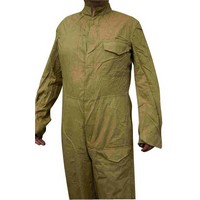
Original UK Tanker Coveralls

Discover the story of original 1944 British tanker coveralls. Unissued WWII gear for reenactors & historians. Explore the uniform of the Desert Rats.

There’s a certain smell to history. It’s not just the musty scent of old paper in an archive; sometimes, it’s the faint, phantom whiff of oil, hot metal, and sun-baked dust. Close your eyes and you can almost hear it—the rhythmic clatter of tracks, the low growl of a Rolls-Royce Meteor engine, the clipped commands over a crackling wireless set. This was the world of the British tanker in World War II, a world encapsulated not by a grand monument, but by a simple, profoundly functional piece of clothing: the Original UK Tanker Coveralls.

Original UK Tanker Coveralls

I’ve handled countless artifacts over the years, from rusted helmets pulled from the fields of Normandy to letters penned in the faint light of a dugout. But there's a unique thrill, a palpable connection, that comes from holding a piece of unissued equipment. It’s a ghost of a garment. A uniform that was made for a soldier who, by some twist of fate, was never assigned it. It exists in a perfect state of preservation, a time capsule of manufacturing, intention, and the vast, global logistics of war.

Forged in the Commonwealth, Destined for the Desert

The coveralls we're looking at here are something truly special. These aren’t just any tanker suit; they are original, unissued British Army issue, precisely dated 1944. And the story gets even more interesting when you look closer at the maker's mark. They are Indian-made. It’s a detail that speaks volumes about the sheer scale of the Allied war effort, a global tapestry of industry and manpower stretching from the mills of Manchester to the factories of Mumbai.

Why Indian-Made Matters

During WWII, India was the beating heart of a massive supply operation for the British Fourteenth Army in the Burma Campaign and for forces across the Middle East and North Africa. The textile industry there produced millions of uniforms, tents, and pieces of webbing. These 1944-dated coveralls are a direct link to that crucial, and often overlooked, part of history. They represent the hands of countless Commonwealth citizens who contributed to the fight for freedom, their stitches just as vital as the rivets on a Cromwell tank.

The "Khaki Drill" Advantage

The material itself is key: khaki drill. It's a stout, breathable cotton fabric, far more suited to the blistering heat of the North African desert or the humid climate of Italy than the heavy wool serge of the standard British Battledress. For a tank crew, crammed into a steel box that could easily become a sweltering oven under the sun, this was a critical consideration. It wasn't just about comfort—well, comfort was a luxury they rarely had—it was about fighting efficiency. A crew suffering from heat exhaustion is a crew that makes mistakes. This fabric was their first line of defense against the elements.

Life Inside the Tin Can: A Tanker's Second Skin

Why a one-piece coverall? The answer is brutally practical. A tank’s interior is a hostile environment—cramped, littered with sharp edges, levers, and ammunition casings. The last thing you want is a loose jacket or belt snagging on a crucial piece of equipment in the heat of battle. The coverall, or "overall," as they were often called, presented a sleek, snag-free silhouette. It also protected the soldier's regular uniform underneath from the inescapable grease, oil, and grime that was part of life in an armored fighting vehicle.

Designed for Duress

I remember the first time I held an original pair, years ago at a small museum. The curator, a veteran of the Royal Tank Regiment, pointed out the simple, robust construction. The large pockets for maps, tools, or personal items. The simple button-up front. There are no unnecessary frills here. Every element is born of necessity. This garment was designed to be thrown on quickly over a shirt and trousers and to simply *work*. It is the physical embodiment of function over form.

A Far Cry from the "Pixie Suit"

It’s important for reenactors and collectors to distinguish these khaki drill coveralls from their more famous European-theater cousin, the "Tank Suit," affectionately known as the "Pixie Suit." The Pixie Suit was a heavy, padded, multi-layered garment designed for the cold, damp conditions of Northwest Europe. These khaki drill coveralls are its lightweight, desert-bred predecessor, built for a different kind of war, a different kind of climate. Owning a pair of these tells a specific story—of campaigns fought under a relentless sun, from El Alamein to the dusty roads of Sicily.

Bringing History to Life: The Coveralls in Modern Reenactment

For a reenactor striving for authenticity, an item like this is the holy grail. Reproductions are excellent and fill a vital role, but there is nothing quite like incorporating a genuine, period-made piece into your impression. And because these are unissued, you are starting with a clean slate. There's no damage, no post-war modifications. It is exactly as a British "Tommy" would have received it from the quartermaster's stores in 1944.

When you wear these Original UK Tanker Coveralls, you're not just putting on a costume. You are donning a piece of history, connecting with the experience of the armored crews of the 7th Armoured Division—the famed "Desert Rats"—and countless other units. You're honoring their memory by getting the details right.

A Tangible Link to the Past

This isn't just a piece of surplus clothing. It's a witness. It was created in a year of titanic struggle, as Allied forces were pushing back on all fronts. It was shipped across oceans, stored in a depot, and waited for a call to duty that never came. Now, nearly 80 years later, it offers us a direct, physical connection to that time. It's a chance to hold not just a piece of fabric, but a piece of the story, in our own hands.

Experience a piece of history for yourself! Check out our authentic reproduction of Original UK Tanker Coveralls here: Get Your Original UK Tanker Coveralls

UK String Vest (Reproduction) | Cold Weather Underwear

Discover the history of the UK String Vest, the unsung hero of British soldiers in WWII. Learn how this ingenious underwear kept Tommies wa...